






News

全部
Corporate News
news
Project Introduction

What should I pay attention to in the development of APP/ applet?
Everyone who works on products and projects carries their dreams, but the realization of their dreams is not always smooth sailing. They think that after creating an app or mini program, they can make money and get rich returns while lying down. Little do they know that there are too many processes involved in this process. Shenzhen Siring Information Technology Co., Ltd. (referred to as Siring Siring) not only customizes various creative projects, but also accumulates rich practical experience in project promotion and operation. Taking this opportunity, we share our experience with all enterprises or individuals who strive for their dreams. 1、 Creative leading project engineering The beginning of a customized software development project always starts with good creativity. Without good creativity, it is difficult to stimulate user preferences. A good user experience is the only criterion for testing a good product. A good idea is not just a wild idea, but rather one who thinks it will work. In fact, it is necessary to comprehensively consider practical ideas based on public experience, experience, market research and analysis, combine good ideas with these factors, and then try to develop one's own exclusive app. In the current situation of severe homogenization in the APP software development industry, creative apps are the first to seize the market opportunity. If you have good ideas, you need to be brave enough to take action. Many people have many ideas, but none of them take action, so APP software development is still in the conceptual stage. If you do it, you may succeed, but if you don't do it, you will definitely not succeed. 2、 R&D starts with prototype design APP software development is by no means an easy task. When too many demanders are just a concept, they hastily entrust a development company to start researching and developing. The first thing they think about every day is to quickly launch the product, but they are careless about every detail. Here, we first remind all demanders: the prototype should be carefully compared and corrected at the beginning of research and development! So, what is prototype design? Prototyping is a way for users to experience products in advance, communicate design ideas, and showcase complex systems. Essentially, a prototype is a communication tool for graphical interaction. The main function is to describe the logical relationship between function and content. Why do we need prototype design? Firstly, the vast majority of business owners themselves do not understand design knowledge or programming knowledge, and prototypes show them the basic framework or model of websites or apps, allowing them to understand their basic appearance and operational mechanisms. An interactive prototype can basically run like the final product, and you can operate on it. The prototype will provide corresponding feedback, and users can understand its operation and seek solutions to specific problems. After usability testing, the prototype can optimize for a better user experience and eliminate a considerable number of potential issues and malfunctions before the product is launched. Prototypes are like development drawings in construction projects. Once the drawings are confirmed, construction is carried out. However, the response during the construction process is not like this, and the impact on the entire project construction is obvious! 3、 Don't play with children in function development Many app developers themselves do not have a clear understanding of what established functions their apps need to implement. During the development process, various functional changes began. Today, when I thought of a great feature, I immediately made a phone call requesting it to be added. If it wasn't added, I might not be able to survive anymore. The next day, I was informed that it seemed like the feature should be removed. However, I didn't realize that the entire day of the project team's time was wasted, which resulted in a significant increase in project development costs! As a development demander, it is essential to have sufficient product considerations and thinking, as well as cost awareness, to identify the market and direction. Good features are available at every stage and must be completed through a phased and step-by-step system. As we can see from the upgrades of Apple phones, they are usually updated every year. Of course, Apple will produce world-class phones, but many of their cool features are carefully added in stages to meet the needs of the market and general customers. Because you think it's good, users may not necessarily buy it, but instead invisibly add budget costs to themselves, while also causing delays in project launch. 4、 "Fine tuned operation" in marketing promotion The above mentioned are all issues that need to be noted in product design and research and development. So, after the project is developed and formed, how should we operate? With the disappearance of market dividends, it is necessary to realize that promoting new APP software will be very difficult! Nowadays, we have entered the era of traffic. Whoever seizes the entrance to traffic is like a pig flying into the sky. Where does traffic come from? It comes from news, entertainment, games, and applications on PC and mobile devices, big and small. However, there are millions of channels for traffic, and the cost of user promotion is tight, making the cost increasingly high. To enhance customer acquisition capabilities, it is necessary to screen high-quality customer acquisition channels and continuously improve the conversion rate of traffic to reduce user acquisition costs. Siring, an APP customization development company, believes that whether it is search engine optimization or SEM bidding advertising, the advertising channels should do a good job in analyzing the landing page conversion of each channel, purposefully reducing resource waste.
Corporate News
发布时间:2026-04-12 00:00:00
 10902
10902
查看详情
>

What are the steps of the APP / small program development process?
In today's mobile Internet era, APP / small program has become a necessary marketing promotion tool for enterprises. In particular, it can be used without download and installation, providing users with a convenient operation experience. So, what is the APP / applet development process like? Next, Shenzhen Sirui Information Technology Co., Ltd. (hereinafter referred to as: Siring Sirui) will introduce the following steps: 1. Do a good job of requirements analysis for development First, we need to be clear about how we need to develop an APP / applet ourselves. This step includes understanding the requirements of pre-development application processes, market research, and competitive product analysis. Through these methods, we can determine the requirements of the APP / applet function, interface design, and user experience. Siring Sirui has a consultant project manager, who accompanies you to sort out your business needs. 2. Technical selection After clarifying the requirements, we need to choose the appropriate technical framework to implement the APP / small program. At present, there are many excellent APP / small program development frameworks in the market. The front end can choose: uniAPP development tools, WeChat Web developer tools, Alipay life number, etc., and the back end can choose: Java, go, php language, etc. According to the actual needs and technical background of the project, we can choose the appropriate technical framework for development. Siring Sirui has a multi-type development team to provide you with the right development framework and development language. 3. design phase After the technical selection is completed, we enter the design stage of the APP / applet program. This stage mainly includes UI design, interaction design and functional module design, etc. Through this phase of the work, we can provide a beautiful, easy-to-use user interface for the APP / applet. Siring We uses a variety of design tools, such as Axure, Figma, etc., to design high fidelity prototypes of the project, so that the user can know the whole picture of the project at a glance. 4. exploitated phase After the design phase was completed, we started the development of the APP / applet. This stage mainly includes two parts: front-end development and back-end development. The front-end development is mainly responsible for implementing the user interface and interaction functions of the APP / applet, while the back-end development is mainly responsible for handling the business logic and data storage problems. Siring Sirui uses instant online tools to follow up the progress of project development immediately. 5. Testing and optimization After the APP / applet development is completed, we need to fully test it to ensure proper functionality and a good user experience. During the test process, we need to find and fix the potential problems, while we can optimize the performance of the APP / small program to improve its operation efficiency. Siring Sirui will first carry out the project testing and bug repair, and then to the user experience and optimization, to meet the actual operation needs of the project. 6. On-line and operation Finally, we will submit the APP / applet to the major application platforms for review and release. After the release, we need to carry out continuous operation and maintenance of the APP / applet, including content update, collection and processing of user feedback, data analysis, etc. Through continuous optimization and improvement, we can make the APP / applet more in line with user needs and remain competitive. The APP / applet development process involves multiple links, and we need to invest enough energy and time in each link. Only in this way can we create a beautiful APP / small program that is both beautiful and practical, and bring a better experience to users. #APP Customization Development # Website Construction # Software Development # Hardware Development # Source Code Development # Source Code Customization#Social Customization # Live Streaming # E-commerce Shopping # Website System # Takeout # Same City Services # Internet of Things # Education
Corporate News
发布时间:2026-03-02 00:00:00
24326
查看详情
>

Introduction to MES Production Management Software System, IoT App Development, Smart Factory Visual Dashboard, and AI Digitalization Development
Shenzhen Siring Information Technology Co., Ltd. (Siring) was founded in 1996. For 30 years, we have been focusing on the R&D of MES digital factory and intelligent manufacturing systems. Our team consists of 100 members, among which R&D staff account for 90%. We hold multiple authoritative qualifications including ISO27001 Information Security Certification, Double Software Certification and National High-tech Enterprise Certificate. Supported by research institutions such as Shenzhen Big Data Research Institute, our team specializes in back-end programming languages including Java, GO and Python, as well as industrial IoT algorithm frameworks. We have built a full-stack technical system covering production line design, PLC integration, AI vision algorithms and cloud platforms. Focusing on customized MES solutions for discrete manufacturing and process industries, our self-developed core technology matrix includes: full-process quality traceability algorithms combining barcode and RFID, deep integration solutions for ERP+WMS+PLC systems, multi-objective intelligent defect detection engine (supports customized model training for precision assembly, material abnormality, etc.), and industrial data security encryption & real-time transmission technology. We have completed full-process development ranging from edge computing gateways to factory digital twin platforms, enabling production parameters and equipment status data to be uploaded to the cloud within seconds and supporting massive concurrent processing. We have successfully delivered a number of benchmark industrial solutions: Sanitation Vehicle Parts MES: Connect ERP and production equipment data, raise on-time delivery rate from 88% to 96%, and reduce WIP inventory by 22%. Tire Mold Smart Factory: Integrate secondary development of CAD & UG with MES, boost equipment availability by 18.75%, improve design efficiency by 30% and achieve zero missed inspections. Electronic Assembly MES: Realize precision assembly traceability at 0.01mm level via machine vision, and cut defective product rate below 0.2%. Building Material Intelligent Operation & Maintenance Platform: Adopt 5G predictive maintenance model to reduce unplanned equipment downtime by 56%. Our solutions fully cover core sectors including auto parts, mold manufacturing, electronics, building materials and chemical industry. The products support multiple communication protocols such as OPC UA, Modbus and 5G private network, with open API interfaces and data middle office to realize full-scenario connection of production scheduling, material distribution and quality control. We provide customized development services for MES software platform (production scheduling, quality management, equipment maintenance), industrial IoT gateways, mobile APPs and data visualization large screens, as well as private deployment and source code authorization. Leveraging reusable mature technical modules and standardized development procedures, we help clients cut R&D budget by 60% and shorten project cycle by 70% on average. Our service commitments include 5-minute rapid response, 24-hour fault recovery and lifetime algorithm model upgrade to guarantee 100% on-time delivery. As a core team repeatedly awarded the "Futian Talents" title, Siring Information commits to industrializing scientific research achievements of AI intelligence and Industrial Internet. Centered on core demands of digital factories such as complex process optimization and intelligent task execution, we cooperate with partners to share the trillion-level intelligent manufacturing market dividends.
Project Introduction
发布时间:2025-10-18 00:00:00
3326
查看详情
>
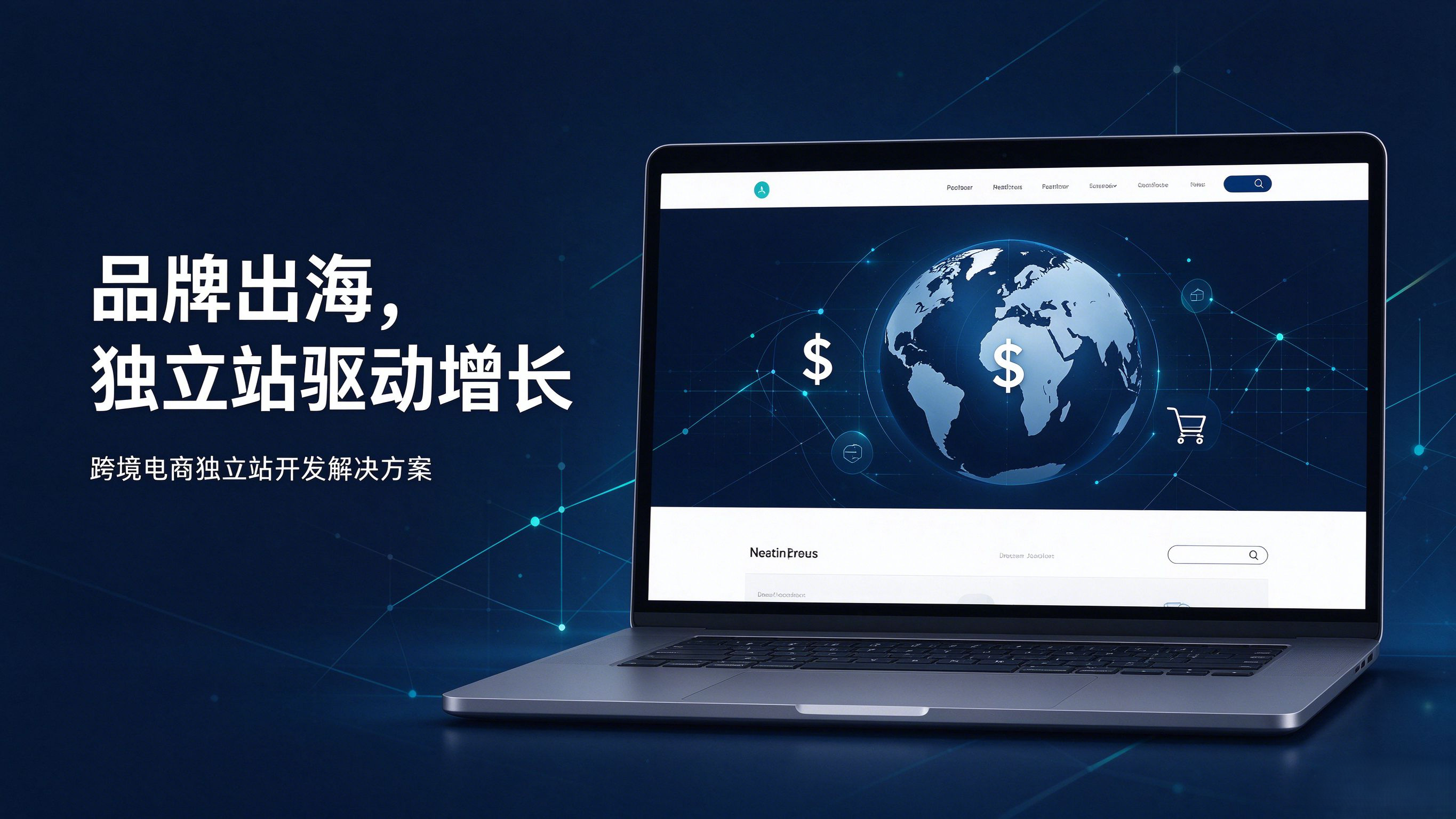
Brand Expansion Drives Growth by Independent Sites
**Abstract:** As global e-commerce competition enters deep waters, more and more Chinese brands realize that to expand their business overseas, they cannot rely solely on platform traffic, but must also have their own foothold. This article will share a custom development case from zero to one, completed for an overseas independent website for a home furnishing company going global, covering requirements insights, technical solutions, functional architecture, and launch results, hoping to provide a reference for companies planning to go global. **1. Why Independent Sites Have Become a Must-Have Amid the Wave of Going Global** Over the past decade, Chinese companies have mainly relied on cross-border e-commerce platforms for going global. The platform has large traffic and quick user experience, but it brings practical issues such as homogeneous competition, ever-changing rules, rising traffic costs, and difficulties in brand accumulation. As platform dividends fade, the risk of "putting all your eggs in one basket" becomes increasingly apparent. Meanwhile, overseas consumers' awareness of brands is upgrading. They no longer focus solely on "cheapness," but care more about brand story, shopping experience, and after-sales service. Against this backdrop, the Direct-to-Consumer (DTC) model has returned to center stage—companies building their own official websites, mastering data, retaining users, and setting prices independently has become a key move for more and more companies going global to build long-term competitiveness. The value of an independent site can be summarized in three points: First, traffic and data are autonomously controllable, so every placement and every visitor can be converted into reusable assets; Second, the brand image is fully presented, conveying a unified value proposition from page design to content expression; Third, the transaction cost structure is better, which can effectively reduce platform commissions and rule dependencies in the long run. **2. Customer Pain Points: Good Products, But Hard to Build a Good Brand** The client in this case is a home product supplier deeply rooted in overseas markets, possessing independent R&D production capabilities and a stable supply chain, with products enjoying a good reputation in Europe and America. However, its online sales have long relied on third-party platforms, facing three major challenges: First, **brand expression is limited**. Platform page templates are highly homogenized, failing to fully showcase product craftsmanship, brand stories, and differentiated selling points, making it difficult for clients to establish a clear brand mindset. Second, **data asset loss**. Under the platform model, customers cannot obtain complete user profiles, repurchase behavior, and marketing attribution data, operational decisions lack basis, and membership systems are out of the question. Third, **high traffic costs**. As platform advertising bidding becomes increasingly intense, customer acquisition costs continue to rise, profit margins are constantly squeezed, and clients urgently need a more efficient platform for traffic acquisition and conversion. After thorough research, the client decided to build their own overseas independent site and entrusted us with full-process services from planning, design, development to launch. **3. Customized Development Solutions: One-Time Development, Connecting Global Business** After the project launch, we formed a dedicated team composed of project managers, UI designers, front-end engineers, back-end engineers, and overseas operations consultants, focusing on four principles: "stability, compliance, scalability, and transformation." **1. Technical architecture: secure, stable, and scalable** Independent sites adopt a mainstream front-end and back-end separation architecture. The frontend uses a high-performance framework to ensure page loading speed, while the backend adopts a modular design to facilitate subsequent functional expansion. HTTPS encryption and multiple security protections are enabled site-wide to ensure transaction data security. To meet the access needs of different overseas regions, we have deployed CDN global acceleration nodes to ensure smooth access in major markets such as Europe, America, and Southeast Asia. **2. Multilingualism and Localization: Making Every Market "Speak Its Native Language"** Going global is not simply about "translating Chinese into English." We have established a multilingual content management system for independent sites, covering all touchpoints such as product information, shopping processes, payment settlement, and customer service descriptions. We localize and adapt to target market language habits, currencies, units of measurement, date formats, and more, giving overseas users a native shopping experience. **3. Global Payments and Compliance: Receiving Payments Without Borders** Payment is a key link in cross-border transactions. The independent site integrates with various mainstream payment methods such as PayPal, credit cards, and local payments, covering mainstream payment habits in Europe, America, and Southeast Asia. At the same time, we assist clients in configuring overseas data compliance requirements such as GDPR, including privacy policies and cookie authorizations, to ensure the site operates legally and compliantly. **4. Conversion-Driven Shopping Experience: Turning Traffic into Sales** To improve conversion rates, we meticulously refined the page design: clear navigation and search, high-quality product detail pages, a smooth ordering process, trustworthy endorsement elements, and differentiated marketing components targeting both new and existing users. Fully responsive design ensures a consistently high-quality experience whether on PC or mobile. **4. Implementation and Launch: A Complete Closed Loop from 0 to 1** During development, we maintain high-frequency communication with clients and advance in stages: requirement confirmation and prototyping, visual and interaction design, front-end development and back-end interface co-debugging, multilingual content filling, payment and logistics integration, compatibility and performance testing. Before going live, we conducted multiple rounds of real-world testing to ensure every link was stable and reliable. After launching the independent site, we continuously provide operational support, including SEO optimization, marketing campaign configuration, data analysis, and dashboard construction, helping clients quickly complete the positive cycle of "traffic generation — conversion — repurchase." **5. Project Outcomes and Outlook** After several months of operation, the client's independent site successfully achieved a breakthrough from zero to one: the site operated stably in the target market, with page loading speed and conversion experience receiving positive reviews from overseas users; Relying on on-site data analysis, customers gradually gain control over their user assets; The brand image is fully presented through customized pages, laying a solid foundation for subsequent localized marketing. More importantly, independent sites open up greater possibilities for customers: in the future, they can refine user operations based on internal data, build membership systems, and expand into more markets and categories. Independent sites are no longer just "websites for selling goods"—they are the digital foundation for brand globalization strategies. **Conclusion** Going global is a long-distance race, and the independent station is the most important "home arena" for enterprises in this race. Through a professional custom development, companies not only gain a high-quality trading platform but also accumulate their own brand equity and user data. If you are also planning to build an overseas independent site, feel free to contact us and let our professional team help you grow your global business even better.
Corporate News
发布时间:2026-09-22 00:00:00
3516
查看详情
>
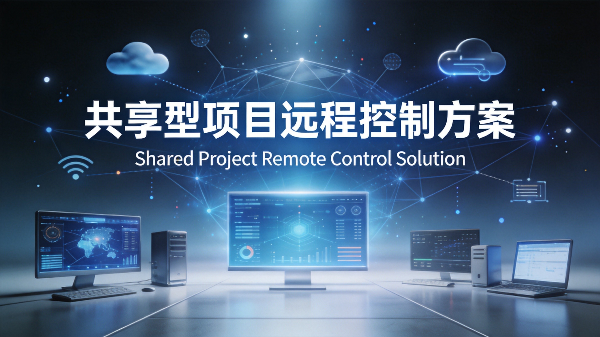
Shared Project Remote Control Solution and Quotation
Remote Control Solution for Shared Projects and Quotation —Control Panel Products and Platform Deployment Solution Our company, Shenzhen Siring Information Technology Co., Ltd. (hereinafter referred to as "Siring"), specializes in remote control solutions for shared-use projects. We offer control board products supporting multiple communication protocols—including Bluetooth (BLE), WiFi, and 4G—enabling both single-protocol and multi-protocol combination configurations to meet remote control requirements across diverse application scenarios. Below, we have compiled our control board products and platform deployment solutions for your company's reference and selection. I. Solution Positioning (Scenario Classification) Based on typical application scenarios for shared equipment, we have categorized customer requirements into the following three types, with different communication solutions recommended for each scenario: Scene Type Typical equipment Recommended Communication Solution Indoor fixed, mesh-covered Water purifiers / water vending machines, automatic vending machines, snack cabinets WiFi + BLE (BLE for mesh networking and near-field coverage) Outdoor / Unfixed Network Shared charging stations and shared amusement facilities Primarily using 4G Cat.1, with BLE used for local debugging. High reliability / requires dual channels Portable power banks, charging stations 4G primary connection + WiFi/BLE backup; offline local caching commands II. Tiered Quotation for Control Panels Depending on the functional requirements, we categorize our control boards into four tiers to meet the needs of projects of varying scales and budgets. The detailed quotations are as follows: Model Configuration Instructions Reference unit price (1–99 units) Reference unit price (500 units+) Application Scenarios Basic Model ESP32 + Single/Dual Relay, WiFi + BLE 48 yuan 35 yuan Compact equipment, simple control B Multi-channel version ESP32 + 4-channel/8-channel relays with current/water level/temperature sensor interfaces 128 yuan 88 yuan Medium-sized equipment, multi-channel control C 4G Model Cat.1 module + relay with BLE networking capability 168 yuan 128 yuan Outdoor equipment, Wi-Fi-free scenarios D Combination Set Triple-mode support for 4G, WiFi, and BLE; supports OTA updates and abnormal alert reporting 298 yuan 228 yuan Large-scale equipment, high reliability requirements Additional Options (Optional, billed separately): Customized housing/terminal connectors: +35 CNY per set (minimum order quantity: 1,000 sets) Add GPS positioning module: +45 CNY per set (Minimum order quantity: 30 sets) Audio announcement module: +38 CNY per set (Minimum order quantity: 30 sets) RS-485/CAN peripheral interface: +28 CNY per set (minimum order quantity: 50 sets) III. Platform Deployment Plan We offer two platform deployment modes, allowing customers to choose based on their specific requirements: (1) SaaS Model (Low upfront investment, rapid go-live) One-time setup/configuration fee: ¥5,000 (includes mini-program template, merchant backend, and billing rule configuration) Number of equipment units Annual service fee Description Up to 100 units 2,000 yuan per year Suitable for the pilot phase 100–500 units 6,000 yuan per year Suitable for scalable operations Over 500 units Negotiation Customized service solutions Optional commission model: No annual fee; a 2% commission is applied based on transaction volume (suitable for clients in their early stages who wish to avoid upfront cost commitments). (2) Independent Deployment (data autonomy, capability to build proprietary brands) Platform + Mini-Program Customization: Starting from CNY 50,000 for basic functional requirements; CNY 150,000 for solutions featuring multi-device compatibility, data analytics, and permission hierarchy management. Server and Maintenance: For small-scale projects, the monthly cost is CNY 800, and the annual maintenance fee is typically charged at 10% of the development cost. Key advantages: a localized closed-loop data ecosystem, seamless integration with customers' proprietary payment systems and ERP systems, and future scalability independent of platform constraints. IV. Recommended Portfolio Options Depending on your current stage of development, we recommend the following combination options for you: Development Stage Recommended Solution Description Pilot phase (≤50 units) B/C-type control board + SaaS model First, validate the billing and operations workflows to ensure low upfront costs and rapid deployment. Scalable (200 units or more) Model D Control Panel + Independent Deployment Lower long-term costs, with full control over data. Hybrid mode Independent deployment in core areas + SaaS adoption for scattered deployment points Utilize a unified backend system for centralized management, enabling flexible and balanced oversight. V. Bid Price Explanation 1. The quoted price for the control wall includes firmware flashing and factory testing; additional quotes will be provided for customized firmware development. 2. The fees for the IoT card are not included in the quotation for the control wall; the customer shall either renew the fees themselves or have our company manage the payments on their behalf (the annual management fee, if applicable, shall be negotiated separately). 3. If a mini-program requires the client's own legal entity to complete registration and possess payment qualifications, the client shall provide the relevant licenses and permits to facilitate integration. 4. Warranty Period: The control board is covered by a 12-month warranty, during which any non-human-caused damage shall be replaced free of charge. 5. Interface costs for secondary development or the addition of new equipment types shall be assessed and quoted separately based on actual requirements. 6. All of the above quotations are tax-exclusive prices (VAT-specific invoices). 7. Payment Terms: 70% of the total payment shall be made as an advance payment upon execution of this contract, and the remaining 30% shall be paid upon delivery and acceptance.
Project Introduction
发布时间:2026-09-18 00:00:00
800
查看详情
>

From Demand to AI Evolution: A Practical Guide to Integrating Software and Hardware Product Development
In the second half of the mobile internet era, companies expect far more from "digital products" than a simple information page. They want systems that genuinely solve business problems — apps, mini programs, and even integrated hardware-software smart products. What steps does it take to develop a product? Why do some products end up unusable? And in the AI era, is it too late to get started? This article answers these questions in one place: from the full development workflow and pitfalls to avoid, to how to transform and grow in the age of AI — giving you a complete and clear picture of product development. I. The Full Development Workflow: Seven Steps from Idea to Launch 1. Requirements Analysis and Product Definition Every development effort begins with requirements. The core of this stage is turning an "idea" into an "executable plan": Who are the target users? What problem are we solving? What are the core features? Which features belong in the first phase? We recommend producing a clear requirements document and a feature list with priorities (P0/P1/P2) to avoid the chaos of "trying to do everything." The time invested at this stage determines 80% of the rework that follows. The clearer the requirements, the less rework later. 2. UI/UX Design and Interactive Prototypes Product experience is what keeps users coming back. Designers produce page flow diagrams, high-fidelity prototypes, and visual design specs that define information architecture, user journeys, and visual style. Good design isn't "pretty" — it lets users "know how to use it without thinking." Once the prototype is approved, communication costs between design and development drop significantly, and flow issues surface early. 3. Frontend Development: The Differences Between Apps and Mini Programs For native apps, the technology path depends on the platform: iOS native, Android native, or cross-platform frameworks like Flutter and React Native. Native development delivers the best performance and most refined experience; cross-platform development is more efficient, reusing one codebase across two platforms, though it involves trade-offs in complex interactions and hardware capability access. Mini programs, meanwhile, rely on ecosystems like WeChat. They have a low development threshold, low distribution cost, and are "use-and-go" — ideal for lightweight businesses and private-domain traffic operations. However, they are subject to platform rules, and the platform defines the feature boundaries. The right choice depends on the product form, team capability, and budget. 4. Backend and Cloud Architecture Behind the interface users see lies the "brain" that supports the business: servers, databases, APIs, push notifications, file storage, and more. The development team must design a sound system architecture that ensures stability under high concurrency and data security, while leaving room for elastic scaling — whether the system can scale smoothly as the business grows directly determines the product's ceiling. 5. Hardware Development and Hardware-Software Integration (for Integrated Projects) If the product includes smart hardware (such as smart strollers, unmanned devices, or smart terminals), deep coordination between hardware and software is essential: embedded firmware development, communication protocol design, data collection, and cloud synchronization. Hardware-software integration is the stage that most tests a team's engineering skill — network fluctuations, device variance, and power management all require repeated testing and refinement. A failure at any point directly affects the user experience. 6. Testing and Launch Once feature development is complete, testing begins: functional testing, compatibility testing, performance testing, and security testing — none can be skipped. After passing, the product is submitted for review to the app store or mini program platform. Review is the "first hurdle" many teams hit — incomplete materials, policy violations, or missing privacy disclosures can all lead to rejection. Understanding platform guidelines in advance saves a great deal of rework. 7. Operations, Maintenance, and Iteration After Launch Launch is not the finish line; it is the starting point. Products need continuous monitoring, user feedback collection, and data instrumentation, refined through version iterations. A mature product often goes through dozens of versions before delivering a stable, smooth user experience. The ability to keep iterating is the product's true moat. II. Pitfalls to Avoid: Sidestepping These Traps Saves Months of Detours 1. Starting Development with Unclear Requirements Is the Most Expensive Mistake Without a clear requirements document, constantly "adding requirements" mid-development is the leading cause of delays and budget overruns. We recommend starting with an MVP (Minimum Viable Product), validating core value first, then expanding gradually — spending limited resources on the most critical features. 2. Technology Selection Should "Match," Not "Follow Trends" New technology is not necessarily good technology. Cross-platform frameworks save cost, but they may struggle with complex animations or deep hardware interactions. Building your own servers offers flexibility, but cloud services (such as Tencent Cloud and Alibaba Cloud) are more cost-effective and easier to maintain. The only selection criterion is whether the technology fits your business scenario and team capability. 3. Hardware-Software Coordination: Don't Underestimate the Complexity of "Connection" In integrated products, communication stability between hardware and app, the timeliness of data synchronization, and reconnection mechanisms after abnormal disconnects are the lifeline of user experience. Define communication protocols and exception-handling logic early in the project — don't wait until the integration phase to patch things up, when rework costs have already multiplied. 4. Start Security and Compliance on Day One With regulations such as the Personal Information Protection Law and the Data Security Law now in force, data compliance is no longer optional. Privacy policies, user consent, data encryption, filing and review materials — all of these must be designed into the requirements stage. Fixing them just before launch risks delays at best and app removal at worst. 5. Performance and Experience Determine Retention Slow startup, laggy interactions, and endless loading on weak networks are the top three reasons users uninstall products. Performance metrics (such as first-screen time, response speed, and crash rate) must be hard acceptance criteria during development, not "good enough" afterthoughts. 6. Documentation and Code Standards Are the Foundation of Long-Term Thinking Team turnover is the norm. Solid documentation, disciplined code, and a clear project structure let newcomers take over quickly and prevent the product from becoming a "black box nobody dares to touch." This investment yields no visible return in the short term, but its long-term value is enormous. 7. Budget and Scheduling: Leave Room for the Unexpected In software development, "unplanned things" are the norm: API changes, design adjustments, review rejections, ad-hoc requests. We recommend reserving 15–20% buffer in both schedule and budget, and setting review gates at key milestones (prototype sign-off, hardware-software integration, pre-launch) so risks surface early rather than erupting at the last moment. Transparent, honest scheduling communication is also the foundation of long-term trust between client and vendor. III. The AI Era: From "Building a Product" to "Building a System That Evolves" If the past decade of software development was about "efficiency," the next decade will be about "intelligence." AI is reshaping the software industry on three levels — and opening entirely new possibilities for integrated hardware-software products. 1. AI Transforms the Development Paradigm: Faster Code, Lower Cost AI-assisted programming tools (code completion, auto-generation, intelligent testing) have dramatically improved development efficiency, and low-code/no-code platforms let non-technical people build basic applications. For SMEs, the digitalization that once seemed "unthinkable" is now within reach. But note: AI accelerates speed, not judgment — generated code still needs human review, and security and architecture decisions must be made by people. 2. AI Capabilities Built into Products: From "Usable" to "Understanding You" Intelligent customer service, voice interaction, image recognition, personalized recommendations — AI is becoming the standard capability of products. The spread of large language models and generative AI has further lowered the barrier to intelligent features: devices can converse with users in natural language, systems can automatically generate content and reports, and customer service can respond to complex inquiries 24/7. In hardware-software products, for example: cameras with AI vision can detect anomalies and proactively alert; sensor data with machine learning can predict equipment failures and enable preventive maintenance; user behavior data with recommendation algorithms can deliver tailored services to each individual. These capabilities evolve products from "passive response" to "proactive service." 3. Data-Driven Iteration: Products Get Smarter with Use AI's value is built on data. Through instrumentation and data analysis, companies can understand real user behavior; through continuous model training and feedback loops, products keep improving the experience. In the future, the differentiator is not who has more features, but who has deeper data assets and faster iteration loops — and this is precisely the natural advantage of integrated hardware-software products: hardware collects data, software analyzes it, AI drives decisions, forming a complete value flywheel. 4. The Long-Term Path for Enterprises: Staying Competitive in the AI Era Facing the AI wave, enterprises should focus on three things: Treat AI as a "product capability," not a "marketing gimmick" — implement it from real business scenarios, not AI for AI's sake; Build a data foundation — without data, AI is water without a source; data collection, governance, and security systems should be established early; Maintain organizational agility — let technology and business teams evolve together, build fast experiment-and-validate mechanisms, and stay ahead in the technology race. IV. Conclusion: Technology Changes, but the Essence of Creating Value Does Not From requirements analysis to AI transformation, software development methodologies evolve, but the underlying logic remains the same: great products always come from deep understanding of user needs, solid engineering capability, and a keen grasp of technology trends. In the AI era, tools are upgrading and barriers are falling, but the thinking behind "what to build, why to build it, and who to build it for" will always be the rarest capability of all. Whether you are planning your first product or considering the intelligent upgrade of an existing one, we welcome you to talk with us — let us use technology to turn your ideas into products that truly create value. Published by the [Siring] technology team, specializing in app, mini program, and integrated hardware-software development services.
Corporate News
发布时间:2026-08-18 00:00:00
26843
查看详情
>

# Resonance of AI, Cloud and Data: Six Definitive Directions for Corporate Technology Strategy in 2026
As technological evolution enters an era of integrated explosion, dividends from isolated breakthroughs are narrowing, while compound interest effects from cross-technology synergy are emerging. For corporate decision-makers, the core agenda for 2025–2026 is no longer “whether to embrace new technologies”, but “how to generate multiplicative effects through technology portfolios”. I. Large AI Models Enter Deep Waters: From General Intelligence to Enterprise Productivity In 2025, the large model industry completed a pivotal shift from a “parameter race” to an “implementation race”. Although the growth curve of model capabilities has flattened, application penetration is accelerating. This means corporate competitiveness hinges no longer on access to the most cutting-edge models, but on the ability to embed model capabilities into real business workflows. Agents represent the most promising frontier in this phase. Unlike single-turn question-and-answer interactions, Agents can decompose objectives, call external tools, conduct multi-step reasoning and execute tasks autonomously. They take over complex workflows previously requiring manual orchestration. From intelligent customer service and code generation, bulk marketing content production to supply chain scheduling optimization, Agents are elevating AI from auxiliary tools to digital employees. Three key observations for enterprises:First, scenario granularity determines ROI. Standardized processes with sufficient accumulated data deliver the most dramatic efficiency gains from Agents.Second, private and lightweight deployment has become a rigid requirement. Enterprises prefer running vertical models in controlled environments to balance performance and data security.Third, human-machine collaboration, rather than full machine replacement, is the optimal short-term solution. AI handles repetitive, rule-based work, while humans focus on judgment and creative decision-making. Trend Outlook: In 2026, a wave of AI-Native applications will emerge in volume. Instead of retrofitting AI features onto existing products, these solutions will be redesigned from the ground up with AI as the core interaction logic. II. Cloud Computing & Cloud-Native: From Cloud Migration to Cloud Optimization Over the past decade, enterprises solved the problem of resource migration to the cloud. In the next two years, the industry will focus on architectural cloud utilization. Beyond foundational building blocks such as containers and microservices, cloud-native technologies are expanding comprehensively into Serverless, edge computing, and multi/hybrid cloud governance. Serverless is redefining the boundaries of operations and maintenance. Developers are freed from managing server scaling and elastic policies, and only pay for actual code execution. This architecture fits perfectly for internet businesses with volatile traffic and high iteration frequency, abstracting infrastructure complexity so teams can fully concentrate on core business development. The rise of edge computing is highly coupled with local AI inference demands. Where low-latency real-time reasoning is mandatory — including industrial quality inspection, autonomous driving and smart terminals — pushing computing power down to data endpoints proves more cost-effective and efficient than cloud backhaul. By 2026, the “cloud-edge-end” collaborative architecture will become the standard configuration for IoT and intelligent connected scenarios. Meanwhile, hybrid cloud has evolved from a transitional workaround into a long-term strategic framework. Driven by cost control, regulatory compliance and data sovereignty rules, most enterprises adopt a hybrid model: core sensitive data is stored on-premises, and elastic variable workloads run on public clouds. Unified observability tools and multi-cloud governance platforms have become new competitive battlegrounds for cloud vendors. III. Data Security & Compliance Governance: From Cost Center to Value Moat Since data was officially recognized as a factor of production, data governance has undergone a fundamental strategic upgrade. It is no longer a back-office compliance task, but a prerequisite enabling secure data circulation, trading and monetization. Privacy-preserving computing and trusted data spaces unlock the deadlock between data sharing and data protection. Techniques including federated learning and secure multi-party computation allow joint modeling and analytics across organizations without raw data leaving local domains. This opens compliant pathways for cross-industry and cross-enterprise data collaboration, with large-scale deployments already underway in financial risk control, medical research and smart city governance. On the security and compliance front, systematic defense has replaced point-solution protection as the industry consensus. Zero Trust architecture has moved from theoretical concepts to practical engineering, covering full-lifecycle dynamic authentication across identities, devices, applications and datasets. New risks introduced by AI itself — such as model hallucinations, data poisoning and prompt injection — have given birth to the brand-new discipline of AI security governance. Enterprises that embed “shift-left security + continuous validation” mechanisms by 2026 will gain an upper hand in regulatory compliance and customer trust. Core Takeaway: Whoever enables data to be used boldly, efficiently and securely will own the core asset of the industrial internet era. IV. Deepened Industrial Internet: Digital Transformation Reaches Advanced Stages If digital transformation in previous years centered on online migration — digitizing paper-based workflows — the keywords for 2025–2026 are intelligence and end-to-end process integration. Traditional sectors including manufacturing, energy, agriculture and healthcare are shifting from fragmented point applications to holistic end-to-end overhauls. Industrial internet platforms keep expanding connected device fleets, and massive operational data feeds back into model training, forming a closed loop: Data → Modeling → Optimization → Reproduction. Use cases such as digital twins, predictive maintenance and flexible production have proven measurable ROI and are scaling beyond pilot projects. Crucially, industrial internet transformation can no longer be led solely by the IT department. Trinity reform aligning business, technology and organizational structure determines success or failure. Technology addresses technical feasibility, while organizational and process restructuring decides practical adoption and outcomes. V. Tipping Point of Technology Convergence: Integrated Resonance of AI × Cloud × Data AI, cloud computing and data once operated as three relatively independent technological tracks. Today they are deeply integrated into a mutually reinforcing technology triangle: Cloud provides elastic computing power and global distribution infrastructure for large-scale AI deployment, without which mass rollout of foundation models would be impossible. AI empowers data with actionable insights and automated decision-making, turning dormant data assets into executable business strategies. High-quality data fuels continuous model training and iterative optimization, forming a feedback loop for sustained AI performance improvement. This convergence delivers far more than productivity gains; it reconstructs underlying business models. Emerging paradigms including MaaS (Model-as-a-Service), integrated Data+AI platforms and cloud-native AI development environments drastically lower the technical barrier for enterprises to adopt cutting-edge technologies. For business leaders, the imperative is to break the siloed mindset of standalone tech procurement, manage investment through the lens of capability middle platforms, and avoid redundant spending and data fragmentation caused by stovepipe architecture. VI. Strategic Recommendations for Enterprise Decision-Makers Faced with overlapping trends and accelerated technological iteration, leaders must strike a balance between change and enduring fundamentals: Anchor investments to business value, not technological hype. Every tech initiative must clearly answer which core business pain point it resolves. Avoid blind AI or cloud deployment for vanity purposes. Prioritize building a robust data foundation. The ceiling of AI performance is bounded by data quality. Before rolling out large model applications, solidify frameworks for data collection, governance and labeling — the bedrock of all intelligent transformation. Adopt an agile test-and-scale mechanism with incremental iterations. Given the volatility of the technology maturity curve, follow a “pilot → validation → full-scale rollout” approach via minimum viable products (MVPs) to limit sunk costs and mitigate risks. Invest concurrently in talent and organizational capacity. The biggest bottleneck of technology implementation rarely lies in tools, but in human resources. Cultivate cross-functional talents with both business acumen and technical literacy, and restructure teams to support agile collaboration for long-term sustainable transformation. Embed security and compliance into underlying architecture. Build compliance and risk controls into the initial design phase rather than retrofitting safeguards afterward. This mitigates operational risks and builds long-term brand credibility and stakeholder trust. Conclusion The global technology industry stands at the tipping point of cross-domain technological fusion. Deep AI commercialization, full maturation of cloud-native architecture, value monetization of data factors, and in-depth industrial internet advancement do not evolve in isolation — they intersect and amplify one another. The greatest opportunities belong to enterprises that abandon fragmented single-technology thinking and systematically build closed loops spanning technology, data and business. In an era where certainty is scarcer than uncertainty, rather than chasing fleeting market fads, focus on laying irreversible core foundations: strengthen the data backbone, build agile organizational systems, lock down security compliance guardrails, and laser-focus on tangible business value. Technological waves will keep surging forward, but only enterprises that translate technological advantages into sustainable operational competitiveness can endure across economic and industry cycles.
Corporate News
发布时间:2026-08-13 00:00:00
4135
查看详情
>

Current Enterprise Informatization Development Directions
Shenzhen Siring Information Technology Co., Ltd. (abbreviated as Siring), founded in 1996, is a high-tech enterprise integrating comprehensive e‑commerce, educational live‑streaming, blockchain application development, IoT application development, high‑end customized APP development, and platform operation & promotion. Headquartered in Futian District, Shenzhen, the company has adhered for over two decades to the philosophy of “putting users first,” striving for a 100% project completion rate and delivering the highest‑quality personalized full‑service solutions. Its core team members possess more than ten years of software R&D experience and have earned a strong reputation in the industry through excellent execution capability. Siring is also a standing member of the Shenzhen IoT Intelligent Technology Application Association, a standing member of the Big Data Association, and a designated ICT development partner of Guangdong Mobile. At present, enterprise informatization is at a critical turning point—from “informatization” to “digital intelligence.” According to data from the Ministry of Industry and Information Technology (MIIT), China’s software business revenue reached RMB 15.48 trillion in 2025, a year‑on‑year increase of 13.2%. The software industry has completed three iterative waves—informatization, networking, and cloudification—and has entered a pivotal phase of intelligent transformation. Against this backdrop, the development directions for enterprise informatization are undergoing profound changes. The following areas deserve particular attention. 1. Cloud‑Native Architecture Becomes the Mainstream Choice Leveraging elastic scalability and pay‑as‑you‑go models, cloud‑native architecture has become the mainstream choice for enterprise management information systems in 2026. Whether for the lightweight needs of SMEs or the complex scenarios of large enterprises, cloud‑native enables flexible adaptation through modular configuration and microservices. For enterprises, migrating existing systems to a cloud‑native approach, or adopting it for new system development, has become a vital path to reducing operational costs and enhancing system resilience. 2. Deep Integration of AI into Enterprise Scenarios In its 2026 Guidelines for Cultivating “Small, Fast, Lightweight, and Precise” Digital Products and Services, the MIIT explicitly identified deepening AI applications as a core direction for SME digital transformation. AI technology is moving from “proof‑of‑concept” to “large‑scale deployment.” Enterprises are no longer satisfied with superficial “+AI” integration; instead, they are advancing toward deep restructuring. From intelligent customer service and quality inspection to demand forecasting, AI capabilities are being encapsulated into specific business contexts, allowing enterprises to directly use them without understanding the underlying algorithms. For enterprise informatization development, embedding AI capabilities into existing business processes and building AI‑driven applications are among the most valuable investment directions today. 3. Data‑Driven Capability as a Core Competency In 2026, data strategies are shifting from “compliance reporting” to “intelligent driving.” Enterprises no longer focus solely on the book value of data, but rather on its deep application in AI model training, real‑time decision‑making, and personalized services. Informatization systems must establish a full‑chain collaborative mechanism covering data collection, cleansing, modeling, and scenario‑based deployment. Data‑platform construction, improvement of data governance systems, and development of intelligent decision‑making systems based on data have become foundational projects for enterprise informatization. 4. Accelerated Replacement with Indigenous Innovation (Xinchuang) Ecosystem The Xinchuang (indigenous innovation) industry reached a critical inflection point in 2026. Domestic operating systems have completed compatibility adaptation for mainstream office software and enterprise applications. In leading industries such as automotive manufacturing, some enterprises have already fully replaced their ERP and data platforms with domestic solutions, achieving a 98% localization rate for core business systems. For enterprise informatization development, accelerating migration to localized technology stacks and ensuring stable system operation within the Xinchuang environment have become unavoidable strategic tasks. 5. “Small, Fast, Lightweight, and Precise” as a New Development Paradigm The MIIT’s proposed development orientation—miniaturized, rapid, lightweight, and precise—is reshaping the form of enterprise informatization products. Digital products should avoid monolithic, all‑in‑one feature stacks and instead prioritize meeting the transformation needs of key business links. The widespread adoption of low‑code and no‑code development approaches also allows business users to generate application templates without complex coding, significantly reducing customization costs and iteration cycles. In response to these trends, Siring will continue to leverage its technical expertise in e‑commerce platforms, APP development, IoT applications, and other areas. By keeping pace with cloud‑native, AI, data intelligence, and other technological waves, we aim to deliver more efficient and smarter informatization solutions for our enterprise clients. Upholding the core philosophy of “putting users first” and drawing on more than two decades of hands‑on industry experience, Siring is committed to helping enterprises seize opportunities and move steadily forward in the wave of digital intelligence.
Corporate News
发布时间:2026-08-06 00:00:00
3256
查看详情
>
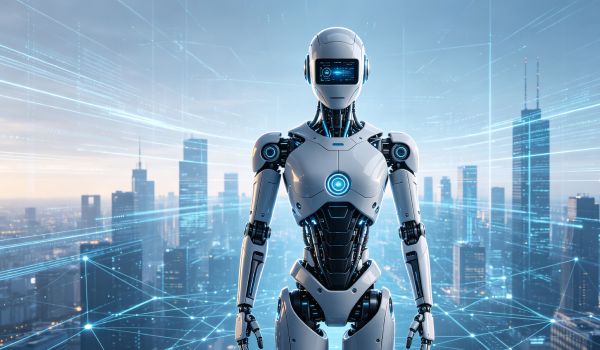
A comprehensive breakthrough in embodied intelligence technology has ushered in a new cycle of large-scale landing for humanoid robots
As a core future industry strategically prioritized by the nation, embodied AI and humanoid robots are reaching a dual inflection point of technological iteration and commercial implementation. Different from the passive, software-only interactive mode of traditional AI, embodied AI relies on physical robot carriers to realize integrated autonomous operation of perception, decision-making, execution and learning, breaking the core technical barrier for AI to shift from recognition and listening to practical execution. With the maturity of edge-side large model adaptation, bionic structure R&D and full-scenario sensing integration, humanoid robots have moved beyond laboratory conceptual verification and been gradually applied in industrial manufacturing, public services, special operations and home care. The industry has entered a new transformation cycle from technical demonstration to large-scale commercialization with promising long-term prospects. 1. Core Definition and Technical Connotation: Restructuring AI Implementation Embodied AI represents a new evolutionary form of artificial intelligence. Its core value lies in enabling AI algorithms to interact dynamically, make autonomous decisions and evolve continuously in real physical environments via physical carriers, solving the industry pain points of traditional AI that cannot adapt to unstructured complex scenarios and lack practical operational capabilities. As the most complete and core carrier of embodied AI, humanoid robots replicate human motion, perception, operation and interaction capabilities through bionic structural design, full-dimensional environmental sensing systems and edge intelligent decision algorithms, becoming a key strategic direction of future technology industries. Compared with traditional industrial robots and consumer desktop robots, embodied AI humanoid robots have three core advantages. First, scenario generalization capability: they can adapt to variable unstructured environments through autonomous learning without repeated programming for single scenarios, flexibly completing complex tasks. Second, multi-modal autonomous decision-making: integrating visual, force, auditory and posture sensing data to realize real-time environmental judgment, path planning and motion fine-tuning. Third, continuous evolution capability: accumulating scenario data to iterate models and upgrade skills, achieving progressive intelligence and breaking the functional solidification limitations of traditional robots. 2. Software and Hardware R&D System: Multi-Dimensional Technological Breakthroughs The industrial implementation of humanoid robots relies on a three-in-one R&D system of bionic hardware integration, core component development and embodied algorithm iteration, with deep software-hardware coupling to support anthropomorphic operation and autonomous intelligent movement. In terms of hardware and structural design, the industry focuses on lightweight, high flexibility, high precision and high safety. Adopting bionic human torso, limb and joint layouts, the structure breaks the rigidity of traditional machinery. Combined with lightweight alloys and high-strength composite materials, it reduces overall weight while ensuring structural strength, adapting to multi-scenario mobile operations. Domestic core components including high-precision bionic servo joints, lightweight reducers and high-sensitivity force sensors have achieved continuous breakthroughs, solving key problems such as motion stuttering, insufficient precision, limited load capacity and high noise. Equipped with panoramic cameras, multi-dimensional force sensors, inertial measurement units and LiDAR, the robot builds a full-coverage environmental sensing system to support autonomous operation. The high-capacity long-life battery matches an intelligent energy management system to balance high-computing power consumption and long-duration operation. In terms of software and embodied algorithms, technological iteration forms core product competitiveness. Current R&D focuses on four major fields: lightweight edge embodied large models, multi-modal fusion sensing algorithms, motion control algorithms, and autonomous planning reinforcement learning algorithms. Edge embodied large models eliminate cloud dependence, enabling local environmental understanding, task decomposition and logical decision-making to improve response speed and operational stability in complex scenarios. Multi-modal fusion algorithms accurately identify unknown scenarios, dynamic obstacles and flexible objects through integrated sensing data. Motion control algorithms optimize full-body collaborative movement to realize stable walking, stair climbing, flexible obstacle avoidance and precise grasping. Reinforcement learning algorithms enable robots to accumulate operational data, optimize workflows independently and expand new skills for continuous intelligent upgrading. 3. Industrial Implementation Status: From Pilot Verification to Mass Production After years of technological breakthroughs, China’s embodied AI and humanoid robot industry has completed technological accumulation and scenario piloting, entering a critical stage of mass production and landing. According to authoritative industry data, domestic humanoid robot output is expected to exceed 100,000 units in 2026, marking the industry’s official shift from customized R&D and small-batch trial production to large-scale industrial mass production and accelerating commercialization. Industrially, flexible manufacturing is the core breakthrough scenario. Humanoid robots have been deployed in new energy vehicles, 3C electronics and high-end manufacturing flexible production lines, replacing manual labor in repetitive, high-intensity and high-risk tasks such as component handling, precision assembly, equipment inspection and material sorting. Compared with traditional fixed-station industrial robots, humanoid robots adapt to flexible production line iteration, switch tasks quickly and reduce enterprise renovation and labor costs. Meanwhile, pilot applications in special operations, public services and commercial services continue to advance, covering power inspection, emergency rescue, government services and shopping mall guidance with improving scenario adaptability. A tripartite collaborative pattern of policy, enterprise and technology has taken shape. The state has continuously incorporated embodied AI and humanoid robots into key future industry layouts, issuing standardized construction, industrial support and scenario opening policies to optimize the industrial system. Leading domestic technology and manufacturing enterprises have increased R&D investment to break through core components, underlying algorithms and mass production technologies, accelerating domestic substitution. Industrial parks nationwide open real application scenarios to support product iteration, data accumulation and commercial verification. 4. Current Industrial Bottlenecks Restricting Large-Scale Development Despite rapid development, the industry is still in the early growth stage with prominent bottlenecks in core technology, mass production cost, scenario adaptation and ecological system. Technologically, high-end bionic joints and high-precision reducers require further iteration, and robots lag behind humans in complex environment adaptability and fine operation accuracy with insufficient stability in extreme scenarios. In terms of cost, high R&D and component costs lead to high overall machine prices, restricting commercial promotion in small and medium-sized scenarios. Scenario-specific technical solutions for home, medical and complex service scenarios are immature with limited universal operation capabilities. The industrial standard system is still being improved with ununified data collaboration, technical adaptation and safety specifications, limiting collaborative development efficiency. 5. Future Development Trends: Decade-Long Golden Growth Period Industry analysts believe that the next three to ten years will be the golden development period for embodied AI and humanoid robots, realizing all-round upgrading in technological generalization, cost popularization, full-scenario coverage and ecological standardization, and becoming a core growth pole of AI and high-end manufacturing industries. Technologically, in-depth popularization of edge embodied large models will equip humanoid robots with stronger autonomous thinking, logical reasoning and independent task creation capabilities, realizing the leap from passive command execution to active autonomous operation. The iteration of bionic motion, flexible operation and multi-modal sensing will make robot accuracy, stability and flexibility infinitely close to human levels. Industrially, continuous cost reduction and large-scale mass production will be realized. With the completion of domestic core component substitution, mature mass production processes and expanding industrial scale, humanoid robot costs will drop significantly with improved cost performance, achieving large-scale commercial popularity and moving out of the niche high-end equipment positioning. Unified industry standards for R&D, production, testing and safety will drive standardized and high-quality industrial development. In terms of scenarios, application boundaries will continue to expand for full-field penetration. In the short term, industrial flexible manufacturing, special operations and public services will remain core landing scenarios to replace repetitive manual work. In the medium and long term, robots will gradually penetrate home companionship, elderly care, medical assistance, educational services and whole-house intelligent operation, becoming new intelligent infrastructure for families and society to empower intelligent upgrading of production and life. Ecologically, a comprehensive industrial collaboration system will accelerate cross-border integration. Humanoid robots will be deeply integrated into intelligent manufacturing and whole-house smart ecosystems to realize data interconnection and scenario linkage with various smart devices. The improved industry-university-research collaboration system will form a closed loop of technological R&D, talent training, scenario implementation and commercial operation, promoting high-quality development of the embodied AI industry. In conclusion, embodied AI and humanoid robots represent one of the ultimate forms of the AI industry and the core track of future technological competition. With continuous breakthroughs in technical bottlenecks, mature commercial systems and expanding application scenarios, humanoid robots will completely reshape production and service modes, opening a new industrial era of general intelligent robots with immeasurable market potential and industrial value.
Corporate News
发布时间:2026-07-18 00:00:00
6155
查看详情
>

Desktop robot software and hardware research and development full-dimensional iteration, intelligent companion track ushered in the upgrade trend
With the rapid iteration of artificial intelligence, micro-sensing, and precision machinery technology, lightweight, emotional, and intelligent desktop companion robots have rapidly emerged as a new trend in consumer smart hardware. Unlike industrial robots that focus on tool attributes and household sweeping robots with single functions, desktop robots focus on close-range human-computer interaction, intelligent companionship, and scenario-assisted services, widely applied in office assistance, home companionship, children’s education, and smart home central control. At present, the industry has formed a mature three-in-one R&D system including appearance and structural design, hardware integrated development, and software algorithm iteration. Product forms continue to improve and technologies keep upgrading, bringing broad prospects for future market development. 1. Appearance and Structural Design: Integration of Aesthetics and Engineering The core goals of desktop robot design are weakening mechanical coldness, enhancing affinity, and adapting to desktop scenarios, realizing in-depth integration of industrial engineering and consumer aesthetics. In terms of modeling, the industry generally adopts rounded streamline bodies, anthropomorphic head structures, and minimalist visual language to eliminate the cold mechanical texture of traditional smart devices. Equipped with movable expression screens, rotatable heads, and fine limb adjustments, the robot gains anthropomorphic vitality and greatly improves the warmth of human-computer interaction. The color system adapts to the mainstream minimalist style of homes and offices, dominated by low-saturation colors, with exclusive color matching for segmented scenarios such as children’s education, e-sports, and office work. High-grade consumer materials including matte ABS, skin-friendly silicone, and frosted metal are adopted to achieve fingerprint resistance, collision resistance, wear resistance and comfortable touch, improving long-term product texture. Structural engineering focuses on miniaturization, integration and high stability. Through 3D modeling and finite element simulation, the internal space layout is optimized to integrate multiple hardware components in a tiny desktop volume while reserving functional expansion space. Micro multi-degree-of-freedom servo motors form the core motion system, supporting head pitching, rotation and fine movement with silent, smooth and non-stuttering operation. Gravity center sinking and symmetric counterweight design effectively solve the problems of tilting and shaking, greatly improving desktop operation stability. 2. Hardware System Development: High-Integration Lightweight Smart Hardware Foundation The desktop robot hardware system adopts a low-power, high-integration and high-sensing embedded architecture, consisting of four core units: main control computing unit, environment sensing unit, motion execution unit and intelligent power supply unit, which jointly support refined intelligent interaction experiences. As the core brain of the device, the main control unit generally adopts high-performance embedded AI chips to balance computing power and power consumption, capable of running lightweight AI models such as speech recognition, visual analysis and semantic understanding locally. Mid-to-high-end models are equipped with exclusive edge AI computing chips to support offline intelligent operation, featuring faster response and higher privacy security. Standard expansion interfaces are reserved for long-term functional iteration and peripheral upgrading. The sensing system adopts a multi-sensor fusion solution, integrating wide-angle cameras, array noise-canceling microphones, six-axis attitude sensors, infrared ranging and light sensors. The vision module realizes face recognition, gesture control, user following and scenario recognition; the audio module supports 360° directional sound pickup, intelligent noise reduction, long-distance wake-up and multi-turn dialogue; the attitude sensor corrects motion deviation in real time to ensure accurate and stable movement, building an all-round environmental sensing system. The motion execution unit is equipped with high-precision micro servo motors, featuring low noise, fast response and high stability to support anthropomorphic micro-interactions. Mobile desktop robots adopt a micro differential drive structure for flexible steering and stable movement in narrow desktop spaces. The power supply system uses lightweight lithium polymer batteries matched with an intelligent power management system to dynamically adjust power consumption, achieving long battery life, low energy loss, intelligent sleep and low battery reminder. 3. Software Algorithm Development: Multi-Modal Anthropomorphic Interaction System Software algorithms are the core of intelligent and emotional experiences for desktop robots. Industry software R&D focuses on multi-modal interaction, autonomous learning, scenario adaptive intelligence and cloud security collaboration, completely changing the passive command-based interaction of traditional smart devices and realizing real two-way anthropomorphic companionship. The multi-modal interaction system covers speech, vision and touch interaction. Based on noise reduction algorithms and semantic large models, speech interaction supports natural multi-turn dialogue, intelligent Q&A and life service commands; vision interaction identifies user expressions, emotions and gestures to actively adapt to companionship, comfort and concentration modes; touch interaction supports multi-level induction feedback with simple operation and immersive interaction. Autonomous learning algorithms enable personalized customized services for different users. The robot can memorize user habits, preferences and commonly used functions, continuously optimize interaction logic, and adapt to individual usage styles. Built-in scenario recognition models can automatically identify office, home, study and leisure scenarios to intelligently switch operation modes and adapt to environmental atmospheres. The cloud collaboration system supports remote control, data synchronization and online OTA upgrades, enabling continuous functional updates and experience optimization without hardware replacement. A complete data encryption and privacy protection mechanism is deployed to ensure secure and controllable user interaction data. 4. Future Development Trends of the Industry Future desktop companion robots will iterate rapidly in five major directions: edge AI intelligence, emotional anthropomorphic interaction, vertical scenario specialization, extreme hardware lightweighting, and whole-house intelligent ecology. Technologically, lightweight edge large models will be fully popularized, enabling robots with autonomous thinking, active service and scenario prediction capabilities, upgrading from passive response to active companionship. The continuous iteration of multi-modal fusion sensing will make interaction accuracy, emotion recognition and environmental understanding close to real human interaction. In terms of products, flexible materials, invisible mechanical structures and extreme lightweight design will become mainstream, greatly improving product safety and aesthetic texture. Modular design will support appearance replacement and functional expansion to realize personalized customization experiences.
Corporate News
发布时间:2026-07-16 00:00:00
2286
查看详情
>
 客户案例
客户案例













 Call
Call