






A comprehensive breakthrough in embodied intelligence technology has ushered in a new cycle of large-scale landing for humanoid robots
2026-07-18 14:25:21
As a core future industry strategically prioritized by the nation, embodied AI and humanoid robots are reaching a dual inflection point of technological iteration and commercial implementation. Different from the passive, software-only interactive mode of traditional AI, embodied AI relies on physical robot carriers to realize integrated autonomous operation of perception, decision-making, execution and learning, breaking the core technical barrier for AI to shift from recognition and listening to practical execution. With the maturity of edge-side large model adaptation, bionic structure R&D and full-scenario sensing integration, humanoid robots have moved beyond laboratory conceptual verification and been gradually applied in industrial manufacturing, public services, special operations and home care. The industry has entered a new transformation cycle from technical demonstration to large-scale commercialization with promising long-term prospects.
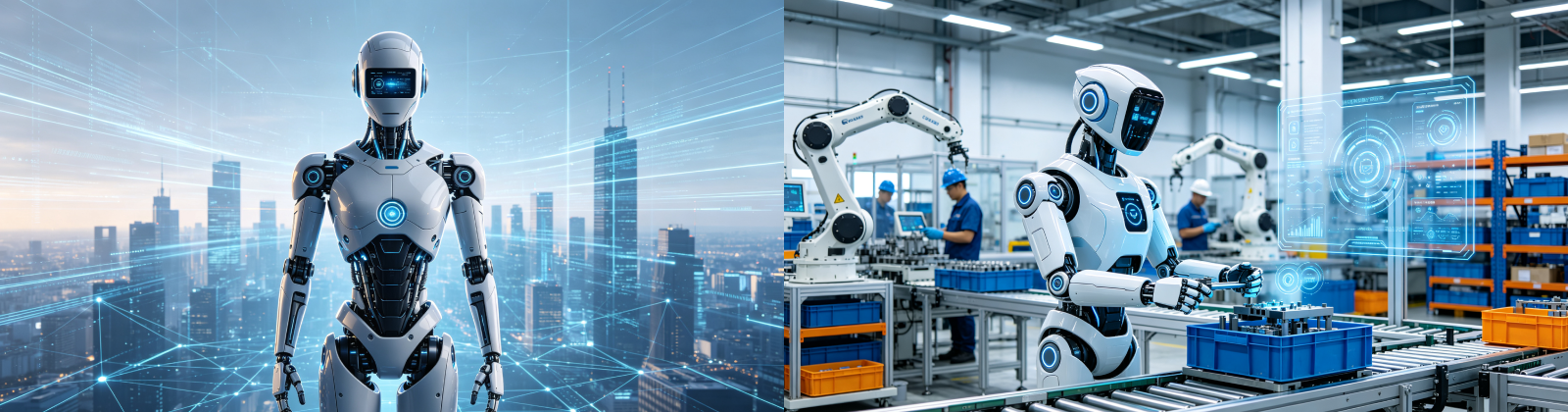
1. Core Definition and Technical Connotation: Restructuring AI Implementation
Embodied AI represents a new evolutionary form of artificial intelligence. Its core value lies in enabling AI algorithms to interact dynamically, make autonomous decisions and evolve continuously in real physical environments via physical carriers, solving the industry pain points of traditional AI that cannot adapt to unstructured complex scenarios and lack practical operational capabilities. As the most complete and core carrier of embodied AI, humanoid robots replicate human motion, perception, operation and interaction capabilities through bionic structural design, full-dimensional environmental sensing systems and edge intelligent decision algorithms, becoming a key strategic direction of future technology industries.
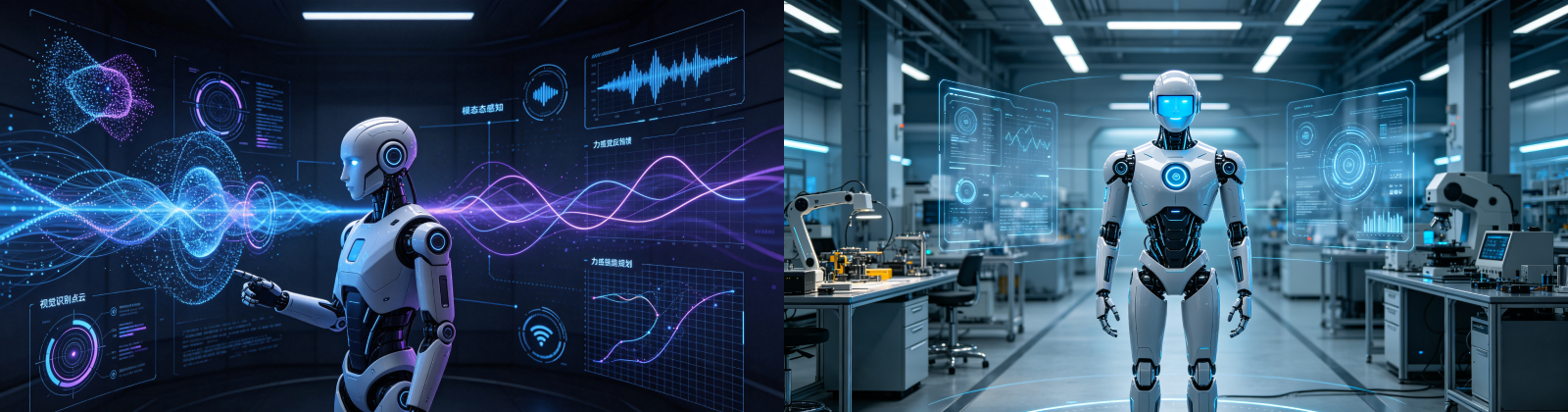
Compared with traditional industrial robots and consumer desktop robots, embodied AI humanoid robots have three core advantages. First, scenario generalization capability: they can adapt to variable unstructured environments through autonomous learning without repeated programming for single scenarios, flexibly completing complex tasks. Second, multi-modal autonomous decision-making: integrating visual, force, auditory and posture sensing data to realize real-time environmental judgment, path planning and motion fine-tuning. Third, continuous evolution capability: accumulating scenario data to iterate models and upgrade skills, achieving progressive intelligence and breaking the functional solidification limitations of traditional robots.
2. Software and Hardware R&D System: Multi-Dimensional Technological Breakthroughs
The industrial implementation of humanoid robots relies on a three-in-one R&D system of bionic hardware integration, core component development and embodied algorithm iteration, with deep software-hardware coupling to support anthropomorphic operation and autonomous intelligent movement.
In terms of hardware and structural design, the industry focuses on lightweight, high flexibility, high precision and high safety. Adopting bionic human torso, limb and joint layouts, the structure breaks the rigidity of traditional machinery. Combined with lightweight alloys and high-strength composite materials, it reduces overall weight while ensuring structural strength, adapting to multi-scenario mobile operations. Domestic core components including high-precision bionic servo joints, lightweight reducers and high-sensitivity force sensors have achieved continuous breakthroughs, solving key problems such as motion stuttering, insufficient precision, limited load capacity and high noise. Equipped with panoramic cameras, multi-dimensional force sensors, inertial measurement units and LiDAR, the robot builds a full-coverage environmental sensing system to support autonomous operation. The high-capacity long-life battery matches an intelligent energy management system to balance high-computing power consumption and long-duration operation.
In terms of software and embodied algorithms, technological iteration forms core product competitiveness. Current R&D focuses on four major fields: lightweight edge embodied large models, multi-modal fusion sensing algorithms, motion control algorithms, and autonomous planning reinforcement learning algorithms. Edge embodied large models eliminate cloud dependence, enabling local environmental understanding, task decomposition and logical decision-making to improve response speed and operational stability in complex scenarios. Multi-modal fusion algorithms accurately identify unknown scenarios, dynamic obstacles and flexible objects through integrated sensing data. Motion control algorithms optimize full-body collaborative movement to realize stable walking, stair climbing, flexible obstacle avoidance and precise grasping. Reinforcement learning algorithms enable robots to accumulate operational data, optimize workflows independently and expand new skills for continuous intelligent upgrading.
3. Industrial Implementation Status: From Pilot Verification to Mass Production
After years of technological breakthroughs, China’s embodied AI and humanoid robot industry has completed technological accumulation and scenario piloting, entering a critical stage of mass production and landing. According to authoritative industry data, domestic humanoid robot output is expected to exceed 100,000 units in 2026, marking the industry’s official shift from customized R&D and small-batch trial production to large-scale industrial mass production and accelerating commercialization.
Industrially, flexible manufacturing is the core breakthrough scenario. Humanoid robots have been deployed in new energy vehicles, 3C electronics and high-end manufacturing flexible production lines, replacing manual labor in repetitive, high-intensity and high-risk tasks such as component handling, precision assembly, equipment inspection and material sorting. Compared with traditional fixed-station industrial robots, humanoid robots adapt to flexible production line iteration, switch tasks quickly and reduce enterprise renovation and labor costs. Meanwhile, pilot applications in special operations, public services and commercial services continue to advance, covering power inspection, emergency rescue, government services and shopping mall guidance with improving scenario adaptability.
A tripartite collaborative pattern of policy, enterprise and technology has taken shape. The state has continuously incorporated embodied AI and humanoid robots into key future industry layouts, issuing standardized construction, industrial support and scenario opening policies to optimize the industrial system. Leading domestic technology and manufacturing enterprises have increased R&D investment to break through core components, underlying algorithms and mass production technologies, accelerating domestic substitution. Industrial parks nationwide open real application scenarios to support product iteration, data accumulation and commercial verification.
4. Current Industrial Bottlenecks Restricting Large-Scale Development
Despite rapid development, the industry is still in the early growth stage with prominent bottlenecks in core technology, mass production cost, scenario adaptation and ecological system. Technologically, high-end bionic joints and high-precision reducers require further iteration, and robots lag behind humans in complex environment adaptability and fine operation accuracy with insufficient stability in extreme scenarios. In terms of cost, high R&D and component costs lead to high overall machine prices, restricting commercial promotion in small and medium-sized scenarios. Scenario-specific technical solutions for home, medical and complex service scenarios are immature with limited universal operation capabilities. The industrial standard system is still being improved with ununified data collaboration, technical adaptation and safety specifications, limiting collaborative development efficiency.
5. Future Development Trends: Decade-Long Golden Growth Period
Industry analysts believe that the next three to ten years will be the golden development period for embodied AI and humanoid robots, realizing all-round upgrading in technological generalization, cost popularization, full-scenario coverage and ecological standardization, and becoming a core growth pole of AI and high-end manufacturing industries.
Technologically, in-depth popularization of edge embodied large models will equip humanoid robots with stronger autonomous thinking, logical reasoning and independent task creation capabilities, realizing the leap from passive command execution to active autonomous operation. The iteration of bionic motion, flexible operation and multi-modal sensing will make robot accuracy, stability and flexibility infinitely close to human levels.
Industrially, continuous cost reduction and large-scale mass production will be realized. With the completion of domestic core component substitution, mature mass production processes and expanding industrial scale, humanoid robot costs will drop significantly with improved cost performance, achieving large-scale commercial popularity and moving out of the niche high-end equipment positioning. Unified industry standards for R&D, production, testing and safety will drive standardized and high-quality industrial development.
In terms of scenarios, application boundaries will continue to expand for full-field penetration. In the short term, industrial flexible manufacturing, special operations and public services will remain core landing scenarios to replace repetitive manual work. In the medium and long term, robots will gradually penetrate home companionship, elderly care, medical assistance, educational services and whole-house intelligent operation, becoming new intelligent infrastructure for families and society to empower intelligent upgrading of production and life.
Ecologically, a comprehensive industrial collaboration system will accelerate cross-border integration. Humanoid robots will be deeply integrated into intelligent manufacturing and whole-house smart ecosystems to realize data interconnection and scenario linkage with various smart devices. The improved industry-university-research collaboration system will form a closed loop of technological R&D, talent training, scenario implementation and commercial operation, promoting high-quality development of the embodied AI industry.
In conclusion, embodied AI and humanoid robots represent one of the ultimate forms of the AI industry and the core track of future technological competition. With continuous breakthroughs in technical bottlenecks, mature commercial systems and expanding application scenarios, humanoid robots will completely reshape production and service modes, opening a new industrial era of general intelligent robots with immeasurable market potential and industrial value.








 Call
Call