更多
| 简体
Technology empowerment
development partner
Tel
+86 - 19925374651
图片
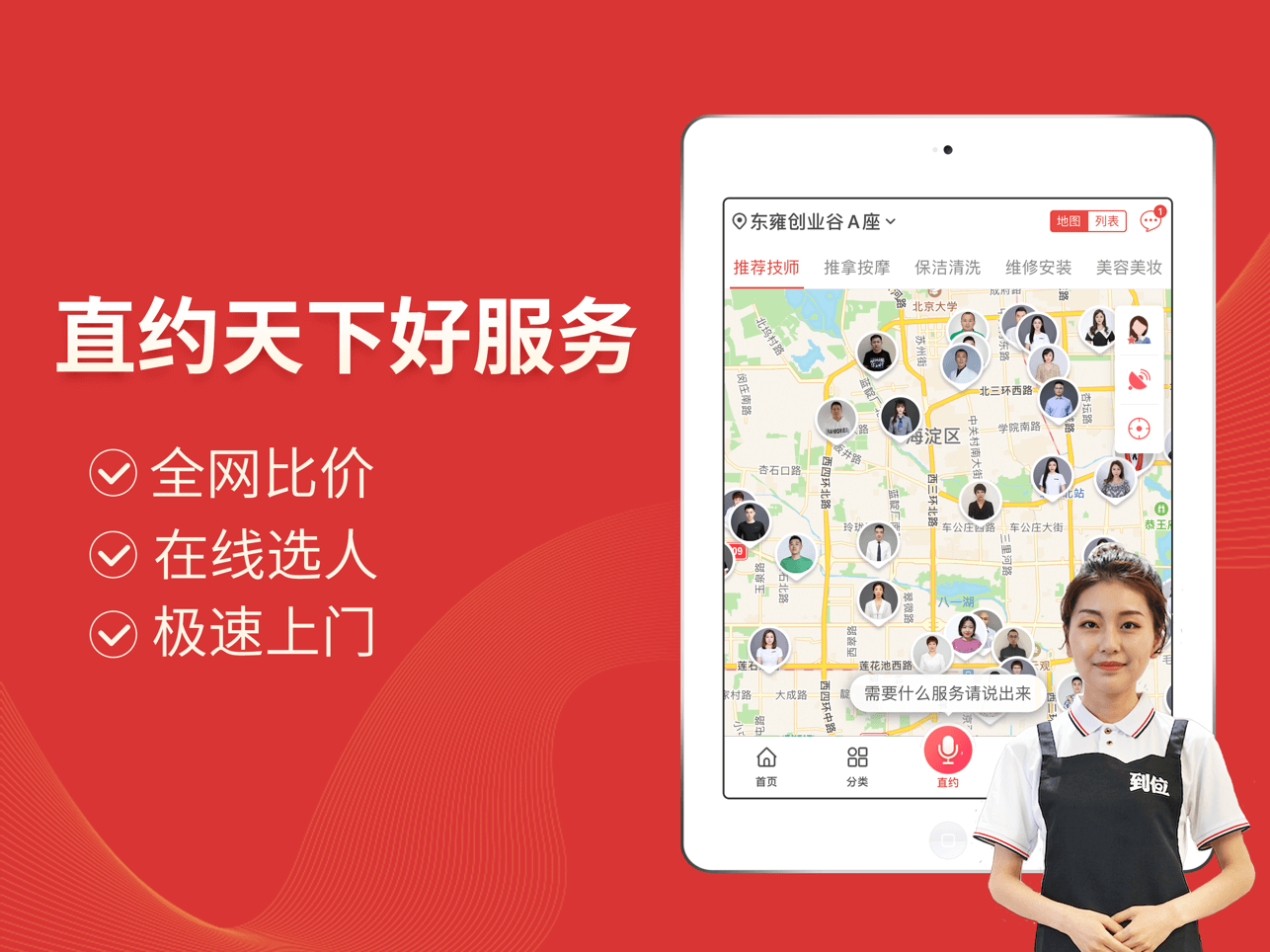
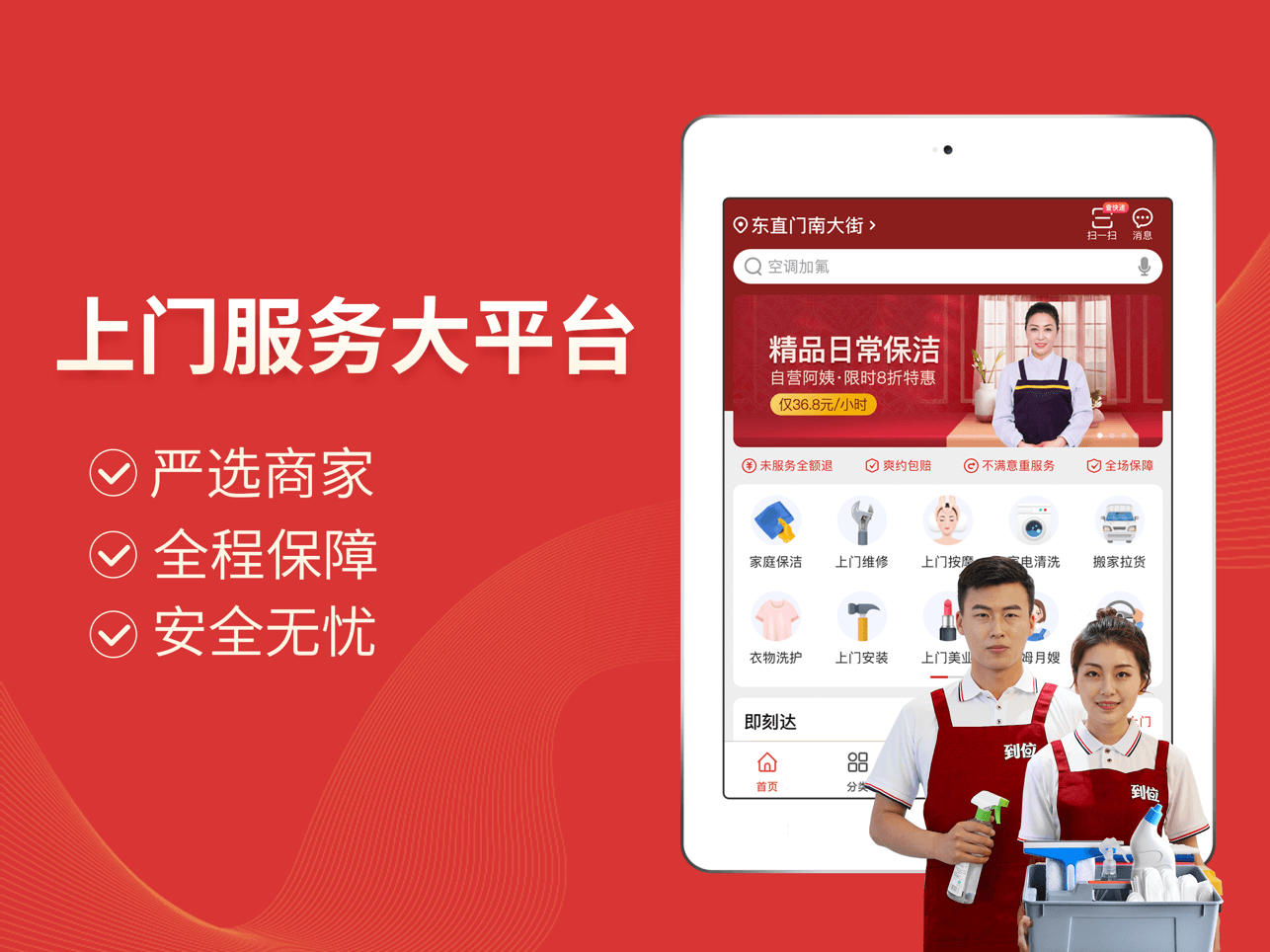
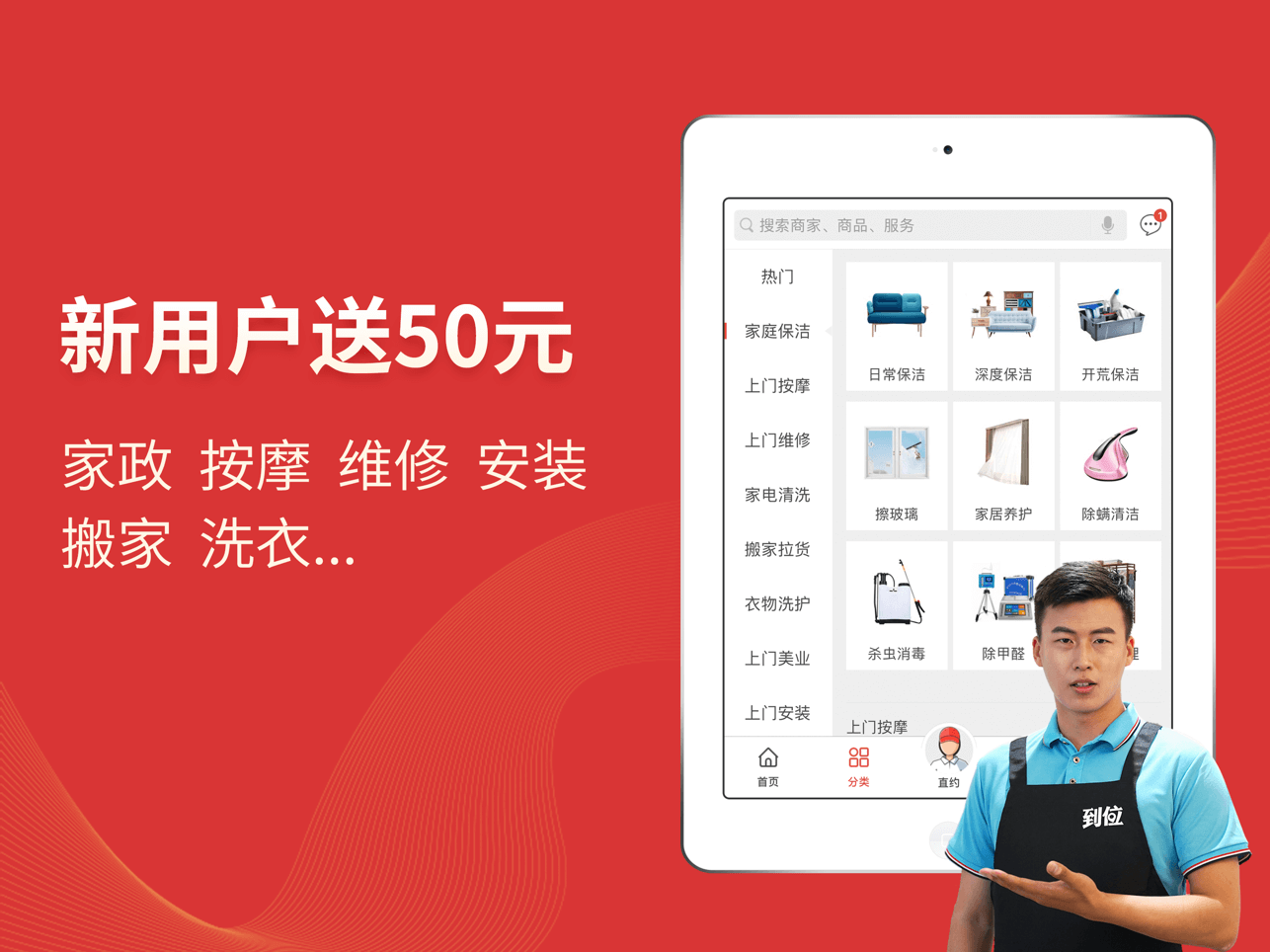
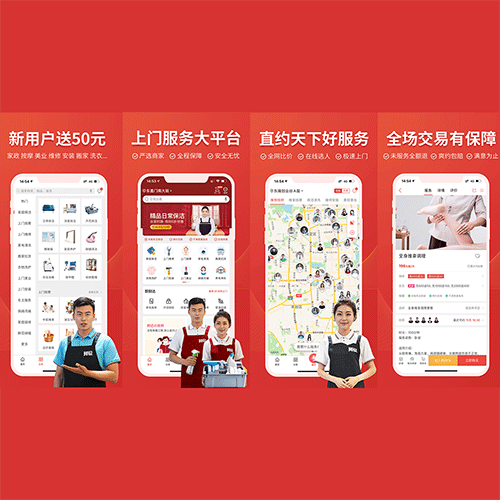
In place life services
The name "in place" implies "in place people+in place service", which connects people with good service. The mission in place is to connect millions of high-quality service providers around the world and provide users with one-stop high-quality door-to-door services
发布时间 : 2024-03-16 17:30:37
图片 1

图片 新闻动态
图片
What are the steps of the APP / small program development process?

  In today's mobile Internet era, APP / small program has become a necessary marketing promotion tool for enterprises. In particular, it can be used without download and installation, providing users with a convenient operation experience. So, what is the APP / applet development process like? Next, Shenzhen Sirui Information Technology Co., Ltd. (hereinafter referred to as: Siring Sirui) will introduce the following steps:


1. Do a good job of requirements analysis for development

  First, we need to be clear about how we need to develop an APP / applet ourselves. This step includes understanding the requirements of pre-development application processes, market research, and competitive product analysis. Through these methods, we can determine the requirements of the APP / applet function, interface design, and user experience. Siring Sirui has a consultant project manager, who accompanies you to sort out your business needs.


2. Technical selection

  After clarifying the requirements, we need to choose the appropriate technical framework to implement the APP / small program. At present, there are many excellent APP / small program development frameworks in the market. The front end can choose: uniAPP development tools, WeChat Web developer tools, Alipay life number, etc., and the back end can choose: Java, go, php language, etc. According to the actual needs and technical background of the project, we can choose the appropriate technical framework for development. Siring Sirui has a multi-type development team to provide you with the right development framework and development language.


3. design phase

  After the technical selection is completed, we enter the design stage of the APP / applet program. This stage mainly includes UI design, interaction design and functional module design, etc. Through this phase of the work, we can provide a beautiful, easy-to-use user interface for the APP / applet. Siring We uses a variety of design tools, such as Axure, Figma, etc., to design high fidelity prototypes of the project, so that the user can know the whole picture of the project at a glance.


4. exploitated phase

  After the design phase was completed, we started the development of the APP / applet. This stage mainly includes two parts: front-end development and back-end development. The front-end development is mainly responsible for implementing the user interface and interaction functions of the APP / applet, while the back-end development is mainly responsible for handling the business logic and data storage problems. Siring Sirui uses instant online tools to follow up the progress of project development immediately.


5. Testing and optimization

  After the APP / applet development is completed, we need to fully test it to ensure proper functionality and a good user experience. During the test process, we need to find and fix the potential problems, while we can optimize the performance of the APP / small program to improve its operation efficiency. Siring Sirui will first carry out the project testing and bug repair, and then to the user experience and optimization, to meet the actual operation needs of the project.


6. On-line and operation

   Finally, we will submit the APP / applet to the major application platforms for review and release. After the release, we need to carry out continuous operation and maintenance of the APP / applet, including content update, collection and processing of user feedback, data analysis, etc. Through continuous optimization and improvement, we can make the APP / applet more in line with user needs and remain competitive.

The APP / applet development process involves multiple links, and we need to invest enough energy and time in each link. Only in this way can we create a beautiful APP / small program that is both beautiful and practical, and bring a better experience to users.


#APP Customization Development # Website Construction # Software Development # Hardware Development # Source Code Development # Source Code Customization
#Social Customization # Live Streaming # E-commerce Shopping # Website System # Takeout # Same City Services # Internet of Things # Education


2024-01-27 16:50:48
图片
What should I pay attention to in the development of APP/ applet?

Everyone who works on products and projects carries their dreams, but the realization of their dreams is not always smooth sailing. They think that after creating an app or mini program, they can make money and get rich returns while lying down. Little do they know that there are too many processes involved in this process. Shenzhen Siring Information Technology Co., Ltd. (referred to as Siring Siring) not only customizes various creative projects, but also accumulates rich practical experience in project promotion and operation. Taking this opportunity, we share our experience with all enterprises or individuals who strive for their dreams.


1、 Creative leading project engineering

The beginning of a customized software development project always starts with good creativity. Without good creativity, it is difficult to stimulate user preferences. A good user experience is the only criterion for testing a good product. A good idea is not just a wild idea, but rather one who thinks it will work. In fact, it is necessary to comprehensively consider practical ideas based on public experience, experience, market research and analysis, combine good ideas with these factors, and then try to develop one's own exclusive app.

In the current situation of severe homogenization in the APP software development industry, creative apps are the first to seize the market opportunity. If you have good ideas, you need to be brave enough to take action. Many people have many ideas, but none of them take action, so APP software development is still in the conceptual stage. If you do it, you may succeed, but if you don't do it, you will definitely not succeed.


2、 R&D starts with prototype design

APP software development is by no means an easy task. When too many demanders are just a concept, they hastily entrust a development company to start researching and developing. The first thing they think about every day is to quickly launch the product, but they are careless about every detail. Here, we first remind all demanders: the prototype should be carefully compared and corrected at the beginning of research and development!

So, what is prototype design?

Prototyping is a way for users to experience products in advance, communicate design ideas, and showcase complex systems. Essentially, a prototype is a communication tool for graphical interaction. The main function is to describe the logical relationship between function and content.

Why do we need prototype design?

Firstly, the vast majority of business owners themselves do not understand design knowledge or programming knowledge, and prototypes show them the basic framework or model of websites or apps, allowing them to understand their basic appearance and operational mechanisms.

An interactive prototype can basically run like the final product, and you can operate on it. The prototype will provide corresponding feedback, and users can understand its operation and seek solutions to specific problems. After usability testing, the prototype can optimize for a better user experience and eliminate a considerable number of potential issues and malfunctions before the product is launched.

Prototypes are like development drawings in construction projects. Once the drawings are confirmed, construction is carried out. However, the response during the construction process is not like this, and the impact on the entire project construction is obvious!


3、 Don't play with children in function development

Many app developers themselves do not have a clear understanding of what established functions their apps need to implement. During the development process, various functional changes began. Today, when I thought of a great feature, I immediately made a phone call requesting it to be added. If it wasn't added, I might not be able to survive anymore. The next day, I was informed that it seemed like the feature should be removed. However, I didn't realize that the entire day of the project team's time was wasted, which resulted in a significant increase in project development costs!

As a development demander, it is essential to have sufficient product considerations and thinking, as well as cost awareness, to identify the market and direction. Good features are available at every stage and must be completed through a phased and step-by-step system.

As we can see from the upgrades of Apple phones, they are usually updated every year. Of course, Apple will produce world-class phones, but many of their cool features are carefully added in stages to meet the needs of the market and general customers. Because you think it's good, users may not necessarily buy it, but instead invisibly add budget costs to themselves, while also causing delays in project launch.


4、 "Fine tuned operation" in marketing promotion

The above mentioned are all issues that need to be noted in product design and research and development. So, after the project is developed and formed, how should we operate?

With the disappearance of market dividends, it is necessary to realize that promoting new APP software will be very difficult!

Nowadays, we have entered the era of traffic. Whoever seizes the entrance to traffic is like a pig flying into the sky. Where does traffic come from? It comes from news, entertainment, games, and applications on PC and mobile devices, big and small. However, there are millions of channels for traffic, and the cost of user promotion is tight, making the cost increasingly high. To enhance customer acquisition capabilities, it is necessary to screen high-quality customer acquisition channels and continuously improve the conversion rate of traffic to reduce user acquisition costs. Siring, an APP customization development company, believes that whether it is search engine optimization or SEM bidding advertising, the advertising channels should do a good job in analyzing the landing page conversion of each channel, purposefully reducing resource waste.

2024-01-27 16:52:37
图片
Introduction to MES Production Management Software System, IoT App Development, Smart Factory Visual Dashboard, and AI Digitalization Development

        Shenzhen Siring Information Technology Co., Ltd. (Siring) was founded in 1996. For 30 years, we have been focusing on the R&D of MES digital factory and intelligent manufacturing systems. Our team consists of 100 members, among which R&D staff account for 90%. We hold multiple authoritative qualifications including ISO27001 Information Security Certification, Double Software Certification and National High-tech Enterprise Certificate. Supported by research institutions such as Shenzhen Big Data Research Institute, our team specializes in back-end programming languages including Java, GO and Python, as well as industrial IoT algorithm frameworks. We have built a full-stack technical system covering production line design, PLC integration, AI vision algorithms and cloud platforms.

       Focusing on customized MES solutions for discrete manufacturing and process industries, our self-developed core technology matrix includes: full-process quality traceability algorithms combining barcode and RFID, deep integration solutions for ERP+WMS+PLC systems, multi-objective intelligent defect detection engine (supports customized model training for precision assembly, material abnormality, etc.), and industrial data security encryption & real-time transmission technology. We have completed full-process development ranging from edge computing gateways to factory digital twin platforms, enabling production parameters and equipment status data to be uploaded to the cloud within seconds and supporting massive concurrent processing.

       We have successfully delivered a number of benchmark industrial solutions: Sanitation Vehicle Parts MES: Connect ERP and production equipment data, raise on-time delivery rate from 88% to 96%, and reduce WIP inventory by 22%. Tire Mold Smart Factory: Integrate secondary development of CAD & UG with MES, boost equipment availability by 18.75%, improve design efficiency by 30% and achieve zero missed inspections. Electronic Assembly MES: Realize precision assembly traceability at 0.01mm level via machine vision, and cut defective product rate below 0.2%. Building Material Intelligent Operation & Maintenance Platform: Adopt 5G predictive maintenance model to reduce unplanned equipment downtime by 56%.

        Our solutions fully cover core sectors including auto parts, mold manufacturing, electronics, building materials and chemical industry. The products support multiple communication protocols such as OPC UA, Modbus and 5G private network, with open API interfaces and data middle office to realize full-scenario connection of production scheduling, material distribution and quality control.

       We provide customized development services for MES software platform (production scheduling, quality management, equipment maintenance), industrial IoT gateways, mobile APPs and data visualization large screens, as well as private deployment and source code authorization. Leveraging reusable mature technical modules and standardized development procedures, we help clients cut R&D budget by 60% and shorten project cycle by 70% on average. Our service commitments include 5-minute rapid response, 24-hour fault recovery and lifetime algorithm model upgrade to guarantee 100% on-time delivery.

       As a core team repeatedly awarded the "Futian Talents" title, Siring Information commits to industrializing scientific research achievements of AI intelligence and Industrial Internet. Centered on core demands of digital factories such as complex process optimization and intelligent task execution, we cooperate with partners to share the trillion-level intelligent manufacturing market dividends.

2026-06-19 18:18:33
图片
AI Following Robot Xiaozhi Voice Desktop Toy Customization, ESP32 JieLi Solution, APP Platform Development for Smart Devices

        Shenzhen Siring Information Technology Co., Ltd. (Siring) Founded in 1996, with 30 years of deep expertise in AI digitalization. Our team of 100 professionals includes 90% R&D staff. We hold ISO27001, Double-Soft, and National High-Tech Enterprise certifications, collaborating with top research institutions including the Shenzhen Institute of Big Data Research. We master the full technology stack: Java/GO/Python/Vue/Flutter. Targeting the AI Desktop Companion Robot Segment, we independently develop emotion recognition, voiceprint wake-up, multimodal interaction, and DeepSeek dialogue engine algorithms. We offer deep customization for ESP32 / JieLi chip solutions, from PCBA prototyping to mass production, with cloud data synchronization in seconds.

     Core Product Portfolio: AI Following Robot "Xiaozhi": Voice wake-up + visual tracking + emotional interaction — intelligent desktop companionship AI Desktop Pet Companion: Multimodal emotional interaction for therapeutic companionship Learning Assistant: AI tutoring + curriculum sync + habit formation Meeting Minutes Robot: Real-time voice transcription + smart summarization + multi-platform sync Elderly Care Elf: Fall detection + medication reminders + emergency calling Gaming Buddy "Little Cannon": Voice interaction + strategy assistance + community battles

    Technical Strengths: Seamless multi-protocol support: Bluetooth 5.3, Wi-Fi 6, NB-IoT Open API integration with QQ, WeChat, DingTalk, and education platforms Full-scenario connectivity: reminders, entertainment, security, social, gaming Full-stack customization: hardware, embedded systems, APP, mini-programs, SaaS Service Commitments: Private deployment and source code licensing available Average 60% budget savings and 70% shorter delivery cycles 5-minute response, 24-hour fix, lifetime OTA upgrades 100% on-time delivery

    Consecutive winner of the "Futian Elite Talent" team award, we are dedicated to commercializing AI companion research achievements, partnering with clients to capture the trillion-level smart companionship and affective computing market.

2026-06-19 22:22:21
图片
Medical Elderly Care Nursing Sports Rehabilitation Big Data AI Consultation Health & Wellness APP Mini Program Software Development Smart Products

      Shenzhen Siring Information Technology Co., Ltd. (Siring), established in 1996, has dedicated 30 years to custom software development. With over 100 employees and 90% in R&D roles, the company leverages an AI algorithm laboratory founded in partnership with the Shenzhen Institute of Big Data Research and other top universities. Siring masters the full technology stack including Java/GO/Python/Vue/Flutter, and holds ISO27001, ISO9001, Double-Soft, and National High-Tech Enterprise certifications.

       Siring deeply cultivates the smart healthcare, elderly care nursing, and sports rehabilitation sectors, launching the "SiringHealth" Health & Wellness Middle Platform, which delivers customized full-chain big data platforms covering appointment booking, AI consultation, follow-up visits, health assessments, rehabilitation training, payment processing, and regulatory compliance.

       I. Smart Healthcare

       AI Intelligent Consultation System Powered by big data and deep learning technologies, the system provides symptom self-assessment, intelligent department recommendation, and medication guidance, effectively diverting outpatient pressure and improving medical visit efficiency. Online Appointment & Follow-up Platform Supporting multi-hospital integration and unified management, with intelligent scheduling, re-visit reminders, and electronic medical record management, achieving full-cycle patient health management. Medical Insurance Settlement Interface Fully integrated with the national medical insurance platform, supporting one-click reimbursement and real-time billing settlement, simplifying the medical payment process.

      II. Elderly Care Nursing

      Smart Elderly Care Management System Covering elderly electronic profiles, real-time health monitoring, intelligent nursing staff scheduling, one-click emergency calling, and remote family interaction, building an integrated elderly care service system for institutions, communities, and home-based care. Civil Affairs Elderly Care Code Set Integration Strictly following national elderly care service standards, supporting government regulatory audits and elderly care subsidy applications, ensuring data compliance and business transparency.

     III. Sports Rehabilitation

     Intelligent Rehabilitation Assessment & Training System Utilizing motion capture technology and AI posture correction algorithms, automatically generating personalized rehabilitation training plans, tracking rehabilitation progress in real-time, and scientifically evaluating training effectiveness. Wearable Device Data Integration Real-time collection of critical physiological data including heart rate, blood oxygen, and gait, synchronized to the rehabilitation big data platform, providing precise decision-making support for doctors and rehabilitation specialists.

     IV. Big Data Middle Platform

     SiringHealth Data Middle Platform Providing a unified data governance architecture, constructing multi-dimensional user health profiles, achieving disease prediction models and health risk early warnings, driving precision medicine and proactive health management.

    V. Multi-terminal Coverage

    Comprehensive support for iOS and Android native apps, WeChat/Alipay mini programs, H5 mobile web pages, and Web management backends, achieving full-scenario coverage for user ends, medical staff ends, management ends, and regulatory ends.

     VI. Core Technical Advantages

     The company independently develops AI algorithms including emotion recognition, voiceprint wake-up, multimodal interaction, and the DeepSeek dialogue engine, possessing full-stack development capabilities from hardware embedded systems to backend, frontend, apps, mini programs, and SaaS. Supports multiple communication protocols including Bluetooth 5.3, Wi-Fi 6, and NB-IoT, seamlessly connecting various smart wearables and IoT devices. Open APIs for QQ, WeChat, DingTalk, education platforms, and the national medical insurance platform, building an open and win-win health ecosystem. Provides flexible cooperation models including SaaS cloud deployment, private deployment, and source code customization.

    VII. Flagship Case Study

    Successfully delivered a national-level project for a Health Commission serving 7.5 million residents, with the system stably serving tens of millions of users, earning high recognition from government departments and the industry.

    VIII. Service Commitments

     Average 60% budget savings and 70% shorter delivery cycles; 5-minute response, 24-hour repair, lifetime upgrades; 100% on-time delivery. Partnering with clients to seize the trillion-level AI Health & Wellness blue ocean market.

2026-06-20 09:13:03
图片
Smart Wearable Solution Development, Smart Watch, VR/AR Glasses, Software & Hardware APP & Mini Program, Electronic Product Development

        Shenzhen Siring Information Technology Co., Ltd. (Siring), founded in 1996, has dedicated 30 years to AI digitalization. With 100 employees and 90% in R&D roles, the company holds ISO27001, Double-Soft, and National High-Tech Enterprise certifications. Leveraging partnerships with the Shenzhen Institute of Big Data Research and other top universities, Siring masters the full technology stack: Java/GO/Python/Vue/Flutter. Targeting the smart wearable and metaverse segments, the company independently develops heart rate, blood oxygen, fall detection, eye tracking, and DeepSeek voice interaction algorithms, delivering PCBA prototypes to mass production with cloud data synchronization in seconds.

      I. Smart Watch Solutions

      AI Stethoscope Watch Integrating high-precision ECG sensors with AI heart sound analysis algorithms, enabling at-home cardiac health monitoring and anomaly alerts. Data is synchronized in real-time to medical institution backends, providing round-the-clock health protection for chronic disease patients. AI Body Fat Scale Integration Seamless data sharing between the watch and smart body fat scale, comprehensively analyzing weight, body fat percentage, BMI, and basal metabolic rate to generate personalized health management recommendations, with multi-account support for family members.

      II. VR/AR Glasses Solutions

      AR Navigation Glasses Utilizing SLAM spatial positioning and computer vision technology for real-time path planning and virtual information overlay, widely applied in industrial inspections, warehousing logistics, and tourism navigation scenarios. Virtual Coach Headset Combining eye tracking and motion capture technology to deliver immersive virtual instruction for fitness, sports rehabilitation, and skills training, with real-time posture correction and training data recording.

       III. Immersive Audio Solutions

       Immersive Earphones Equipped with spatial audio algorithms and active noise cancellation technology, supporting head tracking and 360-degree sound field reproduction, delivering an immersive auditory experience for gaming, film, and remote conferencing.

      IV. Core Technical Advantages

      Self-Developed Sensor Algorithms Core algorithms for heart rate monitoring, blood oxygen saturation detection, fall identification, and eye tracking are all independently developed, achieving medical-grade accuracy standards. DeepSeek Voice Interaction Engine Supporting offline wake-up, continuous dialogue, and multi-turn intent understanding, providing natural and fluent voice control experiences for wearable devices. Multi-Protocol Connectivity Supporting Bluetooth 5.3, Wi-Fi 6, NB-IoT, and other communication protocols, ensuring stable connection and low-power operation across various scenarios. Open Ecosystem APIs Open interfaces for HealthKit, national medical insurance, civil affairs elderly care, and sports fitness platforms, enabling seamless integration across payment, regulatory, social, and gaming scenarios.

       V. Full-Stack Development Capabilities

       From hardware design, embedded development, PCBA prototyping, and mold mass production to APPs, mini programs, and SaaS management backends, providing one-stop full-stack customization services. Private deployment is supported with localized data storage, meeting compliance requirements for sensitive industries such as healthcare and finance. Source code licensing is available with core code delivery, granting clients full intellectual property ownership. OTA upgrades ensure lifetime firmware and algorithm iterations, continuously optimizing product experience.

      VI. Flagship Products

      AI Stethoscope Watch Integrating high-precision ECG sensors with AI heart sound analysis algorithms, enabling at-home cardiac health monitoring and anomaly alerts, with real-time data synchronization to medical institution backends. AI Body Fat Scale Multi-dimensional body composition analysis, comprehensively evaluating weight, body fat percentage, BMI, basal metabolic rate, and other indicators to generate personalized health management recommendations, with multi-account support for family members. AR Navigation Glasses Utilizing SLAM spatial positioning and computer vision technology for real-time path planning and augmented reality information fusion, suitable for industrial inspections, warehousing logistics, tourism navigation, and other scenarios. Virtual Coach Headset Combining eye tracking and motion capture technology to deliver immersive virtual instruction for fitness, sports rehabilitation, and skills training, with real-time posture correction and training data recording. Immersive Earphones Equipped with spatial audio algorithms and active noise cancellation technology, supporting head tracking and 360-degree sound field reproduction, delivering an immersive auditory experience for gaming, film, and remote conferencing.

     VII. Service Commitments

     Average 60% budget savings and 70% shorter delivery cycles; 5-minute response, 24-hour repair, lifetime OTA upgrades; 100% on-time delivery. Consecutive winner of the "Futian Elite Talent" team award, Siring is dedicated to commercializing AI wearable research achievements, partnering with clients to capture the trillion-level smart health and metaverse market.

2026-06-20 19:31:42
图片
IoT Embedded Software & Hardware PCBA Microcontroller STM32/ESP32/JieLi/Rockchip Electronic Products Wireless Smart
Shenzhen Siring Information Technology Co., Ltd. (Siring), founded in 1996, has dedicated 30 years to AI digitalization and IoT technology. With 100 employees and 90% in R&D roles, the company holds ISO27001, ISO9001, Double-Soft, and National High-Tech Enterprise certifications. Leveraging partnerships with the Shenzhen Institute of Big Data Research and other top universities, Siring masters the full technology stack: Java/GO/Python/Vue/Flutter, with complete full-chain development capabilities from chip-level to cloud.

I. Project Overview

This project focuses on integrated IoT embedded software and hardware development, covering PCBA design, microcontroller firmware development, wireless communication protocol integration, and smart terminal mass production delivery. Supporting mainstream chip platforms including STM32, ESP32, JieLi, and Rockchip, we provide high-reliability wireless smart solutions for smart home, industrial control, smart healthcare, automotive electronics, wearable devices, and more.

II. Core Chip Platform Support

STM32 Series (STMicroelectronics) Targeting industrial-grade high-reliability applications, supporting Cortex-M0/M3/M4/M7 cores, suitable for motor control, power monitoring, precision instruments, and other scenarios. Rich peripheral interfaces (ADC/DAC/CAN/ETH), supporting RTOS real-time operating systems and low-power modes.
ESP32 Series (Espressif) Integrated Wi-Fi 4/5 and Bluetooth 5.3 dual-mode communication, ideal for consumer IoT devices such as smart home, smart wearables, and wireless sensors. Supports Arduino, MicroPython, ESP-IDF development frameworks, with ultra-low-power sleep modes and rich GPIO expansion capabilities.
JieLi Chips (Zhuhai JieLi) Focused on audio and low-power Bluetooth solutions, widely used in TWS earphones, Bluetooth speakers, smart voice toys, and other products. Supports Bluetooth 5.3, LE Audio, multi-point connection, with high cost-performance ratio and rapid mass production advantages.
Rockchip Targeting high-end smart terminals and edge computing, supporting RK3566/RK3568/RK3588 AIoT chip platforms. Powerful NPU computing power (up to 6 TOPS), suitable for complex graphics and AI inference scenarios such as smart security, robotics, industrial tablets, and digital signage.

III. PCBA Hardware Development Capabilities

Schematic and PCB Design Supporting mainstream EDA tools including Altium Designer, Cadence, and PADS, with experience in multi-layer boards (4-12 layers), high-frequency high-speed design, and EMC/EMI optimization. Providing SI/PI simulation, thermal design analysis, and DFM manufacturability review.
Component Selection and Supply Chain Management Leveraging Shenzhen's complete electronics industry chain, establishing long-term stable chip agency channels to ensure stable supply and cost advantages for core components such as STM32, ESP32, JieLi, and Rockchip.
PCBA Prototyping and Mass Production Equipped with complete production lines including SMT mounting, DIP insertion, AOI inspection, X-RAY, and functional testing, supporting seamless scaling from 5 prototype boards to 1 million monthly production capacity. Providing value-added processes such as conformal coating, potting, and aging testing.

IV. Embedded Software Development

Firmware Development
  • STM32: HAL/LL libraries, FreeRTOS, RT-Thread, bare-metal drivers
  • ESP32: ESP-IDF, Arduino, MicroPython, Lua scripting
  • JieLi: SDK secondary development, Bluetooth protocol stack customization, audio codec optimization
  • Rockchip: Linux/Android system porting, BSP driver development, NPU model deployment
Wireless Communication Protocols
  • Short-range: BLE 5.3, Mesh, Zigbee, Thread, Matter
  • Local area: Wi-Fi 6, Ethernet, PLC power line carrier
  • Wide area: NB-IoT, 4G Cat.1, 5G RedCap, LoRa
  • Cloud integration: MQTT, CoAP, HTTP/2, WebSocket, TLS/SSL encryption
Edge Computing and AI Inference
  • Rockchip NPU: Supports TensorFlow Lite, ONNX, Caffe model conversion and quantization
  • STM32 AI: X-Cube-AI toolchain, enabling lightweight neural network deployment
  • ESP32-S3: Vector instruction acceleration, supporting voice wake-up, image recognition, and other edge AI applications

V. Application Scenario Solutions

Smart Home Networking and interoperability for smart sockets, lighting control, environmental monitoring, security sensors, and other devices. Supports Matter/Thread protocols for cross-brand ecosystem compatibility.
Industrial IoT Equipment status monitoring, predictive maintenance, energy management, production line traceability, and other solutions. Supports industrial protocols such as Modbus, OPC UA, and CAN bus, with integration to MES/ERP systems.
Smart Healthcare Wearable health monitoring, medical device networking, pharmaceutical cold chain traceability, and more. Compliant with medical device electromagnetic compatibility standards, with FDA/CE certification support.
Automotive Electronics T-Box vehicle terminals, OBD diagnostics, tire pressure monitoring, smart cockpits, and more. Supports CAN/LIN bus, GNSS positioning, and 4G/5G remote communication.
Smart Audio TWS earphones, Bluetooth speakers, AI voice assistants, hearing aids, and more. Based on JieLi/Rockchip platforms, supporting active noise cancellation, spatial audio, and offline voice wake-up.

VI. Cloud and Application Layer Development

Device Management Platform Based on Spring Cloud microservices architecture, supporting million-level device concurrent access, providing device registration, OTA upgrades, remote diagnostics, rule engines, data visualization, and other functions.
Mobile Development
  • APP: Native iOS/Android, Flutter cross-platform, React Native
  • Mini Programs: WeChat, Alipay, TikTok, Baidu, and other multi-platform adaptation
  • Management Backend: Vue3/Element Plus, data dashboards, BI reports
Data Security and Compliance
  • Transmission encryption: TLS 1.3, national cryptography SM2/SM3/SM4
  • Storage encryption: AES-256, database transparent encryption
  • Privacy compliance: GDPR, Personal Information Protection Law, Level 2.0 Protection

VII. Project Delivery and Services

Development Process Requirements Analysis → Solution Design → Schematic Design → PCB Layout → Prototype Verification → Firmware Development → Cloud Integration → Small Batch Trial Production → Mass Production Import → Continuous Operation and Maintenance
Quality Assurance
  • Hardware: ICT/FCT testing, temperature cycling, salt spray testing, ESD protection
  • Software: Unit testing, integration testing, stress testing, penetration testing
  • Certifications: CCC, SRRC, CE, FCC, RoHS, REACH
Service Commitments
  • Average 60% budget savings and 70% shorter delivery cycles
  • 5-minute response, 24-hour repair, lifetime OTA upgrades
  • 100% on-time delivery, with optional source code licensing

VIII. Flagship Cases

Delivered core IoT modules for multiple industry leaders, covering smart appliance main control boards, industrial gateways, medical monitoring devices, automotive T-Box, TWS earphone main controls, and more, with cumulative shipments exceeding 10 million units.
Consecutive winner of the "Futian Elite Talent" team award, Siring is dedicated to commercializing embedded IoT research achievements, partnering with clients to capture the trillion-level wireless smart market.
2026-06-20 20:47:54
图片
APP Development, Mini Program Production, IoT Cloud Platform, Shared Bluetooth System, AI Agent, OA Mall Development
Shenzhen Siring Information Technology Co., Ltd. (Siring), founded in 1996, has dedicated 30 years to AI digitalization and software development. With 100 employees and 90% in R&D roles, the company holds ISO27001, ISO9001, Double-Soft, and National High-Tech Enterprise certifications. Leveraging partnerships with the Shenzhen Institute of Big Data Research and other top universities, Siring masters the full technology stack: Java/GO/Python/Vue/Flutter, with complete full-chain development capabilities from mobile terminals to cloud, from hardware to software.

I. Project Overview

This project is a one-stop enterprise digital transformation solution, covering six core modules: mobile application development, lightweight mini program construction, IoT device cloud management, shared Bluetooth device ecosystem, AI agent customer service, and automated office mall system. Targeting retail, manufacturing, logistics, healthcare, education, and other industries, providing end-to-end technology empowerment to help enterprises achieve business online, device intelligence, and service automation.

II. APP Development

Native Development
  • iOS: Swift/Objective-C, based on UIKit/SwiftUI frameworks, adapted for iPhone/iPad/Apple Watch
  • Android: Kotlin/Java, based on Jetpack Compose/MVVM architecture, adapted for phones/tablets/vehicle systems
Cross-Platform Development
  • Flutter: Dart language, single codebase outputting iOS/Android/desktop, hot reload accelerating iteration
  • React Native: JavaScript ecosystem, rich component library, suitable for rapid prototyping and medium-large projects
Core Functional Modules User registration and login (phone number/WeChat/Apple ID one-click authorization), push notifications (APNs/FCM/JPush), map positioning (Amap/Baidu/Google Maps), payment settlement (WeChat Pay/Alipay/Apple Pay), audio-video calls (Tencent Cloud TRTC/Agora), live streaming (RTMP/FLV/HLS low-latency streaming)

III. Mini Program Production

WeChat Ecosystem
  • WeChat Mini Program: Native framework/Taro/Uni-app, supporting subscription messages, live components, video channel mounting, WeChat Work integration
  • WeChat Mini Shop: Rapidly build带货 malls, supporting distribution, group buying, flash sales, member points
Multi-Platform Adaptation
  • Alipay Mini Program: Sesame Credit deposit-free, Huabei installment, lifestyle account content marketing
  • Douyin Mini Program: Short video product linking, live room small windmill, POI store引流
  • Baidu Mini Program: Search direct access, information flow recommendation, AI voice interaction
  • Kuaishou/QQ/360 Mini Programs: Selective adaptation based on target user groups
Industry Solutions Restaurant ordering (scan-to-order + kitchen printing + delivery integration), retail stores (in-store pickup + same-city delivery + inventory sync), education and training (course booking + online live streaming + homework check-in), government services (appointment queuing + progress inquiry + electronic certificates)

IV. IoT Cloud Platform

Device Access Layer Supports MQTT/CoAP/HTTP multi-protocol access, single cluster supporting million-level device concurrent connections. Provides Device Shadow functionality for offline device state caching and synchronization.
Device Management Layer
  • Full lifecycle management: registration, activation, diagnostics, remote configuration, firmware OTA, decommissioning
  • Grouping and tagging: flexible grouping by project, region, model dimensions, batch operations
  • Rule engine: device data threshold alerts, linkage control, automated scenario orchestration
Data Processing Layer Time-series databases (InfluxDB/TDengine) store sensor data, stream computing (Flink/Spark Streaming) real-time analysis, data dashboards (Grafana/DataV) visualization.
Application Enablement Layer Open API gateway (Kong/Spring Cloud Gateway), providing standard interfaces for device control, data query, alert subscription, supporting rapid third-party system integration.

V. Shared Bluetooth System

Core Architecture Based on BLE 5.3 low-power Bluetooth, achieving full-process automation of device discovery, pairing, authentication, billing, and settlement. Supports dual-mode switching between broadcast mode (Beacon) and connection mode (GATT).
Application Scenarios
Shared Power Banks User scans code → Bluetooth wakes device → cloud authentication → power bank pops out → timed billing → return settlement. Supports cross-location returns, credit deposit-free, profit sharing settlement.
Shared Bikes/Electric Vehicles Bluetooth unlocking (replacing NB-IoT solution, reducing power consumption and data costs), battery monitoring, electronic fencing, standardized parking voice prompts.
Shared Massage Chairs/Claw Machines/Arcade Games Scan to start, time-based or per-use billing, remote device status monitoring, automatic profit distribution to merchants and venue owners.
Shared Printers/Coffee Machines/Umbrellas Scan and use immediately, prepaid deposit, automatic refund after use, automatic device fault alerts.
System Capabilities
  • Bluetooth gateway: supports multi-device concurrent connections, data aggregation to cloud
  • Offline mode: local caching of transaction data, automatic synchronization after network recovery
  • Anti-cheating mechanisms: GPS positioning verification, device abnormal vibration detection, repeated scan interception

VI. AI Agent

Dialogue Engine Based on DeepSeek large models and RAG retrieval-augmented generation technology, building vertical domain knowledge bases. Supports multi-turn dialogue, intent recognition, slot filling, and context memory.
Application Scenarios
Intelligent Customer Service 7×24 online Q&A, automatically handling 80% of common inquiries, seamless transfer to human agents for complex issues. Supports text, voice, and image multimodal interaction.
Sales Guide Based on user profiles and historical behavior, recommending personalized product combinations, generating marketing scripts, guiding order conversion.
Office Assistant Automatically drafting emails, meeting minutes, work reports, intelligent scheduling, to-do reminders, document summarization.
Training Mentor Generating exam questions, mock interviews, practical guidance based on knowledge bases, tracking learning progress and automatically adjusting difficulty.
Technical Architecture
  • Model layer: DeepSeek/ChatGPT/Claude and other large model API access, or private deployment of open-source models (Llama/Qwen)
  • Knowledge layer: Vector databases (Milvus/Pinecone) storing enterprise documents, product manuals, FAQs
  • Tool layer: Function Calling connecting to order queries, inventory retrieval, logistics tracking, and other business systems
  • Deployment layer: supports multi-terminal embedding in WeChat Official Accounts, WeChat Work, DingTalk, Lark, and standalone APPs

VII. OA Mall Development

OA Office Automation
Workflow Engine Visual process designer, supporting complex approval logic including joint signatures, alternative signatures, transfers, reminders, and returns. Covers 200+ common templates including leave and reimbursement, procurement requests, contract approval, and seal applications.
Collaborative Office Instant messaging (private chat/group chat/read receipts), schedule management (meeting booking, conflict detection), task collaboration (Kanban, Gantt charts, time tracking), document collaboration (online editing, version history, permission control).
Human Resources Organizational structure, attendance check-in (GPS/Wi-Fi/Bluetooth multi-mode), payroll calculation, performance appraisal, recruitment management.
Mall System
B2C Retail Mall Product management (SPU/SKU, specification attributes, inventory alerts), order management (automatic order splitting, logistics tracking, after-sales returns), marketing tools (coupons, discounts, points, member levels, distribution commissions), payment settlement (multi-merchant profit sharing, automatic reconciliation, invoice management).
B2B Wholesale Mall Tiered pricing, bulk procurement, credit period management, credit limits, electronic contract signing, batch import/export.
O2O Store Mall LBS store positioning, in-store pickup, same-city delivery (Dada/Meituan/FlashEx), independent store inventory management, staff performance statistics.
Multi-Merchant Platform Entry application, deposit management, store decoration, product review, transaction commission, settlement reconciliation, complaint handling.
Technical Architecture
  • Frontend: Vue3/React + Element Plus/Ant Design, responsive adaptation for PC/tablet/mobile
  • Backend: Spring Cloud/Dubbo microservices, MySQL/Redis/RocketMQ middleware
  • Search: Elasticsearch full-text search for products/orders/logs
  • Recommendation: collaborative filtering based on user behavior + deep learning ranking models
  • Payment: integration with WeChat Pay, Alipay, UnionPay, PayPal, Stripe, and other domestic and international mainstream channels

VIII. Project Delivery and Services

Development Process Requirements research → prototype design → UI design → system development → integration testing → user acceptance → deployment → operation monitoring
Quality Assurance
  • Code review: Git Flow branch management, SonarQube static scanning, unit test coverage ≥ 80%
  • Performance testing: JMeter stress testing, API response time ≤ 200ms, concurrent users ≥ 100,000
  • Security testing: OWASP Top 10 vulnerability scanning, penetration testing, code audit
Service Commitments
  • Average 60% budget savings and 70% shorter delivery cycles
  • 5-minute response, 24-hour repair, lifetime OTA upgrades
  • 100% on-time delivery, with optional source code licensing

IX. Flagship Cases

Delivered 500+ digital projects for retail, manufacturing, logistics, healthcare, education, and other industries, covering brand malls, shared device platforms, smart parks, online education, remote healthcare, and other scenarios, with cumulative service to over 10 million users.
Consecutive winner of the "Futian Elite Talent" team award, Siring is dedicated to commercializing cutting-edge technology achievements, partnering with clients to capture the trillion-level digital economy blue ocean market.


2026-06-20 21:04:37
图片
Usher in a New Smart Sanitation Era! Yanbian Runji’s First AI-Powered Autonomous Sweeping Robot Rolls Off the Production Line

Usher in a New Smart Sanitation Era! Yanbian Runji’s First AI-Powered Autonomous Sweeping Robot Rolls Off the Production Line

In the flourishing early summer of June, innovation momentum is surging across the region. At 11 a.m. on June 12, 2026, the roll-off ceremony for the first autonomous sweeping robot under the AI + Autonomous Driving Sanitation Equipment Project was grandly held at the project plant in the Prefabricated Industrial Park of Airport Zone.
The event showcased the enterprise’s scientific and technological innovations and marked a key milestone for Yanji City in advancing integrated development of artificial intelligence and high-end equipment manufacturing industries. Distinguished guests from local Party and government authorities, business circles, academic institutions and industry associations gathered at the venue to witness a historic moment as the sanitation industry of Yanbian Prefecture and even the entire Northeast China strides into a new era of intelligence and unmanned operation.


The ceremony was hosted by Wu Yong, President of Shenzhen Runhong Environmental Engineering Co., Ltd. Per event arrangements, all participating leaders and guests arrived at the venue in an orderly manner before 10:50 a.m. Thorough pre-event preparations laid a solid foundation for the smooth running of the whole ceremony. The venue was filled with a solemn yet warm atmosphere, with all guests brimming with anticipation to welcome the official launch of the first intelligent sweeping robot.
 
A full lineup of Yanji municipal leaders attended the event, including: Wang Jibao, Member of the Standing Committee of Yanbian Prefectural Party Committee and Secretary of Yanji Municipal Party Committee; Ji Wenbo, Vice Mayor of Yanji Municipal People’s Government; Liu Guoxiang, Deputy Secretary of the Party Working Committee of Airport Zone; Li Shenghua, Deputy Director of the Administrative Committee of Airport Zone; Ye Guibin, Director of the General Office of Yanji Municipal Party Committee; Sun Shouquan, Director of Yanji Investment Promotion Service Center; and Fei Yongzhi, Chairman of Yanji Sanitation Operation Co., Ltd. Having long followed project construction and industrial growth, all leaders participated in the full ceremony and attached great importance to the landing and development of the intelligent sanitation equipment industry.
 
The ceremony also drew an elite roster of renowned entrepreneurs, industry experts, university scholars and chamber of commerce representatives nationwide. Notable attendees included: Yu Jinlong, Executive Chairman and Secretary-General of China Air Business School Entrepreneurs Club, Standing Director of Hong Kong Beijing Overseas Friendship Association, and President of Beijing Air Business Investment Management Co., Ltd.; Zeng Changbiao, Vice President of the Global Zheshang General Chamber of Commerce, Chairman of Liaoning Zhejiang Chamber of Commerce, Chairman of Shenyang Zhongxu Group Co., Ltd., and Chairman of Zheshang United Investment & Development Co., Ltd.; Xu Zhe, Associate Research Fellow at Tsinghua University Institute of Education, former Deputy Director of Tsinghua University Policy Research Office, Expert Member of Higher Education Reform Committee, and Co-founder of Tsinghua Pingshi Fund; Zhang Yueming, Deputy Secretary-General of Liaoning Zhejiang Chamber of Commerce and Manager of Investment Development Department of Shenyang Zhongxu Group; Fan Bohua, Secretary-General of Shenzhen Hubei Chamber of Commerce; Liu Juntao, Administrative Assistant of Shenyang Zhongxu Group; and Yu Yongcai, Chairman of Zhongyu Group.


The core management team of Shenzhen Runhong Environmental Engineering Co., Ltd. made a full appearance as well. Company executives including Zhang Ying, Chairman; Wu Yong, President; Zhang Haiqing, Vice President and Chief AI Expert; and Zhang Jia, Vice President and General Manager of Operations attended the ceremony, joining guests from all sectors to witness the commercialization of the enterprise’s technological achievements.
 
After the ceremony officially commenced, host Wu Yong introduced all leaders and guests present one by one. On behalf of Shenzhen Runhong Environmental Engineering Co., Ltd., he extended a warm welcome and sincere gratitude to all attendees, met with rounds of applause expressing heartfelt thanks to guests traveling from afar.


Following the guest introduction segment, the event moved to the project briefing session. Zhang Haiqing, Vice President and Chief AI Expert of Shenzhen Runhong Environmental Engineering Co., Ltd., took the stage to deliver a comprehensive overview of the AI + Autonomous Driving Sanitation Equipment Project. He elaborated on multiple dimensions including the project’s original development intent, R&D system, core intelligent technologies, functional advantages of products, manufacturing workflow and market application roadmap. He detailed the team’s technical breakthroughs integrating artificial intelligence, autonomous driving and sanitation operations, and illustrated the project’s high-end, market-oriented and industry-empowering development positioning, enabling leaders and guests to fully grasp the project’s technical prowess, R&D accomplishments and long-term development vision.
 
The project briefing gave way to the much-anticipated highlight of the ceremony. With all leaders and guests as witnesses, Wang Jibao, Member of the Standing Committee of Yanbian Prefectural Party Committee and Secretary of Yanji Municipal Party Committee, and Zhang Ying, Chairman of Shenzhen Runhong Environmental Engineering Co., Ltd., walked slowly toward the autonomous sweeping robot draped in bright red silk cloth. The two guests jointly cut the ceremonial ribbon and lifted the red silk cover together. Accompanied by crisp horn sounds, the first AI-powered autonomous sweeping robot was fully unveiled to the crowd. Boasting a sleek, futuristic design, the brand-new intelligent equipment triggered thunderous applause, lifting the atmosphere of the ceremony to its peak.


This autonomous sweeping robot is an innovative product forged through deep integration of artificial intelligence and traditional sanitation machinery. From technical R&D and component testing to complete vehicle assembly and commissioning before roll-off, the project team endured persistent technological challenges and refined manufacturing, embodying tremendous efforts from all R&D and production staff. Since settling in the Prefabricated Industrial Park of Airport Zone, the project has received full support from the Yanji Municipal Party Committee, Yanji Municipal People’s Government, Airport Zone Administrative Committee, the Municipal Party Committee General Office, Investment Promotion Service Center, Sanitation Company and other relevant departments at all levels. Authorities took proactive initiative and delivered frontline services to resolve various bottlenecks in project progress, laying a solid foundation for steady construction and the scheduled roll-off of the first robot.
 
The successful roll-off of this first AI-powered autonomous sweeping robot carries far-reaching significance. It stands as a successful practice of Yanji City’s commitment to technological innovation and cross-industry integration between high-end equipment manufacturing and artificial intelligence. More importantly, it marks a vital step toward accelerating the transformation and intelligent upgrading of the traditional sanitation industry across Yanbian Prefecture and the entire Northeast China. Leveraging its existing production infrastructure, the plant will later realize full automated operation of flexible production lines. Drawing on mature technologies and production capacity, it will continuously mass-produce high-quality, high-performance autonomous sweeping robots and a full range of supporting sanitation equipment.
 
Moving forward, Shenzhen Runhong Environmental Engineering Co., Ltd. will remain rooted in Yanji and deepen its layout in Airport Zone. Relying on the city’s sound business environment and industrial support policies, the company will steadily ramp up investment in technical R&D, continuously optimize the performance of intelligent sanitation products and expand its product portfolio. The enterprise will fully leverage its technological strengths and industrial driving capacity, taking intelligent sanitation equipment as a core pillar to support Yanji in scaling up its featured AI + manufacturing industry. Meanwhile, it will harness technological innovation to boost efficiency and quality of municipal sanitation operations, contributing to refined urban management and improved ecological environment quality across the region.
 
The entire roll-off ceremony featured tight, well-organized procedures and concluded successfully amid a warm and harmonious atmosphere. This event signals the opening of a brand-new chapter for the development of Yanji’s intelligent sanitation industry. Going forward, the local government will continue to take technological innovation as the guide, foster new industries, new business formats and new growth drivers, promote coordinated development of the regional real economy and digital intelligent industries, and write a new chapter of high-quality industrial development.
2026-06-29 15:47:55
图片
What functions does the scenic area navigation system provide in smart scenic areas?

News Title News Title News Title News Title News Title News Title News Title News Title News Title News Title News Title News Title News Title News Title News Title News Title News Title News Title News Title News Title News Title News Title News Title News Title News Title News Title News Title News Title News Title News Title News Title News Title News Title Title News Title News Title News Title News Title News Title News Title News Title News Title News Title News Title News Title News Title News

2024-01-27 16:49:08
图片
Future Development Trends of Artificial Intelligence (Part 1)
2024-02-18 09:44:25
图片
This article makes you understand what is hardware development, intelligent hardware, hardware systems?

Hardware development generally refers to the hardware development of electronic products. A visible physical electronic product development, such as what we call mobile phone, mouse, keyboard, audio, computer, smart watch, TV and other electronic products research and development, involving motherboard, CPU chip, power supply, circuit, internal and external interface, display screen, various components and so on R & D or embedded development, to provide capabilities for software applications.

Intelligent hardware is a technical concept after the smart phone, which transforms the traditional equipment through the combination of software and hardware, so that the traditional equipment has intelligent functions. Smart hardware development has extended from wearable devices to smart TVS, medical health, smart homes, smart cars, robots and other fields. It is an important part of the new generation of information technology and an important stage of development in the "information" era.

Hardware system refers to the physical equipment that constitutes the computer, that is, the physical components that are composed of mechanical, optical, electrical and magnetic devices with the functions of calculation, control, storage, input and output. Such as CPU, memory, floppy disk drive, hard disk drive, optical disk drive, host board, various cards and the whole machine in the host, display, printer, plotter, modem, etc., the whole machine hardware is also called "hard equipment".

In real life, we often hear some professional terms such as hardware development, intelligent hardware, hardware systems, but many people are not clear, always mixed concepts. Today, the hardware engineers of Mu Wo Technology will share with you what is hardware development, intelligent hardware, hardware system?

After understanding the definition of hardware development, let's take a look at the basic process of hardware development and hardware development cost accounting.

The basic process of hardware development: schematic design, circuit diagram design, PCB board design, test board production, functional testing, stability testing, single-chip microcomputer design, small batch production, formal market or mass production steps.

Hardware development cost accounting:

1. Development investment

The upfront investment in hardware products is generally large, and most companies spend a lot of time and money on product development. The development of the product needs to spend 100,000 to 500,000 yuan, and the development cycle usually takes about 6-9 months.

The development and production of hardware products requires at least one industrial designer, one structural engineer, one electronics engineer, and one assembly worker. It takes months to talk to customers, build prototypes and get them ready for final mass production.

2. BOM cost

When product development is complete, we will get a bill of materials, which is one of the essential costs of hardware development.

3. Sales cost

The cost of sales mainly includes the assembly cost of finished products, processing commission, advertising fee, scrap rate, tax, logistics cost, return and exchange cost, etc.

4. Fixed costs

Fixed cost is the part that needs to be spent once every time a new product is released, such as mold opening costs, certification costs, etc.

As a professional hardware development company, MVO Technology has its own specifications for hardware development and a set of completed development processes, and goes deep into the market, taps customer needs, combines software development with hardware development, deeply integrates the Internet of Things, the real economy and big data, and fundamentally improves the security, efficiency and convenience of product layout. It opens up new exploration for hardware development.

2024-03-25 17:52:22
图片
Should software development choose native or hybrid

1、 Conceptual Analysis

1. Native development:
Native development refers to the direct use of platform provided development tools and languages for development, such as developing iOS platform apps using Objective-C or Swift language, and Android platform apps using Java or Kotlin language. Native development fully utilizes the characteristics and advantages of the platform, providing the best performance and user experience.

2. Mixed development:
Mixed development refers to the use of web technologies such as HTML, CSS, and JavaScript for development, and the ability to access native functionality of devices by embedding browser components. Among them, mixed development is carried out using development frameworks such as React Native, Flutter, and Ionic. Mixed development can run on multiple platforms by writing code once, with high development efficiency and cross platform capabilities.

2、 Performance and User Experience
1. Native development:
  By directly interacting with device hardware and operating system, native apps have better response speed, smoother animation effects, and higher stability. In addition, native development can better adapt to platform updates and rapid iteration of new features.

3. Mixed development:
Compared to native development, hybrid development may have slightly poorer performance and user experience. Because hybrid development requires loading and rendering pages through browser components, it cannot directly interact with device hardware. This may lead to some performance losses, such as slow response times and insufficiently smooth animation effects. Meanwhile, hybrid development is also relatively slow in adapting to new platform features and iterating updates.

3、 Development costs and efficiency
1. Native development:
  In addition, as native development requires separate development for different platforms (Android/iOS), developers need to write two separate sets of code and perform corresponding debugging and maintenance. This increases development time and labor costs, but can provide the highest performance and user experience.

2. Mixed development:
Compared to native development, hybrid development has lower learning costs. By using web technology for development and utilizing development frameworks to run the same code on different platforms, development efficiency has been greatly improved. Hybrid development can cover multiple platforms (Android/iOS) in one development, reducing development time and maintenance costs. But in some special needs, it may be necessary to have a deep understanding and write native plugins.

4、 Applicable scenarios and selection suggestions
1. Applicable scenarios for native development:
If you have high requirements for the performance and user experience of the app, and the project budget is sufficient, native development is of course the first choice. Native development not only provides complete and stable functionality, but also fully utilizes the latest features of the platform and provides better opportunities for operation and promotion.

2. Applicable scenarios for mixed development:
If your project has high requirements for time and cost, and low requirements for performance and user experience, hybrid development is a good choice. Hybrid development can quickly cross platform release and adapt to a wide range of users, covering a wider range of user groups.
In summary, native development and hybrid development each have their own advantages and disadvantages, and it is crucial to choose the development method that suits the needs of your project. Based on the performance, user experience, development cost, and time requirements of the project, developers can flexibly choose appropriate development methods to achieve the best app development and release results.


#APP Customization Development # Website Construction # Software Development # Hardware Development # Source Code Development # Source Code Customization
#Social Customization # Live Streaming # E-commerce Shopping # Website System # Takeout # Same City Services # Internet of Things # Education


2024-04-28 14:28:42
图片
E-commerce marketing practice: in-depth analysis of promotion methods and gameplay to help e-commerce operations improve the effect of discount promotion

In the current environment of "no promotion, no e-commerce", operators need to drain their brains and come up with various tricks. Although there are many gameplay methods, they never leave their roots. In order to develop phased promotional activities and gameplay more scientifically and efficiently, this article categorizes and analyzes the advantages and disadvantages of a series of mainstream promotional methods and gameplay.


1、 Mainstream gameplay collection:


1. Discounts

2. Flash sale

3. Free of charge

4. Full reduction

5. Full delivery

6. Full return

7. Purchase/Bundle

8. Tie-in sales

9. Free shipping

10. Positive review and photo printing

11. Trial

12. Lottery

13. Points/Membership

14. Group buying

15. Pre sale

16. Crowdfunding

17. Games/H5

18. Cross border cooperation


2、 Expand analysis


Next, we will explain the above gameplay one by one, and analyze the advantages, disadvantages, and usage precautions.


1. Discount (direct discount promotion)


Advantages: Fast, accurate and precise, stimulating consumption in the short term, driving sales and increasing purchase volume; Compared to competitors, it is in an active competitive position.


Disadvantages: decreased profits; Once the price drops, it is difficult to recover to the previous level, which will affect the registration of official streaming activities in the future (which will be lowered by the salesperson); Decreased brand loyalty; Malignant price competition.


Usage precautions: In order to avoid the product being tormented to no profit, it is best to set the price of the product to three levels from the beginning: original price, promotional price, and promotional price. The original price is the daily selling price, the promotional price is used for registering for A/B/C/D level official activity slots and periodic store promotions (such as New Year's Day, Teacher's Day, etc.), and the promotional price is used for registering for S-level promotional activities (Double 11, Double 12).


2. Flash sale


Compared to discounts, flash sales have a greater impact (often within 10 yuan/50% off at half price), and merchants set activity times, flash prices, whether there is a limited quantity and region, and whether free shipping is available.


Advantages: Easy to attract traffic, increase store attention and collection, and to some extent increase sales.

Disadvantages: Most of the fans attracted are junk fans (with a price sensitivity of 100%), resulting in a decrease in profits or even losses.

Precautions for use: When calculating the cost of an activity, it is important to control the amount of UV it can bring and whether it is worth doing a flash sale. In order to facilitate the flash sale activity, it is best to release information in advance, guide customers to collect and add shopping carts, which is more suitable for store products with high daily UV and conversion rates.


For example, the marinated steak set menu, originally priced at ¥ 188, will be sold for 10:1 yuan on Christmas night, with a limited edition of 3 servings.


3. Free of charge


It is divided into limited edition free and limited time free. As one of the promotion methods, it is actually a derivative of free trial, which belongs to free trial. The difference is that free of charge requires first purchase, and the system automatically refunds or directly takes the actual amount=0 when placing an order.


Advantages: Strongly stimulate consumption, follow and add shopping carts, and improve the natural search ranking of products.

Disadvantages: In addition to the system setting of exemption policies on the Tmall platform, the fairness and monitorability of other platforms' exemption policies are not guaranteed, resulting in trust issues.

Usage note: The event releases a free order message in advance, followed by two words: "Credit". Don't drag yourself out of the defendant's fraud.


4. Full reduction


Divided into coupon redemption coupons/system automatic full redemption coupons, multiple levels and levels can be set.


Advantages: Stimulate consumption, especially with coupon based discounts, attracting customers to come back to the store for a second time.

Disadvantages: decreased profits; If the instructions and operations are not in place (such as whether they can be stacked and the customer service personnel are lost in thought), it is likely to have the opposite effect and cause customer dissatisfaction.

Usage precautions: Calculate the overall profit margin of the activity; The specific amount of full reduction should be set based on the average unit price during the event period. It is best to ensure that you can enjoy the first full reduction by adding another item. For example, if the average unit price per customer is 150 and the average selling price per item is 30, the first level can be set to a discount of 10 for every 180 units sold.


5. Full delivery


Consume a certain amount and receive physical goods or virtual coupons, which can be set up in multiple levels and levels.


Advantages: Based on the actual value of the gift, it stimulates consumption to varying degrees and increases the unit price of customers. Creating product differentiation; Enhance attractiveness.

Disadvantages: decreased profits; If the gift is too poor, it will affect the brand and sales.

Usage precautions: Calculate the overall profit margin of the activity, and focus on checking whether it coincides with the full reduction (refer to 4) strategy; Selection requirements for gifts: Do not choose inferior or inferior products; Timeliness, such as not giving away items that can only be used in summer during winter. If considering promoting secondary purchases, gifts such as free shipping cards and large discount coupons can be given to stimulate repeat consumption.


6. Full return


The returned items include cash, coupons, etc. All products or designated products can be set to participate, either manually or automatically by the system.


Advantages: Less impact on brand image; Not triggering price competition among competitors; Stimulate consumption.

Disadvantages: decreased profits; The stimulus intensity is limited and cannot trigger a very strong sense of participation.

Usage precautions: Calculate the overall profit margin of the activity, and focus on checking whether it coincides with the strategies of full reduction (reference 4) and full delivery (reference 5); The difficulty level of implementing "return", if manual operation increases customer service workload and error rate, it needs to be considered whether it is worth doing.


7. Buy Free/Bundle


A disguised form of discount, buying and giving away goods can be divided into buying A to give A (giving the same item as a gift) and buying A to give B (giving other items as a gift).


Advantages: disguised discounts, without a series of problems caused by direct price reductions while stimulating consumption (Reference 1)

Disadvantages: decreased profits; If the bundled products are too poor, it will actually affect the evaluation of the products sold.

Usage note: Calculating the profit margin of a product can support which type of buying and giving (buy A get A or B). The essence of buying A get A is actually a 50% discount, and the discount for buying A get B depends on the gift. If free shipping, do not forget to include the shipping cost.


8. Tying sale


Paired sales are divided into X item combination sales and X item exchange with an additional X yuan.


Advantages: Package sales reduce the amount of single product stacking for consumers to make purchases. Combining drainage products with popular products to transform traffic; Related sales increase conversion rates. Diversion for other products.

Disadvantages: decreased profits; If the matching products are not selected properly, it is easy to have a negative effect.

Usage precautions: If product A is a traffic oriented product, it is recommended to bundle the popular product B with a high conversion rate to convert traffic into orders; When choosing products to exchange for X yuan, it is advisable to choose complementary products with lower unit prices. For example, after purchasing a steak set meal, you can choose complementary products such as knives and forks, pasta, and soup.


9. Free shipping


Free shipping is a psychological comfort for customers: the postage itself is the cost beyond the purchase of the goods, and paying the postage will only increase the cost of this purchase, without affecting the quality of the goods themselves. Therefore, if not paid, it will inevitably save a small portion of the cost; For consumers now, whether to include shipping or not is considered the final determinant of whether to place an order. In fact, businesses all know that wool comes from sheep, but this is consumer psychology.


Advantages: The free shipping strategy, combined with internal related sales within the store, reduces product bounce rates and increases average customer value.

Disadvantage: If you choose a courier company that is too poor due to postage prices, it will result in poor delivery timeliness and insufficient delivery range, which will lead to too many negative and medium reviews and a decrease in ratings, which is not worth the loss.

Usage precautions: The price limit for free shipping standards should not exceed 150% of the unit price per customer. For example, if 70% of the unit price is around 70 yuan, the standard for free shipping is best between 88-98 yuan, and the store should also have corresponding products priced at 18 yuan or above or 28 yuan or above to match it.


10. Positive reviews/post orders


The content of "return" includes but is not limited to: physical goods, coupons, and cash.


User psychology 1: When customers purchase satisfactory products, they may not necessarily give positive reviews, but when they purchase products of poor quality, there is a high probability of receiving negative reviews.

User psychology 2: Buying → Looking at store ratings → Looking at reviews (especially on buying shows) → Placing an order.


Advantages: Improve credibility and store ratings; Improve the conversion rate of new customer purchases; Cultivate shopping habits among users. Accelerate the speed of capital turnover (confirm receipt of goods and the money will be transferred to the merchant's account).

Disadvantages: decreased profits; If customer service is not familiar with this policy, it may attract negative reviews; Too much is not enough, and playing this game with inferior products can actually be more deceitful.

Precautions for use: calculate incentives, not coercion. The evolutionary form of brushing positive reviews. Calculate the profit margin of the overall activity; Customer service needs to be relatively familiar with this strategy and unexpected situations.


11. Trial


Gifts products (usually new products or trial kits) to potential target customers and induces purchases. The trial is divided into paid trial (users who apply need to pay postage) and free trial.


Advantages: Improve the speed of product entry into the market; Targeted selection of target consumer groups; Forming a communication effect, improving brand awareness and affinity; Enhance interaction.

Disadvantage: The cost is relatively high; The effect is poor for products with strong homogeneity or weak personalized colors.

Usage precautions: If the merchant suggests using fast-moving consumer goods, cosmetics, and high consumption products, this policy can be adopted. Other products in the Yang industry should be used with caution.

If it is for postage trial, the value of the trial product must be higher than the postage.


12. Lottery


The prizes can be physical or virtual goods, and merchants can set lottery conditions, gimmick prizes, general prizes, and participating prizes.


Advantages: Covering a wide range of target consumer groups, promoting consumption; Attract new customers to try making purchases, while old customers make purchases again.

Disadvantages: Limited stimulation effect, not surprising if seen frequently; It doesn't have much effect on brand improvement. Increase activity workload (in the early stage, brainstorm to find products, calculate costs, adjust strategies based on mid-term statistics of the number of participants, and later announce the winning list)

Usage precautions: The prize settings are divided into gimmicks, general prizes, and participation prizes.

Among them, gimmicks are eye-catching products, and the amount and number of prizes generally depend on the effectiveness and budget of the event (¥ 199 steak fryer). Participating in the prize, as the name suggests, is set up to stimulate secondary consumption (coupons, vouchers).

There should be a certain guarantee of the authenticity of the lottery results: announcements and other forms should be used to inform participants of the progress and results of the activity.

For example, during Christmas from December 21 to December 26, any friend who places an order can receive a lucky draw opportunity, with first prize XX, second prize XX, and comfort prize XX. The winning list will be made public within 3 working days after the end of the event.


13. Points/Membership


Establish a membership and point system, including exclusive discounts for members, point exchange, etc.


Advantages: Stimulate multiple consumption, enhance brand loyalty, and enhance product competitiveness; Low operating costs;

Disadvantage: Poor attractiveness to new customers; Slow returns require regular maintenance; Due to the long cycle, the effectiveness is also difficult to evaluate;

Attention points for use: issues related to the entire pricing system, whether member discounts can be combined with daily discounts, and the calculation of point exchange discounts.


14. Group buying


Set parameters such as single person or group formation, number of group members, tiered pricing, and time. Single person group discounts are limited, while multi person group discounts are based on the number of people.


Advantages: Strong increase in followers, recently popular "Friend Pinyin" and "U Shopkeeper" have adopted this mode.

Disadvantages: decreased profits;

Attention points for use: If it is in WeChat based group buying (with more social attributes), the selection of products in group buying should pay special attention to user experience and repeat purchase rate, that is, low price while paying more attention to the quality of the product to generate dissemination and secondary repeat purchase. On the platform, the price sensitivity of clustering is greater than the stickiness and sufficiency attributes of the product.


15. Pre sale


Pay the deposit in advance and the final payment will be made later. So it's like ordering the goods now, but the goods need to wait for the unified advance notice time for shipment.


Advantages: The pre-sale production process is more like a job order production process, reducing the pressure on the day of the big promotion period (such as Double 11 and Double 12). Merchants can prepare goods in advance according to the order volume, avoid overstocking, and avoid unnecessary labor and production costs; Increase product exposure, extend sales time, and increase sales revenue.

Disadvantages: Customers generally hope to arrive as early as possible after placing an order, and pre-sales are basically impatient. If the product quality department is good, it is easy to get a negative review; The deposit paid for Tmall pre-sale cannot be retrieved.

Usage precautions: The pre-sale price should be lower than the price during the promotion period.


16. Crowdfunding


Group buying refers to products that are already available on the market, of standard quality, offered at lower prices through group buying, with user reviews to help make purchasing decisions. Crowdfunding is mostly considered as pre-sale, not group buying, which is very different from group buying.


Advantages: A great promotional platform; More easily noticed by the media and potential investors.

Disadvantage: Not suitable for the trial and error stage of startup teams; Fundraising cannot be successful due to high traffic.

Usage precautions: Crowdfunding=1 good story+1 possibility+1 expected product; Packaging is important, and price is not the determining factor.


17. Game/H5


Advantages: Enhanced sense of participation, attracting participation through targeted games, and achieving the goal of promoting product sales. Mainly, it is to preheat the product and market before its launch.

Disadvantage: Being too flamboyant or too low can easily lead to aversion.

Usage note: The entire event design and page design require careful consideration. It is stylish, fun and interesting, and gives consumers a sense of urgency for limited time special offers.


18. Cross border/Joint


Two or more brands or companies collaborate to carry out promotional activities, promote products and services, expand the influence of the activities, enhance their respective brands and services, and adopt the principles of profit sharing and cost sharing for promotional activities. Including mutual diversion, powder exchange, product supply, and so on.


Advantages: Quickly approaching the target, reducing corresponding promotional costs; Targeted selection of target consumer groups to form complementary products.

Disadvantages: Slow coordination issues; The advantages of each product cannot be centrally displayed, which can easily create a vague impression.

Usage precautions: It is necessary to find merchants with peer relationships for cooperation. If one party is at an advantage and the other is at a disadvantage, cooperation is often a weak relationship. The choice of partners can seek complementary products and increase demand.


Example:

Merchant 1 is the product supplier, and Merchant 2 is the movie ticket supplier.

Merchant 1: Buy X products and get X movie tickets. Merchant 2: Buy X movie tickets and have the opportunity to draw X products.

2024-04-28 17:48:12
图片
Partners

Partners

Shenzhen Sirui Information Technology Co., Ltd. sincerely invites major enterprises and entrepreneurs from around the world to work together to develop and create the future.


Business scope: Customized services including industry wide APP customization, IoT software and hardware customization, office system customization, mobile phone customization, game customization, etc. (You only need to introduce customers with needs, and we will provide professional communication and research and development delivery.)

Classification of proxy modes: advanced proxy, core proxy


1、 Senior agent: Collaborate with brands through single or multiple projects or business leads;

Maximum cooperation commission: 50%

Support services:
☑  Free project operation plan
☑  Free use of company office space
☑  Professional pre-sales software planning and operation consultants assist in signing contracts;
☑  A professional technical team provides technical pre-sales support, solves technical difficulties and implementation solutions;
☑  Can independently issue legal and valid service invoices for the users you have developed;

Franchise conditions:
Enterprises, units, and individuals who can independently bear civil liability.


2、 Core agent: Cooperate to establish a branch (office);

The highest proportion of cooperation is 80%

We provide support:
☑  Partial financial support
☑  Support for traffic and business opportunities in the operating location in the early stage
☑  Company assisted construction and operation plan
☑  Professional technical service and support team
☑  Professional pre-sales software planning and operation consultant
Franchise conditions:
1. Enterprises, units, and individuals who can independently bear civil liability;
2. Having a certain level of stable economic capacity;
3. Having good company management skills;
4. Having good business expansion ability or establishing an excellent sales team;

Explanation: You only need to be responsible for sales coordination, and the after-sales and R&D work should be handed over to our technical service team for delivery.

Contact information:
Phone:+86 19925374651
WeChat: 19925374651
WhatsApp: 19925374651
Email: 50087335@qq.con

Headquarters Address: 5th Floor, West Block, China Electronics Information Building, No.1 Xinwen Road, Futian District, Shenzhen, China

2024-04-29 11:47:23
图片
Do you know what processes need to be gone through to develop APP Mini Programs?

When developing an app or Mini Program, in addition to finding and assembling a development team, other preparations need to be made.

First of all, we need to register a company as the operator of the APP or Mini Program in order to carry out commercial activities. Registering a company can provide legal protection to ensure legal compliance with development and operational activities. At the same time, company registration also helps to build credibility and brand image, laying the foundation for future growth. Of course, you can also choose to operate an app or Mini Program in your own name, but according to the current policies of various app markets and WeChat Official Accounts Platform, individual operators will be subject to many restrictions, such as personal WeChat Mini Programs cannot access the WeChat Pay function. After completing the company registration, we need to arrange the following:

1. Register a cloud service provider account. We can choose to register a cloud service provider account such as A Mouyun, Teng Mouyun or Hua Mouyun in order to purchase domain names, servers and other third-party services.

2. Purchase a domain name and file for the record. Why buy a domain name? First, domain names can encrypt information and data using the HTTPS protocol to prevent hackers from stealing data. Second, the app needs a public website to publicize the privacy policy, without which the app market will not approve the listing. In addition, the APP or Mini Program also needs a data callback address and a management background address.

3. Register an account for the App Market and WeChat Official Accounts Platform. The Apple AppGallery developer account needs to register a Dun & Bradstreet code first, and then you can register a developer account after completion. The Apple developer account needs to pay 688 yuan per year, if it is not paid in the second year, the online APP will be hidden in the app market, but the users who have downloaded it will not be affected. The domestic Android and HarmonyOS platform application markets do not need to pay fees, and only need to carry out real-name authentication of the developer to apply successfully. To register a Google developer account, you need to climb the ladder to visit foreign websites, first register a Google account, and then register a Google developer account, and pay a one-time fee of $25, which can be used for life. There are three types of WeChat Official Accounts Platform accounts: subscription accounts, service accounts, and Mini Programs, and what we need to register is a Mini Program. Mini Program accounts need to pay a certification fee of 300 yuan, which used to be a one-time fee, but later changed to 300 yuan per year, starting from the first authentication time.

4. Register a merchant account for third-party payment. If the APP or Mini Program has a payment function, you need to register a merchant account for third-party payment. The two mainstream payment platforms fill in the relevant information and carry out real-name authentication according to the process, which is very simple (you will definitely apply for the company's corporate bank account).

5. Register a third-party map developer account. If the APP or Mini Program needs the map function, you need to register a developer account with a third-party map provider. At present, the mainstream application is the map open platform API of a certain virtue and a certain degree, and you can choose one of the two.

6. Apply for special operation qualifications. The special operation qualification of APP or Mini Program needs to be applied for according to specific requirements.

2024-07-08 17:04:26
图片
Unveil the new trend of APP and mini program development: from idea to launch, you can't miss the full strategy!

In today's surging wave of digitalization, apps and mini programs have become important channels for enterprises to expand their business and serve users. With the continuous progress of technology and the diversification of user needs, how to quickly and efficiently develop apps and mini programs that meet market demand has become the focus of attention of many developers and enterprises. Today, we're going to explore the latest trends and practical tips for app and mini program development to help you stand out in a competitive market.

1. APP development: start from the needs of users and create the ultimate experience

User experience is a crucial part of the app development process. In order to create an app that is popular with users, we must first have an in-depth understanding of user needs, collect user feedback through market research, user interviews, etc., and clarify product positioning and functional requirements. After determining the product direction, it is necessary to pay attention to the interface design and interactive experience, so that users can feel smooth, convenient and comfortable in the process of use.

In addition to user experience, technology selection is also a key part of app development. With the continuous upgrade of mobile devices and the update of operating systems, developers need to keep an eye on the development of new technologies and frameworks, and choose the most suitable development tools and technology stacks for their projects. At the same time, it is also necessary to pay attention to the standardization and maintainability of the code to ensure the stability and scalability of the project.

2. Mini program development: lightweight applications, quickly seize the market

As a lightweight application, Mini Programs have the advantages of low development cost, fast deployment, and users can use them without installation. In the era of mobile Internet, Mini Programs have become an important tool for enterprises to expand their online business and improve user stickiness.

In the development of Mini Programs, it is first necessary to clarify the positioning and target user groups of Mini Programs. According to user needs and market trends, select appropriate Mini Program types and templates for development. In the development process, it is necessary to pay attention to user experience and interface design to ensure the ease of use and aesthetics of the Mini Program. At the same time, it is also necessary to pay attention to the performance and stability of the Mini Program to ensure that users will not have problems such as lag and crash during use.

3. The integration trend of APP and Mini Program development

With the continuous development of technology and the diversification of user needs, the boundaries between apps and mini programs are becoming more and more blurred. More and more enterprises have begun to try to integrate APP and Mini Programs to achieve multi-terminal operation through a set of code, reducing development costs and improving development efficiency.

In converged development, developers need to pay attention to cross-platform compatibility and performance optimization. By adopting cross-platform frameworks and tools, we can achieve the goal of writing once and running on multiple devices. At the same time, it is also necessary to pay attention to the differences between different platforms and the differences in user habits, and make targeted optimization and adjustments.

IV. Conclusion

APP and mini program development is an area full of challenges and opportunities. In this field, only continuous learning and innovation can be invincible. I hope the sharing of this article can provide you with some inspiration and help, so that you can go further and further on the road of APP and Mini Program development!

2024-07-09 11:11:37
图片
Future Development Trend of Artificial Intelligence (Part II)

As we continue to explore the future of artificial intelligence (AI), we need to focus not only on technological innovations, but also on how these trends are taking root in real-world applications and their profound social, economic, and cultural implications. The following is a further enrichment and expansion of the future development trend of AI.

1. Examples of the integration of deep learning and reinforcement learning
Case Study: In the field of autonomous driving, Tesla is pushing the convergence of deep learning and reinforcement learning through its Autopilot system. Autopilot uses deep learning technology to identify road signs, pedestrians, and other vehicles, while using reinforcement learning algorithms to optimize driving strategies, such as obstacle avoidance, lane change, and more. This convergence enables autonomous driving systems to make smarter and safer decisions in a complex and changing road environment.

2. AI Ethics and the Practice of Explainability
Industry applications: In the financial sector, the widespread use of AI brings high risks and requires a high degree of transparency. To this end, some financial institutions have begun to adopt explainable AI models, such as rule-based interpretive models and local interpretability models, to ensure the comprehensibility and fairness of their credit decision-making, risk assessment and other processes. This not only strengthens the public's trust in AI, but also promotes the healthy development of the financial industry.

3. The synergy between quantum computing and AI
Technical challenges and solutions: Although the combination of quantum computing and AI is promising, the integration of the two also faces many challenges, such as the instability of qubits and the complexity of quantum error correction technology. To overcome these challenges, researchers are exploring new quantum algorithms and quantum error correction strategies, while strengthening the research and development of quantum computing hardware to achieve more stable and efficient quantum computing platforms. This will provide unprecedented computing resources for AI algorithms and drive further leaps in AI technology.

4. Examples of deep integration of AI and the Internet of Things
Industry applications: In the field of smart cities, the deep integration of AI and the Internet of Things is changing the way cities are managed. By deploying a large number of IoT sensors and devices to collect various data in urban operation, such as traffic flow, environmental quality, public safety, etc., and then using AI technology to analyze and process these data, intelligent management and optimization of cities can be realized. For example, the intelligent transportation system can adjust the timing of traffic lights based on real-time traffic data to alleviate traffic congestion. The intelligent environmental protection system can monitor air quality and warn of pollution events in time.

5. In-depth application of AI in the field of healthcare
What's new: With the continuous development of AI technology, its application in the medical and health field is becoming more and more extensive. The latest research shows that the accuracy of AI in disease diagnosis has approached or even surpassed that of human doctors. For example, in lung cancer screening, AI can detect potential lung cancer lesions in advance by analyzing small lesions in CT images. In addition, AI has shown great potential in personalized treatment and drug discovery. By mining patients' genetic information and clinical data, AI can provide patients with more accurate treatment plans. At the same time, 

AI can also accelerate the drug screening and clinical trial process, reduce R&D costs, and improve drug efficacy.

Social, economic and cultural impacts
Potential impact: The rapid development of AI will not only profoundly change the way we live and work, but will also have a profound impact on social, economic, and cultural aspects. In the economic field, AI will promote industrial upgrading and transformation, and give birth to new economic growth points. In the social field, AI will promote the intelligence and equalization of public services and improve the level of social governance. In the field of culture, AI will enrich the creation methods and communication channels of cultural products, and promote the innovation and development of the cultural industry. However, we should also be soberly aware of the challenges and risks brought about by the development of AI, such as changes in employment structure and data privacy protection, which require us to strengthen supervision and guidance while promoting the development of AI.

To sum up, the future development trend of artificial intelligence is full of infinite possibilities and challenges. We need to meet these changes and challenges with an open mind and a spirit of innovation, and jointly promote the healthy development and widespread application of AI technology.


2024-07-10 10:48:49
图片
Baidu Autonomous Driving: A gorgeous turn from behind the scenes to the front desk

Once upon a time, Baidu, as one of the BAT giants, did not make a huge wave in the field of autonomous driving as expected, so that the outside world almost forgot its existence in this cutting-edge technology field. However, with the innovative service of "Carrot Run", Baidu's autonomous driving has finally returned to the center stage of the public eye.

Interestingly, the strength of Baidu's autonomous driving technology is evidenced by the "complaints" and "complaints" of Wuhan ride-hailing drivers. These seemingly negative voices have actually become an unexpected exposure of Baidu's autonomous driving technology strength. It turns out that what they call "radishes", that is, Baidu Apollo's self-driving online car-hailing in Wuhan, is quietly changing their professional ecology and even threatening their "jobs".

The pace of technological transformation of society has never stopped, and in this process, how to balance the interests of all parties has become an urgent problem to be solved. But in any case, for Baidu, the profound heritage of its autonomous driving technology has finally been seen by the outside world in an intuitive and shocking way at this moment. The positive feedback from the market is directly reflected in the continuous rise in Baidu's stock price.

This makes people think deeply: the true value of technology needs to be tested in practical application after all. Baidu's self-driving cocoon into a butterfly is undoubtedly a vivid interpretation of this truth.

Looking back on the past, Baidu's layout in the field of autonomous driving can be described as far-sighted. As one of the earliest technology companies in China to be deeply involved in this field, Baidu not only has deep technology accumulation, but also spares no effort in market promotion. Robin Li, a pioneer in the field of autonomous driving, announced Baidu's determination and strength in autonomous driving technology to the world seven years ago through a bold live broadcast of a driverless car on the fifth ring.

However, in the past few years, with the sudden rise of new energy vehicles, Huawei, Tesla, Xpeng and other companies have been in the limelight in the field of autonomous driving for a while, and Baidu seems to be a little silent. However, the "complaints" of Wuhan online car-hailing drivers have unexpectedly become an opportunity for Baidu's autonomous driving to return to the mainstream.

In fact, Baidu's autonomous driving technology strength should not be underestimated. Up to now, Baidu Apollo has accumulated more than 4,600 autonomous driving patents, ranking among the top in the world in terms of the number and value of high-level autonomous driving patents. At the same time, Baidu's Apollo L4 autonomous driving operation test mileage has accumulated more than 50 million kilometers, which is a strong proof of Baidu's autonomous driving technology strength.

As the only company in China that has carried out fully unmanned autonomous driving travel services in Beijing, Wuhan, Chongqing and other cities, the cumulative order volume of "Carrot Run" has exceeded 2 million. This achievement not only demonstrates the commercialization potential of Baidu's autonomous driving technology, but also has won wide recognition in the market.

Of course, Baidu's self-driving breakthrough is not accidental. Behind it is Baidu's continuous investment and innovation in autonomous driving technology over the years. From the initial technology research and development to today's commercial application, Baidu's autonomous driving has gone through countless iterations and upgrades before finally ushering in today's glorious moment.

Looking ahead, Baidu is expected to continue to play a leading role in this field as autonomous driving technology continues to mature and become widespread. The successful case of "Carrot Run" will also provide more inspiration and reference for Baidu's commercial exploration in the field of autonomous driving. Let's wait and see how Baidu continues to gallop forward on the track of autonomous driving!

2024-07-15 13:48:42
图片
[Unbounded Innovation, Within Reach] - Unveil the future trend of APP and Mini Program development, and empower a new chapter of digital transformation

introduction
In this ever-changing digital era, apps and mini programs have become bridges connecting users and services, reshaping our lifestyles and driving the digital transformation of all walks of life. From everyday shopping and online education to healthcare and smart cities, they can be seen in every field. Today, let's explore the future trends of app and mini program development, and see how they continue to lead the way, empower thousands of enterprises and individuals, and open a new chapter in digital transformation.

1. Technology integration, innovation-driven
With the continuous development of cutting-edge technologies such as artificial intelligence, big data, and cloud computing, the development of apps and mini programs is gradually moving towards intelligence, personalization, and scenario-based. The application of AI algorithms enables applications to more accurately understand user needs and provide customized services. Big data analysis helps developers gain insight into market trends and optimize product features. With the support of cloud computing, application deployment is more flexible and efficient, reducing the development threshold and operating costs. The deep integration of these technologies is injecting infinite possibilities into the development of apps and mini programs.

Second, the user experience is supreme, and the design leads the trend
In a highly competitive market environment, user experience has become a critical factor in determining the success or failure of an application. In the future, apps and mini programs will pay more attention to the simplicity of interface design, the convenience of operation and the richness of content. Designers will use more diversified design elements and interaction methods to create products that are both beautiful and practical, so that users can feel unprecedented comfort and pleasure in the process of use. At the same time, barrier-free design will also become mainstream to ensure that all users can enjoy the convenience brought by technology.

3. Cross-border integration and ecological co-construction
As the functions of apps and mini programs become more and more powerful, they are no longer limited to a single field, but have begun to deeply integrate with other industries to jointly build a more open and collaborative ecosystem. For example, e-commerce platforms can access financial services and social functions to form a one-stop consumer experience; Education apps can integrate online education resources and learning tools to create personalized learning paths. This cross-border integration not only enriches the functions of the application, but also promotes the coordinated development of the upstream and downstream of the industrial chain, bringing more diversified value to users.

Fourth, green, low-carbon, sustainable development
In the context of global climate change, green and low-carbon has become the consensus of social development. The development of apps and mini programs also needs to pay attention to environmental protection issues, and contribute to the sustainable development of the earth by optimizing code, reducing resource consumption, and promoting green applications. For example, the lightweight design is used to reduce the size of the installation package and reduce the energy consumption of users when downloading and updating. Develop energy-saving modes that automatically reduce energy consumption when users are not using the app; Promote environmental protection applications such as green travel and garbage classification, and guide users to form a low-carbon lifestyle.

epilogue
The future of APP and Mini Program development is the perfect combination of technological innovation and user experience, a vivid practice of cross-border integration and ecological co-construction, and a firm commitment to green, low-carbon and sustainable development. In this new era full of opportunities and challenges, let us go hand in hand, With the power of wisdom and innovation, we will jointly write a brilliant chapter in the development of apps and mini programs, and inject a steady stream of power into digital transformation!

2024-07-26 17:36:50
图片
Green Future, Enjoy Worry-free ——Explore how the charging pile battery swap platform can lead the new trend of new energy travel

In this era of increasing environmental awareness, new energy vehicles are like a fresh wind, blowing all over every corner of the city. With the popularization of electric vehicles, how to solve the "range anxiety" efficiently and conveniently has become the focus of attention of the majority of car owners. The charging pile battery swap platform, as an important infrastructure in the new energy era, is quietly changing the way we travel, making green travel more worry-free and enjoyable.

Charging pile battery swapping platform: the charging revolution in the new era
Although the traditional charging mode has been deeply rooted in the hearts of the people, its pain points of "long charging time and high waiting anxiety" have always been difficult to ignore. In contrast, the charging pile battery swapping platform has become the key to solving this problem with its "swap and go" efficiency. Imagine that when your vehicle is running out of power, you can simply drive to a nearby battery swap station, and within a few minutes, a fully charged battery can replace the depleted battery, so that your car can be "fully revived" in an instant and continue your green journey.

Efficient and convenient, reinventing the travel experience
The charging pile battery swap platform not only greatly shortens the charging time, but also realizes the optimal allocation of resources through intelligent management. Users can easily check the location, battery status and queuing status of nearby battery swap stations through the mobile app, and make an appointment for battery swap service in advance to avoid waiting. At the same time, the platform also supports a variety of payment methods, making the battery swap process smoother. This efficient and convenient battery swap experience will undoubtedly greatly improve the travel satisfaction of new energy vehicle users.

Promote industrial upgrading and promote green development
The rise of the charging pile battery swap platform not only solves the problem of battery life of new energy vehicles, but also has a far-reaching impact on the entire new energy vehicle industry chain. It promotes the continuous progress and standardized production of battery technology, reduces the cost of batteries, and improves battery utilization. At the same time, the promotion of the battery swap mode has also driven the construction and operation of the battery swap station, creating a new growth point for the new energy vehicle industry. With the influx of more enterprises and capital, the charging pile battery swap platform will become an important force to promote the high-quality development of the new energy vehicle industry.

Looking forward to the future: green the future, sharing and win-win
Looking forward to the future, the charging pile battery swap platform will be further integrated into the construction of smart cities, and deeply integrated with intelligent transportation systems and energy management systems to form a more complete green travel ecosystem. In this system, new energy vehicles will no longer be limited by the problem of battery life, and truly realize free galloping; Users will also enjoy more personalized and intelligent travel services. In addition, with the continuous maturity of technology and the further reduction of costs, the battery swap mode is expected to become one of the mainstream ways of charging new energy vehicles in the future, contributing more to the sustainable development of the earth.

epilogue
In this era of green future, the charging pile battery swap platform is leading the new trend of new energy travel with its unique charm. It is not only an important milestone in the development of the new energy vehicle industry, but also a solid cornerstone for us to move towards a low-carbon life and realize our green dream. Let's go hand in hand to welcome this new era of green travel full of hope!

2024-09-04 16:48:21
图片
【Wisdom Enlightens the Future, Tea Rhyme is Reborn】Revealing the Secret of Smart Tea Warehouse: How Technology Reshapes the Millennial Tea Culture

In this fast-paced era, every quiet and elegant is particularly precious. Tea, as a treasure of Chinese culture, has nourished the hearts of countless literati and artists with its unique charm for thousands of years. Nowadays, when traditional tea culture meets modern technology, a revolution about "smart tea warehouse" is quietly emerging, injecting new vitality and possibilities into the ancient tea culture.

1. Smart Tea Warehouse: The perfect integration of technology and tradition
Smart tea warehouse, as the name suggests, is a new type of storage system that uses cutting-edge technologies such as modern Internet of Things, big data, and artificial intelligence to intelligently upgrade the whole process of tea storage, management, and tasting. It is not only a space for storing tea, but also a smart platform integrating functions such as intelligent monitoring, environmental control, quality traceability, and personalized recommendation.

Here, each piece of tea is endowed with a "digital ID", from picking to storage, from warehousing to delivery, the whole process can be traced, ensuring that every cup of tea is a commitment to purity and quality. At the same time, the intelligent sensor monitors the temperature, humidity, light and other environmental factors in the warehouse in real time, and automatically adjusts to the most suitable state for tea preservation, so that the color and fragrance of the tea can be kept fresh for a long time, as if time is frozen at this moment.

2. Technology empowerment to enhance the tea tasting experience
The emergence of smart tea warehouses has not only revolutionized the storage of tea, but also profoundly changed people's tea tasting experience. Through big data analysis of user preferences, Smart Tea Warehouse can provide users with personalized tea recommendations, whether they are pursuing fresh and elegant green tea, or loving mellow and sweet black tea, or obsessed with fragrant and rich oolong tea, they can find their favorite choice here.

In addition, combined with virtual reality (VR) and augmented reality (AR) technology, the smart tea warehouse can also allow users to experience the clouds and mist of the tea mountain, the hard work of the tea farmers, and the wonderful journey of tea from leaf to drink while tasting tea, so that tea tasting is not only a taste enjoyment, but also a spiritual baptism.

3. Smart tea warehouse, leading the new fashion of tea culture
Driven by the wisdom of the tea warehouse, tea culture is moving towards the world with a more open, inclusive and innovative attitude. It not only promotes the transformation and upgrading of the tea industry, improves the quality and added value of tea, but also allows more people, especially the younger generation, to understand and love this ancient cultural heritage through online and offline interactive experiences.

As a bridge connecting tradition and modernity, East and West, the wisdom tea warehouse is leading the new fashion of tea culture with its unique charm. Here, science and technology are no longer cold tools, but have become a powerful driving force for inheriting and innovating tea culture, so that every wisp of tea fragrance contains the light of wisdom and warms the heart of every tea lover.

epilogue
The smart tea warehouse is the product of the deep integration of technology and tea culture, which not only revolutionizes the way we drink tea, but also profoundly changes our understanding and cognition of tea culture. In this era full of wisdom and creativity, let us walk into the smart tea warehouse, feel the new tea rhyme that spans thousands of years, and taste the new chapter of tea culture brought by science and technology.

2024-09-06 10:26:46
图片
Mini Programs Make Great Achievements: Unlock the New Blue Ocean of Software Development and Accelerate the Digital Transformation of Enterprises!

In this era of mobile Internet, Mini Programs are quietly changing the way we live and work with their lightweight, convenient, and ready-to-use characteristics. As an emerging force in the field of software development, Mini Programs not only bring unprecedented experience upgrades to users, but also open up a new path for the digital transformation of enterprises. Today, let's explore the software development secrets behind Mini Programs and witness how it can help enterprises accelerate their progress in this digital transformation.

1. Mini Program: Travel light and connect everything

In the fast-paced modern life, people are increasingly inclined to pursue efficiency and convenience. With its advantages of no download and no memory, Mini Programs have quickly become a bridge connecting users and services. Whether it's food ordering, online shopping, government services, education and learning, Mini Programs can be easily integrated to provide users with a one-stop solution. For developers, the Mini Program platform provides a wealth of API interfaces and powerful development tools, which lowers the development threshold and allows creativity and needs to be quickly realized.

2. New trends in software development: Mini programs lead the trend

With the continuous progress of technology and the continuous expansion of the market, Mini Programs have become an important direction that cannot be ignored in the field of software development. More and more enterprises are beginning to regard Mini Programs as a key part of digital transformation, and realize multi-dimensional value such as brand promotion, user drainage, and product sales by customizing and developing Mini Programs that meet their own business needs. At the same time, Mini Programs also promote the continuous innovation of software development technology, such as the application of AI intelligent recommendation, big data analysis and other technologies, making Mini Programs more intelligent and personalized.

3. Practical practice of Mini Program development: pay equal attention to strategies and skills

In order to stand out in the highly competitive market, the development of Mini Programs requires not only technical strength, but also strategy and skills. First of all, identifying the target user group and understanding their needs and habits is the first step to successful development. Secondly, pay attention to user experience design, concise and clear interface, smooth operation process, is the key to attract users. In addition, the use of social media, KOL cooperation and other means of promotion is also an effective means to increase the exposure and downloads of Mini Programs. Finally, continue to optimize and iterate, adjust strategies and functions in a timely manner according to user feedback and market changes, and maintain the competitiveness of the Mini Program.

4. Looking to the future: the deep integration of Mini Programs and the digital economy

With the rapid development of technologies such as 5G and the Internet of Things, Mini Programs will be deeply integrated with more industries and inject new vitality into the digital economy. In the future, we can foresee that Mini Programs will play a greater role in the fields of smart cities, smart healthcare, and smart education, and become an important force to promote social progress. At the same time, with the continuous maturity of technology and the further standardization of the market, the development and operation of Mini Programs will also become more professional and refined, creating more value for enterprises.

In short, as a bright new star in the field of software development, Mini Program is leading the new trend of enterprise digital transformation with its unique charm and unlimited potential. In this era full of opportunities and challenges, let us go hand in hand to explore the infinite possibilities of Mini Program development and create a brilliant future for the digital economy!

2024-09-10 15:33:20
图片
2024 Software Development Industry Market Depth Analysis Report

With the continuous advancement of technology and changes in market demand, the software development industry has ushered in many new trends and development opportunities in 2024. The following is a detailed analysis of the current industry situation, technological trends, and market dynamics.

Industry Status and Market Trends
In 2024, the global software development industry will continue to maintain rapid growth. According to a research report by Zhongyan Puhua, it is expected that the global software development market will reach 1.039 billion US dollars by 2027, with a compound annual growth rate (CAGR) of 22.54%
In China, the market size of software and information technology services is also constantly expanding, with revenue exceeding RMB 12 trillion in 2023, demonstrating strong growth momentum
.

Large enterprises occupy an important position in the market with strong financial strength and rich technological accumulation, while startups gradually emerge through innovative technology and flexible business models
There are numerous software development companies in Beijing, Guangdong and other regions with strong market competitiveness, while software development companies in the central and western regions are constantly improving their technological level and market competitiveness
.

Technology Trends
Artificial Intelligence and Machine Learning: AI and ML technologies have become indispensable components of modern software development. From predictive algorithms to automatic code review, AI/ML technology is comprehensively improving the efficiency and capabilities of various industries. With the continuous maturity of technology, AI/ML will be further integrated into the entire lifecycle of software development, promoting the intelligent upgrade of software products
.

Blockchain technology: The advantages of blockchain technology in enhancing security and excellent quality have led to the increasing adoption of blockchain based applications. In the future, blockchain is expected to play a greater role in data replication, requirement verification, sequential transaction logging, and other aspects, improving the overall performance of software systems
.

Microservice architecture: Microservice architecture is a method of developing software applications into a set of small, independently deployable, and modular services. With the continuous development of technology, microservice architecture is expected to evolve into multi runtime microservices (MACH architecture) to meet more complex and diverse application needs
.

Cloud computing: The maturity of cloud computing technology and the richness of application scenarios have led more and more enterprises to migrate their business to the cloud. Cloud computing not only reduces IT costs for enterprises, but also enhances business flexibility and scalability. In the future, cloud computing will continue to be an important development direction for the software industry
.

The Internet of Things (IoT): The popularization and application of IoT technology have brought new market demands to the software development industry. It is expected that by 2025, IoT devices will cover over 75 billion devices worldwide
.

Web 3.0: The rise of Web 3.0 will completely change the world of software development, allowing users to directly control data, eliminating intermediaries, and benefiting end-users. Web 3.0 will provide users with a more refined and interactive experience
.

Market demand and challenges
With the acceleration of enterprise digital transformation, the demand for software development services is constantly increasing. Enterprises need to leverage advanced technological means to optimize business processes, improve operational efficiency, and enhance market competitiveness
In addition, as consumers' demand for personalized services continues to increase, software development companies also need to provide more personalized and customized services to meet their needs
.

However, the rapid development of technology has also put forward higher requirements for the technical reserves and talent team building of enterprises. Software development companies need to continuously invest in research and innovation to maintain market competitiveness
At the same time, information security issues are becoming increasingly prominent, and enterprises need to strengthen their information security protection and risk management capabilities to ensure the security and privacy protection of user data
.

Future prospects
In the future, with the acceleration of digital transformation and the continuous development of emerging technologies, the software development industry will face more market opportunities and challenges. Enterprises need to continuously strengthen technological research and innovation, improve product quality and service levels, enhance information security protection and risk management capabilities to cope with market changes and challenges
.

Overall, the software development industry is showing a positive development trend in terms of technological innovation, market demand, and industry competition in 2024. Enterprises and developers need to keep up with these trends in order to maintain competitiveness and success in the fierce market competition.

2024-12-27 17:12:55
图片
China's two wheeler charging and swapping industry in 2024: rapid development under market expansion, technological innovation, and policy support

Two wheeled vehicle charging and swapping industry news and information
With the acceleration of urbanization and the increasing demand for short distance travel, two wheeled electric vehicles have become an important tool for many people's daily travel. As a result, the rapid development of the two wheeled vehicle charging and swapping industry and the continuous expansion of the market size have emerged. The following is a detailed analysis of the latest market status, technological development, competitive landscape, and future trends in the two wheeled vehicle charging and swapping industry.

Market situation
According to the "2024 China Community Two Wheel Electric Vehicle Charging Industry Research Report" released by Toubao Research Institute
In recent years, driven by factors such as the promulgation of new national standards and the increasing demand for short distance travel, the market size of the two wheeled electric vehicle industry has continued to expand. In the future, China's two wheeled electric vehicle charging industry will be influenced by four driving factors: demand growth, policy support, technological changes, and industry integration, accelerating the transition into a sustainable development model characterized by steady growth, unified standards, and orderly competition.

technological development 
On a technical level, the key to the development of the two wheeler battery swapping service industry lies in the standardization of mainstream types of upstream two wheeler electric vehicles. Therefore, there are high technical requirements for the compatibility, performance, and industry standards of batteries and electric vehicles
With the rapid development of advanced intelligent technologies such as big data, the deep integration of informatization and industrialization has become an irreversible trend, and the electric two wheeler battery swapping industry will usher in a more intelligent and refined development
.

Competitive landscape
At present, the global distribution of two wheeled vehicle battery swapping service providers shows obvious regional segmentation characteristics, that is, most manufacturers have half or all of their business serving their own country or region
In China, the two wheeler battery swapping service industry has also seen a significant influx of new companies participating in layout in recent years. However, there have been many mergers and integration activities among top manufacturers in various regions this year, so the overall Chinese market is currently in the stage of integrated development
.

Future Trends
According to data from the Starting Point Research Institute (SPIR), the market size of China's electric two wheeler battery swapping industry is expected to reach 8.4 billion yuan in 2023 and is projected to reach 105 billion yuan by 2030
Electric two wheeler battery swapping will gradually replace charging and become the main energy supply technology for the C-end consumer market of electric bicycles. Battery swapping technology and batteries AI、 Advanced technologies such as the Internet of Things, big data, and cloud computing will be integrated and developed
.

Policy support
In terms of policies, in recent years, there have been frequent incidents of fire accidents involving two wheeled electric vehicles. Relevant policies such as the "Regulations on Fire Safety Management of High rise Civil Buildings" and the "Standard Conditions for the Electric Bicycle Industry" have further standardized the charging sites and equipment for two wheeled electric vehicles, effectively preventing major accidents from occurring and providing a favorable environment for the market development and high-quality development of charging business
.

Market size forecast
According to the "White Paper on the Development of China's Electric Two Wheel Vehicle Battery Swap Industry (2021)" jointly released by research institutions EVTank and Ive Economic Research Institute and China Battery Industry Research Institute, the white paper data shows that the penetration rate of battery swap services varies greatly in different application areas of two wheel vehicles. It is expected that by 2025, the market size is expected to reach 132.6 billion yuan
.

conclusion
In summary, the two wheeled vehicle charging and swapping industry is in a stage of rapid development, with a continuously expanding market size, continuous technological progress, and a gradually clear competitive landscape. The future development potential is enormous. With the support of policies and the promotion of market demand, the two wheeled vehicle charging and swapping industry is expected to become an important growth point in the field of new energy

2024-12-27 18:01:02
图片
Software Development and AI: Deep Integration and Future Outlook


In today's digital age, software development, as a core force driving technological progress, is undergoing a profound transformation led by artificial intelligence (AI). The rapid development of AI technology has not only brought higher efficiency and quality to software development but also reshaped the development process and model. This article will discuss the current applications of AI in software development, its advantages, challenges faced, and future development trends.

AI has penetrated every stage of software development, from requirements analysis to design, coding, testing, deployment, and maintenance and documentation generation. For example, in the requirements analysis phase, AI can understand user requirements through natural language processing technology and automatically generate requirement documents; in the coding phase, AI tools like GitHub Copilot can automatically generate code based on the developer's input; in the testing phase, AI can automatically generate test cases and optimize the testing process. In addition, AI also plays an important role in project management and DevOps, predicting project risks and optimizing CI/CD pipelines to improve development efficiency.

The advantages brought by AI include increased development efficiency, improved code quality, accelerated innovation, and reduced costs. AI can automatically complete repetitive tasks, such as code generation and test case generation, allowing developers to focus on more creative tasks. AI tools can detect potential errors and vulnerabilities in code and provide optimization suggestions. By automating and optimizing processes, AI reduces labor costs and development cycles.

However, AI also faces some challenges in software development, such as accuracy and reliability, data privacy and security, explainability, and skill adaptation and transformation. AI-generated code may contain logical errors or not meet business requirements, data leakage risks are not to be ignored, the "black box" nature of AI models makes their decision-making process difficult to understand, and developers need to learn how to use AI tools, and companies also need to provide corresponding training.

In the future, the application of AI in software development will be more extensive. Development tools will become more intelligent, able to automatically recognize developers' intentions and provide personalized support. AI will closely collaborate with developers to jointly complete complex development tasks. AI will also be integrated with other technologies, such as the Internet of Things and blockchain, to create more innovative applications. With the continuous development of AI technology, software development will move towards a more intelligent and efficient direction.

2025-04-07 18:31:23
图片
Alibaba Cloud Open Source Big Model: Promoting the Construction of AI Ecology and Multi scenario Applications

Alibaba Cloud Open Source Large Model: Promoting AI Ecological Construction and Multi scenario Applications With the emergence of a large number of open source models, their performance can now be comparable to the most advanced closed source models. At the same time, the open source model effectively reduces the cost of model training, allowing the most advanced models to be deployed at low cost and widely applied.
In the era of AI, Alibaba Group has completely transformed its corporate development strategy.
On February 24, 2025, Alibaba Group CEO Wu Yongming announced that Alibaba plans to invest over 380 billion yuan in global cloud services and AI hardware infrastructure construction over the next three years, far exceeding the company's total investment in this field over the past decade.
In the field of large models, Alibaba Cloud has achieved remarkable results. At present, over 200 different models have been open sourced, and the number of Qwen derived models has exceeded 100000 in the open source community at home and abroad, surpassing the Llama series models in the United States and firmly ranking first in the global open source big models.
The Alibaba Cloud Tongyi Qianwen team revealed to Business School magazine that with the help of open source, Alibaba Cloud is committed to building a powerful AI ecosystem, helping a large number of small and medium-sized enterprises and AI developers to use Tongyi Qianwen earlier and more conveniently, promoting the popularization and implementation of big model technology, and contributing to the construction of China's big model ecosystem. Only by building a solid foundation of large-scale models can infinite possibilities be created for future commercial applications.
Fully open source to promote the construction of AI ecosystem
Starting from August 2023, Alibaba Cloud has taken the lead in large-scale open source of large model series in China, becoming the first large-scale open source manufacturer in China, and has won the titles of "Global Open Source Champion" and "Domestic Model Champion" on authoritative lists such as Chatbot Arena and Sinan OpenCompass multiple times. In 2024, the Qwen2.5-1.5B open source model alone will account for 26.6% of the world's largest open source community Hugging Face model downloads, ranking first in the world.
Alibaba Cloud pointed out that open source can gather the wisdom and strength of global developers, and compared to independent research and development by a single company, it can more efficiently promote technological innovation and iteration. For example, after DeepSeek opened up R1, there was a global craze for replicating R1, which had an impact on OpenAI's o1 inference model and propelled global big model technology into a new stage of inference models.
In addition, open source is beneficial for building ecosystems. In open source mode, anyone can download and deploy AI models for free, which effectively promotes the popularization of new technologies. Four of DeepSeek's six distillation models are based on the Qianwen open-source model; The Li Feifei team also successfully trained a new model s1-32B based on the Qianwen open source model, which has performance comparable to top-notch inference models. Its performance on competitive mathematical problems is 27% higher than o1 proof.
Furthermore, open source accelerates the industrialization process of AI and promotes the landing of AI technology in various industries. For startups and small and medium-sized enterprises, directly using open source models can significantly reduce the technological and financial barriers to entering the AI field. By combining their own knowledge base or corpus, they can quickly develop vertical solutions suitable for various industries.
Of particular note is the QwQ-32B released by Alibaba Cloud on March 6, 2025, which is not only suitable for enterprises but also convenient for individual developers and ordinary users to use. It can also be deployed locally on consumer grade graphics cards, significantly reducing deployment and usage costs. Through large-scale reinforcement learning, the model has achieved a leap in mathematics, code, and general abilities, with overall performance comparable to DeepSeeker R1.
However, as the marginal benefits brought by the Scaling Law gradually decrease, large model vendors represented by OpenAI have approached the limits of existing technology and resource conditions in terms of data accumulation and computing power stacking. Therefore, exploring new optimization paths has become crucial. The industry is beginning to reduce costs through extreme computing power optimization and improve in the reinforcement learning and inference stages to train high-performance models in a more efficient way. The launch of QwQ-32B once again confirms the enormous potential of reinforcement learning in improving model performance.
Alibaba Cloud stated that with the continuous emergence of open-source models, its performance can now rival the most advanced closed source models. The open source model also reduces the cost of model training, allowing the most advanced models to be deployed and applied at low cost.
Interestingly, in response to competition from Chinese companies, international giants such as Google and OpenAI have also begun to adjust their strategies and attempt limited open source. For example, Google previously focused on the closed source model Gemini, but recently opened sourced Gemma 3; OpenAI, once jokingly known as CloseAI, has been influenced by the open source environment in China. Its CEO Sam Altman admitted that the closed source strategy was wrong and announced future open source plans.
'Cloud+AI' prepares for application explosion
At present, more and more enterprises tend to directly use the standard API services provided by large model vendors, especially for scenarios where the business is relatively fixed and does not require extensive customization. The cost of using API services is more economical as it only incurs expenses during actual calls, making it particularly suitable for scenarios with obvious peaks and valleys in demand, such as customer service systems. Except for peak hours during the day, the demand is lower at other times, and there is no need to develop a large model from scratch, thereby significantly reducing costs.
Alibaba Cloud Bailian Platform is an AI big model service platform specially designed by Alibaba for enterprises, helping enterprises and developers to build, train, and deploy AI applications more efficiently. At present, API calls based on this platform are the main way for Alibaba Cloud's large-scale model commercialization. The Alibaba Cloud Bailian platform provides a fast and convenient service access method, making it easy for users to utilize Alibaba Cloud's large model capabilities.
In addition to standard API calls, Alibaba Cloud also provides a complete set of AI customized solution services jointly developed, covering model fine-tuning, customized models, etc., to meet customers who are unfamiliar with model technology or have highly customized needs. For users with data security and privacy protection needs, Alibaba Cloud has launched a private deployment solution, such as integrating models into all-in-one machines and selling them directly to customers.
In promoting the commercialization of open source big models, Alibaba Cloud continues to explore more cost-effective ways to open up AI capabilities.
Since 2024, Alibaba Cloud has repeatedly lowered the prices of the Tongyi Qianwen series models, with the input price of the Qwen Long API dropping from 0.02 yuan/thousand tokens to 0.0005 yuan/thousand tokens, a decrease of 97%. Other models such as Qwen Turbo, Qwen Plus, Qwen Max, and visual understanding models have also seen significant price reductions, allowing more businesses and developers to acquire AI capabilities at lower costs.
It is worth noting that the continuous cost reduction is due to Alibaba Cloud's continuous progress in AI infrastructure, especially in improving computing efficiency, optimizing network performance, and accelerating storage speed. For example, Alibaba Cloud has launched the high-performance network architecture HPN7.0 that supports stable connections of over 100000 GPUs, the Panju AI server that supports up to 16 cards per machine, and the CPFS file storage with a data throughput of 20TB/s.
In addition, the Alibaba Cloud Bailian platform has integrated over 200 large model APIs, covering mainstream open source and closed source models both domestically and internationally. To reduce the cost of users using the Text Large Model API, Alibaba Cloud's Bailian platform has launched a new KV Cache billing model, which automatically caches context to avoid duplicate calculations and further reduces model call costs. It is suitable for scenarios such as long texts, code completion, multi round conversations, and specific text summaries.
Overall, AI open-source big models face two major pain points in the commercialization process: firstly, the lack of "killer applications" that can significantly improve user experience or efficiency, which means that the market is not fully prepared to embrace AI big models, and their application scenarios and potential need to be further explored and verified; Secondly, the B-end market is still in the initial exploration stage, and the management of enterprises has insufficient understanding of using open source big models to achieve business value. Compared with closed source big models, it is more difficult to persuade them to invest in AI solutions.
Alibaba has prepared for these challenges and future plans through an integrated full stack solution of "cloud+AI". For example, utilizing the product power of AI infrastructure to expand the B2B market. At the same time, through the revision and upgrading of Quark, we are exploring the potential of large-scale model applications in the C-end market, aiming to create phenomenal product samples and showcase the best AI experience entrance.
Multi scenario exploration of Tongyi Qianwen
With the continuous advancement of big model technology, it has demonstrated enormous application value and potential in multiple scenarios.
In January 2024, China FAW and Tongyi Qianwen jointly launched the first business intelligence (BI) application based on big models in the automotive industry - GPT-BI. FAW utilizes the Qianwen big model capability to achieve data intelligence, transforming a large amount of dormant data assets into valuable resources.
Specifically, GPT-BI helps FAW achieve automatic report generation of sales data, greatly improving work efficiency. Meng Xin, Vice President of FAW Hongqi Brand Operation Committee, stated that there are still more application scenarios for AI in practical work. For example, in the process of vehicle development, a large amount of data is involved, including size matching, process review, assembly strategy, etc. in automobile production, which originally relied on manual measurement. Nowadays, based on these data and requirements, Hongqi has generated an automatic evaluation model for Hongqi automobiles and introduced it into the entire vehicle production process, reducing the previously time-consuming steps of 20, 50, or even 80 days to seconds or days on the workbench.
Based on the exploration of real business scenarios such as GPT-BI, FAW also plans to utilize a large amount of high-quality data assets to create vertical large models for multiple fields such as research and development, manufacturing, and after-sales service on the "Alibaba Cloud Bailian" one-stop large model application development platform, so that the large models can fully play their role in production, sales, and other aspects.
On March 11, 2025, Manus platform announced a strategic partnership with Alibaba's Tongyi Qianwen team. Both parties will implement all functions of Manus on domestic models and computing platforms based on the Tongyi Qianwen series open source model, committed to creating more creative general intelligent agent products for Chinese users.
The industry generally believes that Manus' collaboration with Alibaba is not only about utilizing advanced large-scale models, but also about finding cost-effective cloud platforms to meet the huge computing power demand, especially in the Chinese market. The cooperation between the two parties will accelerate the industrialization process of AI intelligent agents, reduce operating costs and improve service performance through efficient and economical cloud computing solutions.
Not long ago, the globally renowned technology giant Apple reached a cooperation agreement with Alibaba, with Alibaba serving as an Apple supplier to develop artificial intelligence features for the Chinese version of the iPhone.
Analysts pointed out that Apple chose to cooperate with Alibaba, on the one hand, because of the computing power advantage of Alibaba Cloud platform, and on the other hand, because the Tongyi Qianwen model series has strong multimodal capabilities. For AI agents, in addition to powerful language models, they also need to have the ability to understand multimodal inputs such as visual and audio, which is one of the key considerations for companies such as Apple when choosing AI big model partners.
In terms of multimodal capability, the Tongyi Qianwen Qwen Vision Language model performs well. Taking the latest version of Qwen2.5-VL as an example, this model can not only handle text input and output, but also has the ability to handle visual and video input, including understanding videos up to 1 hour long.
Compared to the previous generation Qwen2-VL, this model has undergone multiple updates. For example, the enhanced Grounding ability improves the recognition ability of physical events and objects, enabling the model to better associate textual descriptions with elements in actual images or videos. The enhanced OCR (Optical Character Recognition) capability performs well in handling complex or handwritten text, long texts, without the need for additional tuning for specific types of text, and performs better in handling text with scattered angles.
In Qwen2.5-VL, the Tongyi Qianwen team also designed a more comprehensive document parsing format - QwenVL HTML format, which can accurately recognize the text in the document and extract the position information of document elements (such as images, tables, etc.), accurately restoring the layout of the document.
It is reported that in addition to strong performance, the model also has built-in agent capabilities, such as the ability to output documents in standard JS format, which is crucial for the practical application of intelligent agents. Only by standardizing the output format can the agent effectively call these results. Through these clever designs, not only has the functionality and practicality of the model been enhanced, but it has also provided strong support for the future development of the AI industry.
Starting from 2024, Alibaba Cloud will deploy large models directly to devices such as smartphones to enable local task execution, such as voice summarization generation. The cooperation between Alibaba and Apple adopts an end-to-end cloud architecture, with large-scale models in the cloud and smaller parameter models configured on the device side, combined with security measures. This is a key development direction for the future.
From the deployment mode perspective, there are two main ways to deploy large models on mobile phones: one is local deployment, which embeds the large model into the phone, or deploys smaller models (such as 0.5B to 7B parameter scale) to perform data sensitive tasks; The second is cloud integration, where smaller models run locally to process sensitive data, while complex tasks are submitted to larger models in the cloud through the network for processing.
The advantage of cloud based big models lies in their powerful performance, ability to handle complex tasks, multiple parameters, and good performance, but there are issues with latency and data transmission privacy. Local large models provide better data security and privacy protection, with all processing completed on the device. They are sufficient for basic tasks, but due to size limitations, their performance may not be as good as cloud models, and the experience may be slightly inferior.
Although local models can meet basic task requirements, cloud based models are still indispensable for customized needs with higher levels of intelligence. The future development trend may be to seek a balance between using local models to ensure data security and rapid response, while relying on cloud models to solve complex problems.

2025-04-22 14:13:22
图片
Metaverse: Sinking and accumulating momentum, multi-dimensional breakthroughs, reshaping the future

Metaverse: Sinking and accumulating momentum, multi-dimensional breakthroughs, reshaping the future. In the current noisy landscape of the technology industry, quantum manufacturing, low altitude economy DeepSeek、 Emerging fields such as Yushu Robotics are gaining momentum, like a surging wave, attracting the attention of the public and the industry. However, amidst this tumultuous wave, the metaverse has not been truly submerged, but is steadily forging ahead in a low-key manner, quietly opening up new territories along its own development rhythm. It not only consolidates traditional application fields such as content generation, cultural and tourism creativity, and popular science education and training, but also deeply links cutting-edge fields such as military and AI, dedicating itself to refining and accumulating strength, waiting for the right time to showcase its shocking hidden strength.
1、 Steady and steady development, diversified expansion of new markets and products
The global wave of digital transformation is surging, and countries are laying out their strategies one after another. Qatar is actively building a knowledge-based economy and vigorously cultivating the next generation of creators to achieve its national vision of 2030. Short video giant Snap seized the opportunity and reached a cooperation intention with the Qatar Government Communications Office, planning to launch the first augmented reality academy in the local area to empower digital talent development, promote technological innovation, and inject strong momentum into Qatar's creation of a digital excellence regional center.
In the field of education and training, the Extended Reality Laboratory at New Jersey Institute of Technology has launched the VR forensic training system CSixR, bringing innovation to crime scene investigation training. Students wearing headsets feel as if they are in a real crime scene, able to simulate key procedures such as shooting scenes, extracting fingerprints, marking evidence, and even collaborate with investigation units for drills. This system not only improves training efficiency, but also allows students to deeply experience the complexity of forensic investigation, laying a solid foundation for future career practice.
In the field of hardware devices, the Bigscreen second-generation headset, with its lightweight and intelligent upgrades, has been popular in the market since its launch. The pre order volume in the first 10 hours of release far exceeds the sales volume of the first generation headset in four months. It adopts a brand new Pancake lens, greatly improving the field of view and clarity, compatible with SteamVR accessories, and has also launched different versions to meet the needs of home and enterprise users. The high-end version adds eye tracking function and artificial intelligence driven computer vision, with a super light weight of 107 grams, highlighting the development direction of metaverse hardware devices.
2、 Dual use military civilian metaverse, the new favorite in the military field of Europe and America
In the military field, the exploration of metaverse applications continues to deepen. European manufacturers collaborate to develop XR windshields, aimed at addressing the pain points of traditional combat in low visibility environments. Finnish Distance Technologies has partnered with defense technology company Patria to apply naked eye XR technology to Patria's 6 × 6 vehicles, making the vehicle windshield a real-time tactical information window. Without the need for additional hardware equipment, it can provide 3D tactical information and accurate terrain data for drivers and passengers, deeply integrating military artificial intelligence data streams, greatly improving combat efficiency and safety.
Kopin, a US micro display manufacturer, provides high-performance micro displays and optical systems to the US military. Its advanced AR headsets have served multiple fighter jets and helicopters such as the F-15 and F-16, supplying over 12000 micro displays in total. These AR helmets provide pilots with rich information during flight, enhancing situational awareness and operational accuracy. The recent $4 million new order placed by the US military once again confirms the crucial value of metaverse technology in the military field.
BANC3, a US defense contractor, is creating an advanced XR training system for the US Air Force Special Operations Command, ushering in a new mode of training in the metaverse. The system integrates real-time tracking, repeatable scenarios, and adaptive pressure induction elements to provide realistic immersive training for special operations forces, significantly improving the combat readiness of combat personnel. At the same time, it demonstrates great potential in commercial XR training fields such as aviation, law enforcement, and emergency response.
3、 Top manufacturers are laying out AI for the long term, empowering the development of the metaverse
Apple firmly believes in the future of innovation in the United States and plans to invest over $500 billion in the country over the next four years, increase its Advanced Manufacturing Fund, build a new advanced manufacturing plant in Houston to assemble Apple Intelligence servers, increase investment in research and development centers, and support cutting-edge fields such as artificial intelligence and silicon engineering. As the foundation of private cloud computing, Apple Intelligence integrates powerful AI processing capabilities and is expected to assist in the iterative upgrade of Vision Pro. AI driven AR experience optimization, improving spatial perception accuracy, enhancing natural interaction, upgrading AI computing power on the end side to support complex AR applications, algorithm iteration to extend device battery life, helping Apple achieve "AI+AR" integrated development in the metaverse field, and forming a differentiated competitive situation with Meta.
Meta plans to invest $200 billion to build a large-scale AI data center park to meet the demand for generative AI brought about by the surge in AI chatbot users, with a power supply of 5-7 gigawatts. At the same time, Meta has expanded its investment this year, raising capital expenditures from $60 billion to $65 billion, an increase of nearly 70%, mainly for AI research and development, and improving AI infrastructure. This measure not only benchmarks against Microsoft, but also follows the footsteps of OpenAI and SoftBank's $500 billion investment in building AI data centers, demonstrating Meta's firm determination in the AI competition.
4、 AI applications drive the recovery of VR/MR terminal device consumption
GoerTek actively embraces AI technology and achieved a net profit of 2.665 billion yuan in 2024, a year-on-year increase of 144.93%. The integration of AI technology and intelligent hardware products promotes the performance upgrade of intelligent acoustic machines, VR virtual reality, MR mixed reality and other products, enhancing product value and profitability. This not only reflects the empowering role of AI in industries related to the metaverse, but also injects strong momentum into the metaverse hardware device market, promotes consumer recovery, and lays a solid foundation for the development of the metaverse industry ecosystem.
Faced with doubts about the development of the metaverse, we should remain calm and patient, and view its development trajectory with a rational perspective. Technological progress often follows the characteristic of "exponential explosion". Amara's Law reminds us not to overestimate the short-term impact of new technologies, but to focus on their long-term potential. Just as GPS technology has expanded from military applications to various civilian fields, although the metaverse has experienced initial hype and low points, its technological value and impact will gradually emerge over time. It is expected to shine in areas such as digital twin, digital real integration, and digital real symbiosis, bringing new benefits to human society and reshaping the development pattern of the future world.

2025-04-22 15:39:09
Shenzhen
511, West Block, Zhongdian Information Building, No.1 Xinwen Road, Futian District, Shenzhen
Beijing
Room B03, 17th Floor, Jinqiu International Building, No. 6 Zhichun Road, Haidian District, Beijing
Shanghai
21st Floor, No. 200, Building 2, Building 2, Renmin Avenue, Huangpu District
Wuhan
1810-1813, 18th Floor, Building 2, No. 22 Gaoxin Second Road, Donghu New Technology Development Zone, Wuhan City
Singapore
Room 5043, 28 Aupolis Road, Upper Bay, Singapore
Fuzhou
18th Floor, No. 96 Wushan Road, Antai Street, Gulou District
Xiamen
No. 4001 Huandao South Road, Siming District
Changsha
Room 5001, No. 218 Yuelu Avenue, Yuelu District
Call
Shenzhen
511, West Block, Zhongdian Information Building, No.1 Xinwen Road, Futian District, Shenzhen
Beijing
Room B03, 17th Floor, Jinqiu International Building, No. 6 Zhichun Road, Haidian District, Beijing
Shanghai
21st Floor, No. 200, Building 2, Building 2, Renmin Avenue, Huangpu District
Wuhan
1810-1813, 18th Floor, Building 2, No. 22 Gaoxin Second Road, Donghu New Technology Development Zone, Wuhan City
Singapore
Room 5043, 28 Aupolis Road, Upper Bay, Singapore
Fuzhou
18th Floor, No. 96 Wushan Road, Antai Street, Gulou District
Xiamen
No. 4001 Huandao South Road, Siming District
Changsha
Room 5001, No. 218 Yuelu Avenue, Yuelu District
Copyright © 1996-2026 Shenzhen Sirui Information Technology Co., Ltd. All rights reserved 粤ICP备17014906号
首页
定制
电话
联系