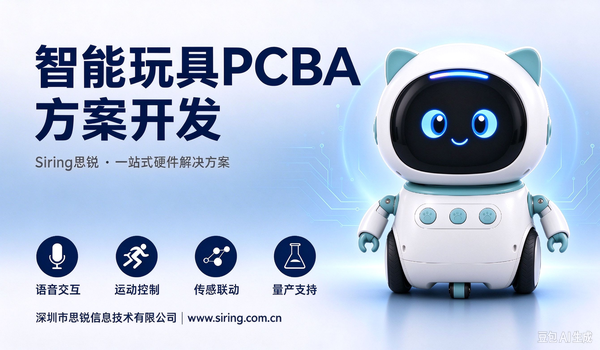
Shenzhen app development-applet development company-APP software customization-applet outsourcing-Shenzhen Sirui Information Technology Co., Ltd.Shenzhen Siring Information Technology Co., Ltd. (hereinafter referred to as Siring Sirui) is a world-leading high-end customized development company for APP development, applet customization development, software and hardware customization, website mall customization, office system software, and comprehensive game development. The fields involved include: big data application, AI artificial intelligence, Internet of Things application, blockchain application, live e-commerce, education and training, AI intelligent equipment, etc.
The company is based in Shenzhen and has branches or offices in mainland cities such as Beijing and Shanghai. In order to expand the global market, the company has offices in Hong Kong, Taiwan, and Singapore, undertaking domestic and foreign development projects. For more than 30 years, the company has been adhering to the concept of "thinking for users", striving for a 100% project completion rate, and striving to provide customers with the highest quality personalized full service;
Siring Sirui is willing to be your intimate development partner as a one-stop technology empowerment platform! !The core members of the team have over ten years of software development experience and have won an excellent reputation in the industry with 100% fulfillment ability.
Entering 2024, the world is ushering in the era of artificial intelligence and AI. The company keeps up with the times and strives to cooperate and meet the project needs of customers in AI big data analysis in project development. It has established project laboratories with well-known computing institutions such as Shenzhen Big Data Research Institute, University of Electronic Science and Technology (Shenzhen) Research Institute, and the Shenzhen Research Institute of The Chinese University of Hong Kong. By applying AI big data algorithms in the projects, it has completed multiple intelligent projects such as AI intelligent auscultation, AI intelligent pillow, and AI experience virtual reality. The company is dedicated to cooperating with more enterprises and institutions dedicated to AI projects to meet the needs of IoT intelligent products!
Shenzhen Siring Information Technology Co., Ltd. (abbreviated as Siring), founded in 1996, is a high-tech enterprise integrating comprehensive e‑commerce, educational live‑streaming, blockchain application development, IoT application development, high‑end customized APP development, and platform operation & promotion. Headquartered in Futian District, Shenzhen, the company has adhered for over two decades to the philosophy of “putting users first,” striving for a 100% project completion rate and delivering the highest‑quality personalized full‑service solutions. Its core team members possess more than ten years of software R&D experience and have earned a strong reputation in the industry through excellent execution capability. Siring is also a standing member of the Shenzhen IoT Intelligent Technology Application Association, a standing member of the Big Data Association, and a designated ICT development partner of Guangdong Mobile.
At present, enterprise informatization is at a critical turning point—from “informatization” to “digital intelligence.” According to data from the Ministry of Industry and Information Technology (MIIT), China’s software business revenue reached RMB 15.48 trillion in 2025, a year‑on‑year increase of 13.2%. The software industry has completed three iterative waves—informatization, networking, and cloudification—and has entered a pivotal phase of intelligent transformation. Against this backdrop, the development directions for enterprise informatization are undergoing profound changes. The following areas deserve particular attention.
1. Cloud‑Native Architecture Becomes the Mainstream Choice
Leveraging elastic scalability and pay‑as‑you‑go models, cloud‑native architecture has become the mainstream choice for enterprise management information systems in 2026. Whether for the lightweight needs of SMEs or the complex scenarios of large enterprises, cloud‑native enables flexible adaptation through modular configuration and microservices. For enterprises, migrating existing systems to a cloud‑native approach, or adopting it for new system development, has become a vital path to reducing operational costs and enhancing system resilience.
2. Deep Integration of AI into Enterprise Scenarios
In its 2026 Guidelines for Cultivating “Small, Fast, Lightweight, and Precise” Digital Products and Services, the MIIT explicitly identified deepening AI applications as a core direction for SME digital transformation. AI technology is moving from “proof‑of‑concept” to “large‑scale deployment.” Enterprises are no longer satisfied with superficial “+AI” integration; instead, they are advancing toward deep restructuring. From intelligent customer service and quality inspection to demand forecasting, AI capabilities are being encapsulated into specific business contexts, allowing enterprises to directly use them without understanding the underlying algorithms. For enterprise informatization development, embedding AI capabilities into existing business processes and building AI‑driven applications are among the most valuable investment directions today.
3. Data‑Driven Capability as a Core Competency
In 2026, data strategies are shifting from “compliance reporting” to “intelligent driving.” Enterprises no longer focus solely on the book value of data, but rather on its deep application in AI model training, real‑time decision‑making, and personalized services. Informatization systems must establish a full‑chain collaborative mechanism covering data collection, cleansing, modeling, and scenario‑based deployment. Data‑platform construction, improvement of data governance systems, and development of intelligent decision‑making systems based on data have become foundational projects for enterprise informatization.
4. Accelerated Replacement with Indigenous Innovation (Xinchuang) Ecosystem
The Xinchuang (indigenous innovation) industry reached a critical inflection point in 2026. Domestic operating systems have completed compatibility adaptation for mainstream office software and enterprise applications. In leading industries such as automotive manufacturing, some enterprises have already fully replaced their ERP and data platforms with domestic solutions, achieving a 98% localization rate for core business systems. For enterprise informatization development, accelerating migration to localized technology stacks and ensuring stable system operation within the Xinchuang environment have become unavoidable strategic tasks.
5. “Small, Fast, Lightweight, and Precise” as a New Development Paradigm
The MIIT’s proposed development orientation—miniaturized, rapid, lightweight, and precise—is reshaping the form of enterprise informatization products. Digital products should avoid monolithic, all‑in‑one feature stacks and instead prioritize meeting the transformation needs of key business links. The widespread adoption of low‑code and no‑code development approaches also allows business users to generate application templates without complex coding, significantly reducing customization costs and iteration cycles.
In response to these trends, Siring will continue to leverage its technical expertise in e‑commerce platforms, APP development, IoT applications, and other areas. By keeping pace with cloud‑native, AI, data intelligence, and other technological waves, we aim to deliver more efficient and smarter informatization solutions for our enterprise clients. Upholding the core philosophy of “putting users first” and drawing on more than two decades of hands‑on industry experience, Siring is committed to helping enterprises seize opportunities and move steadily forward in the wave of digital intelligence.
News Title News Title News Title News Title News Title News Title News Title News Title News Title News Title News Title News Title News Title News Title News Title News Title News Title News Title News Title News Title News Title News Title News Title News Title News Title News Title News Title News Title News Title News Title News Title News Title News Title Title News Title News Title News Title News Title News Title News Title News Title News Title News Title News Title News Title News Title News
In today's mobile Internet era, APP / small program has become a necessary marketing promotion tool for enterprises. In particular, it can be used without download and installation, providing users with a convenient operation experience. So, what is the APP / applet development process like? Next, Shenzhen Sirui Information Technology Co., Ltd. (hereinafter referred to as: Siring Sirui) will introduce the following steps:
1. Do a good job of requirements analysis for development
First, we need to be clear about how we need to develop an APP / applet ourselves. This step includes understanding the requirements of pre-development application processes, market research, and competitive product analysis. Through these methods, we can determine the requirements of the APP / applet function, interface design, and user experience. Siring Sirui has a consultant project manager, who accompanies you to sort out your business needs.
2. Technical selection
After clarifying the requirements, we need to choose the appropriate technical framework to implement the APP / small program. At present, there are many excellent APP / small program development frameworks in the market. The front end can choose: uniAPP development tools, WeChat Web developer tools, Alipay life number, etc., and the back end can choose: Java, go, php language, etc. According to the actual needs and technical background of the project, we can choose the appropriate technical framework for development. Siring Sirui has a multi-type development team to provide you with the right development framework and development language.
3. design phase
After the technical selection is completed, we enter the design stage of the APP / applet program. This stage mainly includes UI design, interaction design and functional module design, etc. Through this phase of the work, we can provide a beautiful, easy-to-use user interface for the APP / applet. Siring We uses a variety of design tools, such as Axure, Figma, etc., to design high fidelity prototypes of the project, so that the user can know the whole picture of the project at a glance.
4. exploitated phase
After the design phase was completed, we started the development of the APP / applet. This stage mainly includes two parts: front-end development and back-end development. The front-end development is mainly responsible for implementing the user interface and interaction functions of the APP / applet, while the back-end development is mainly responsible for handling the business logic and data storage problems. Siring Sirui uses instant online tools to follow up the progress of project development immediately.
5. Testing and optimization
After the APP / applet development is completed, we need to fully test it to ensure proper functionality and a good user experience. During the test process, we need to find and fix the potential problems, while we can optimize the performance of the APP / small program to improve its operation efficiency. Siring Sirui will first carry out the project testing and bug repair, and then to the user experience and optimization, to meet the actual operation needs of the project.
6. On-line and operation
Finally, we will submit the APP / applet to the major application platforms for review and release. After the release, we need to carry out continuous operation and maintenance of the APP / applet, including content update, collection and processing of user feedback, data analysis, etc. Through continuous optimization and improvement, we can make the APP / applet more in line with user needs and remain competitive.
The APP / applet development process involves multiple links, and we need to invest enough energy and time in each link. Only in this way can we create a beautiful APP / small program that is both beautiful and practical, and bring a better experience to users.
#APP Customization Development # Website Construction # Software Development # Hardware Development # Source Code Development # Source Code Customization
#Social Customization # Live Streaming # E-commerce Shopping # Website System # Takeout # Same City Services # Internet of Things # Education
Everyone who works on products and projects carries their dreams, but the realization of their dreams is not always smooth sailing. They think that after creating an app or mini program, they can make money and get rich returns while lying down. Little do they know that there are too many processes involved in this process. Shenzhen Siring Information Technology Co., Ltd. (referred to as Siring Siring) not only customizes various creative projects, but also accumulates rich practical experience in project promotion and operation. Taking this opportunity, we share our experience with all enterprises or individuals who strive for their dreams.
1、 Creative leading project engineering
The beginning of a customized software development project always starts with good creativity. Without good creativity, it is difficult to stimulate user preferences. A good user experience is the only criterion for testing a good product. A good idea is not just a wild idea, but rather one who thinks it will work. In fact, it is necessary to comprehensively consider practical ideas based on public experience, experience, market research and analysis, combine good ideas with these factors, and then try to develop one's own exclusive app.
In the current situation of severe homogenization in the APP software development industry, creative apps are the first to seize the market opportunity. If you have good ideas, you need to be brave enough to take action. Many people have many ideas, but none of them take action, so APP software development is still in the conceptual stage. If you do it, you may succeed, but if you don't do it, you will definitely not succeed.
2、 R&D starts with prototype design
APP software development is by no means an easy task. When too many demanders are just a concept, they hastily entrust a development company to start researching and developing. The first thing they think about every day is to quickly launch the product, but they are careless about every detail. Here, we first remind all demanders: the prototype should be carefully compared and corrected at the beginning of research and development!
So, what is prototype design?
Prototyping is a way for users to experience products in advance, communicate design ideas, and showcase complex systems. Essentially, a prototype is a communication tool for graphical interaction. The main function is to describe the logical relationship between function and content.
Why do we need prototype design?
Firstly, the vast majority of business owners themselves do not understand design knowledge or programming knowledge, and prototypes show them the basic framework or model of websites or apps, allowing them to understand their basic appearance and operational mechanisms.
An interactive prototype can basically run like the final product, and you can operate on it. The prototype will provide corresponding feedback, and users can understand its operation and seek solutions to specific problems. After usability testing, the prototype can optimize for a better user experience and eliminate a considerable number of potential issues and malfunctions before the product is launched.
Prototypes are like development drawings in construction projects. Once the drawings are confirmed, construction is carried out. However, the response during the construction process is not like this, and the impact on the entire project construction is obvious!
3、 Don't play with children in function development
Many app developers themselves do not have a clear understanding of what established functions their apps need to implement. During the development process, various functional changes began. Today, when I thought of a great feature, I immediately made a phone call requesting it to be added. If it wasn't added, I might not be able to survive anymore. The next day, I was informed that it seemed like the feature should be removed. However, I didn't realize that the entire day of the project team's time was wasted, which resulted in a significant increase in project development costs!
As a development demander, it is essential to have sufficient product considerations and thinking, as well as cost awareness, to identify the market and direction. Good features are available at every stage and must be completed through a phased and step-by-step system.
As we can see from the upgrades of Apple phones, they are usually updated every year. Of course, Apple will produce world-class phones, but many of their cool features are carefully added in stages to meet the needs of the market and general customers. Because you think it's good, users may not necessarily buy it, but instead invisibly add budget costs to themselves, while also causing delays in project launch.
4、 "Fine tuned operation" in marketing promotion
The above mentioned are all issues that need to be noted in product design and research and development. So, after the project is developed and formed, how should we operate?
With the disappearance of market dividends, it is necessary to realize that promoting new APP software will be very difficult!
Nowadays, we have entered the era of traffic. Whoever seizes the entrance to traffic is like a pig flying into the sky. Where does traffic come from? It comes from news, entertainment, games, and applications on PC and mobile devices, big and small. However, there are millions of channels for traffic, and the cost of user promotion is tight, making the cost increasingly high. To enhance customer acquisition capabilities, it is necessary to screen high-quality customer acquisition channels and continuously improve the conversion rate of traffic to reduce user acquisition costs. Siring, an APP customization development company, believes that whether it is search engine optimization or SEM bidding advertising, the advertising channels should do a good job in analyzing the landing page conversion of each channel, purposefully reducing resource waste.
Shenzhen Siring Information Technology Co., Ltd. (abbreviated as Siring), founded in 1996, is a high-tech enterprise integrating comprehensive e‑commerce, educational live‑streaming, blockchain application development, IoT application development, high‑end customized APP development, and platform operation & promotion. Headquartered in Futian District, Shenzhen, the company has adhered for over two decades to the philosophy of “putting users first,” striving for a 100% project completion rate and delivering the highest‑quality personalized full‑service solutions. Its core team members possess more than ten years of software R&D experience and have earned a strong reputation in the industry through excellent execution capability. Siring is also a standing member of the Shenzhen IoT Intelligent Technology Application Association, a standing member of the Big Data Association, and a designated ICT development partner of Guangdong Mobile.
At present, enterprise informatization is at a critical turning point—from “informatization” to “digital intelligence.” According to data from the Ministry of Industry and Information Technology (MIIT), China’s software business revenue reached RMB 15.48 trillion in 2025, a year‑on‑year increase of 13.2%. The software industry has completed three iterative waves—informatization, networking, and cloudification—and has entered a pivotal phase of intelligent transformation. Against this backdrop, the development directions for enterprise informatization are undergoing profound changes. The following areas deserve particular attention.
1. Cloud‑Native Architecture Becomes the Mainstream Choice
Leveraging elastic scalability and pay‑as‑you‑go models, cloud‑native architecture has become the mainstream choice for enterprise management information systems in 2026. Whether for the lightweight needs of SMEs or the complex scenarios of large enterprises, cloud‑native enables flexible adaptation through modular configuration and microservices. For enterprises, migrating existing systems to a cloud‑native approach, or adopting it for new system development, has become a vital path to reducing operational costs and enhancing system resilience.
2. Deep Integration of AI into Enterprise Scenarios
In its 2026 Guidelines for Cultivating “Small, Fast, Lightweight, and Precise” Digital Products and Services, the MIIT explicitly identified deepening AI applications as a core direction for SME digital transformation. AI technology is moving from “proof‑of‑concept” to “large‑scale deployment.” Enterprises are no longer satisfied with superficial “+AI” integration; instead, they are advancing toward deep restructuring. From intelligent customer service and quality inspection to demand forecasting, AI capabilities are being encapsulated into specific business contexts, allowing enterprises to directly use them without understanding the underlying algorithms. For enterprise informatization development, embedding AI capabilities into existing business processes and building AI‑driven applications are among the most valuable investment directions today.
3. Data‑Driven Capability as a Core Competency
In 2026, data strategies are shifting from “compliance reporting” to “intelligent driving.” Enterprises no longer focus solely on the book value of data, but rather on its deep application in AI model training, real‑time decision‑making, and personalized services. Informatization systems must establish a full‑chain collaborative mechanism covering data collection, cleansing, modeling, and scenario‑based deployment. Data‑platform construction, improvement of data governance systems, and development of intelligent decision‑making systems based on data have become foundational projects for enterprise informatization.
4. Accelerated Replacement with Indigenous Innovation (Xinchuang) Ecosystem
The Xinchuang (indigenous innovation) industry reached a critical inflection point in 2026. Domestic operating systems have completed compatibility adaptation for mainstream office software and enterprise applications. In leading industries such as automotive manufacturing, some enterprises have already fully replaced their ERP and data platforms with domestic solutions, achieving a 98% localization rate for core business systems. For enterprise informatization development, accelerating migration to localized technology stacks and ensuring stable system operation within the Xinchuang environment have become unavoidable strategic tasks.
5. “Small, Fast, Lightweight, and Precise” as a New Development Paradigm
The MIIT’s proposed development orientation—miniaturized, rapid, lightweight, and precise—is reshaping the form of enterprise informatization products. Digital products should avoid monolithic, all‑in‑one feature stacks and instead prioritize meeting the transformation needs of key business links. The widespread adoption of low‑code and no‑code development approaches also allows business users to generate application templates without complex coding, significantly reducing customization costs and iteration cycles.
In response to these trends, Siring will continue to leverage its technical expertise in e‑commerce platforms, APP development, IoT applications, and other areas. By keeping pace with cloud‑native, AI, data intelligence, and other technological waves, we aim to deliver more efficient and smarter informatization solutions for our enterprise clients. Upholding the core philosophy of “putting users first” and drawing on more than two decades of hands‑on industry experience, Siring is committed to helping enterprises seize opportunities and move steadily forward in the wave of digital intelligence.
News Title News Title News Title News Title News Title News Title News Title News Title News Title News Title News Title News Title News Title News Title News Title News Title News Title News Title News Title News Title News Title News Title News Title News Title News Title News Title News Title News Title News Title News Title News Title News Title News Title Title News Title News Title News Title News Title News Title News Title News Title News Title News Title News Title News Title News Title News
In today's mobile Internet era, APP / small program has become a necessary marketing promotion tool for enterprises. In particular, it can be used without download and installation, providing users with a convenient operation experience. So, what is the APP / applet development process like? Next, Shenzhen Sirui Information Technology Co., Ltd. (hereinafter referred to as: Siring Sirui) will introduce the following steps:
1. Do a good job of requirements analysis for development
First, we need to be clear about how we need to develop an APP / applet ourselves. This step includes understanding the requirements of pre-development application processes, market research, and competitive product analysis. Through these methods, we can determine the requirements of the APP / applet function, interface design, and user experience. Siring Sirui has a consultant project manager, who accompanies you to sort out your business needs.
2. Technical selection
After clarifying the requirements, we need to choose the appropriate technical framework to implement the APP / small program. At present, there are many excellent APP / small program development frameworks in the market. The front end can choose: uniAPP development tools, WeChat Web developer tools, Alipay life number, etc., and the back end can choose: Java, go, php language, etc. According to the actual needs and technical background of the project, we can choose the appropriate technical framework for development. Siring Sirui has a multi-type development team to provide you with the right development framework and development language.
3. design phase
After the technical selection is completed, we enter the design stage of the APP / applet program. This stage mainly includes UI design, interaction design and functional module design, etc. Through this phase of the work, we can provide a beautiful, easy-to-use user interface for the APP / applet. Siring We uses a variety of design tools, such as Axure, Figma, etc., to design high fidelity prototypes of the project, so that the user can know the whole picture of the project at a glance.
4. exploitated phase
After the design phase was completed, we started the development of the APP / applet. This stage mainly includes two parts: front-end development and back-end development. The front-end development is mainly responsible for implementing the user interface and interaction functions of the APP / applet, while the back-end development is mainly responsible for handling the business logic and data storage problems. Siring Sirui uses instant online tools to follow up the progress of project development immediately.
5. Testing and optimization
After the APP / applet development is completed, we need to fully test it to ensure proper functionality and a good user experience. During the test process, we need to find and fix the potential problems, while we can optimize the performance of the APP / small program to improve its operation efficiency. Siring Sirui will first carry out the project testing and bug repair, and then to the user experience and optimization, to meet the actual operation needs of the project.
6. On-line and operation
Finally, we will submit the APP / applet to the major application platforms for review and release. After the release, we need to carry out continuous operation and maintenance of the APP / applet, including content update, collection and processing of user feedback, data analysis, etc. Through continuous optimization and improvement, we can make the APP / applet more in line with user needs and remain competitive.
The APP / applet development process involves multiple links, and we need to invest enough energy and time in each link. Only in this way can we create a beautiful APP / small program that is both beautiful and practical, and bring a better experience to users.
#APP Customization Development # Website Construction # Software Development # Hardware Development # Source Code Development # Source Code Customization
#Social Customization # Live Streaming # E-commerce Shopping # Website System # Takeout # Same City Services # Internet of Things # Education
Everyone who works on products and projects carries their dreams, but the realization of their dreams is not always smooth sailing. They think that after creating an app or mini program, they can make money and get rich returns while lying down. Little do they know that there are too many processes involved in this process. Shenzhen Siring Information Technology Co., Ltd. (referred to as Siring Siring) not only customizes various creative projects, but also accumulates rich practical experience in project promotion and operation. Taking this opportunity, we share our experience with all enterprises or individuals who strive for their dreams.
1、 Creative leading project engineering
The beginning of a customized software development project always starts with good creativity. Without good creativity, it is difficult to stimulate user preferences. A good user experience is the only criterion for testing a good product. A good idea is not just a wild idea, but rather one who thinks it will work. In fact, it is necessary to comprehensively consider practical ideas based on public experience, experience, market research and analysis, combine good ideas with these factors, and then try to develop one's own exclusive app.
In the current situation of severe homogenization in the APP software development industry, creative apps are the first to seize the market opportunity. If you have good ideas, you need to be brave enough to take action. Many people have many ideas, but none of them take action, so APP software development is still in the conceptual stage. If you do it, you may succeed, but if you don't do it, you will definitely not succeed.
2、 R&D starts with prototype design
APP software development is by no means an easy task. When too many demanders are just a concept, they hastily entrust a development company to start researching and developing. The first thing they think about every day is to quickly launch the product, but they are careless about every detail. Here, we first remind all demanders: the prototype should be carefully compared and corrected at the beginning of research and development!
So, what is prototype design?
Prototyping is a way for users to experience products in advance, communicate design ideas, and showcase complex systems. Essentially, a prototype is a communication tool for graphical interaction. The main function is to describe the logical relationship between function and content.
Why do we need prototype design?
Firstly, the vast majority of business owners themselves do not understand design knowledge or programming knowledge, and prototypes show them the basic framework or model of websites or apps, allowing them to understand their basic appearance and operational mechanisms.
An interactive prototype can basically run like the final product, and you can operate on it. The prototype will provide corresponding feedback, and users can understand its operation and seek solutions to specific problems. After usability testing, the prototype can optimize for a better user experience and eliminate a considerable number of potential issues and malfunctions before the product is launched.
Prototypes are like development drawings in construction projects. Once the drawings are confirmed, construction is carried out. However, the response during the construction process is not like this, and the impact on the entire project construction is obvious!
3、 Don't play with children in function development
Many app developers themselves do not have a clear understanding of what established functions their apps need to implement. During the development process, various functional changes began. Today, when I thought of a great feature, I immediately made a phone call requesting it to be added. If it wasn't added, I might not be able to survive anymore. The next day, I was informed that it seemed like the feature should be removed. However, I didn't realize that the entire day of the project team's time was wasted, which resulted in a significant increase in project development costs!
As a development demander, it is essential to have sufficient product considerations and thinking, as well as cost awareness, to identify the market and direction. Good features are available at every stage and must be completed through a phased and step-by-step system.
As we can see from the upgrades of Apple phones, they are usually updated every year. Of course, Apple will produce world-class phones, but many of their cool features are carefully added in stages to meet the needs of the market and general customers. Because you think it's good, users may not necessarily buy it, but instead invisibly add budget costs to themselves, while also causing delays in project launch.
4、 "Fine tuned operation" in marketing promotion
The above mentioned are all issues that need to be noted in product design and research and development. So, after the project is developed and formed, how should we operate?
With the disappearance of market dividends, it is necessary to realize that promoting new APP software will be very difficult!
Nowadays, we have entered the era of traffic. Whoever seizes the entrance to traffic is like a pig flying into the sky. Where does traffic come from? It comes from news, entertainment, games, and applications on PC and mobile devices, big and small. However, there are millions of channels for traffic, and the cost of user promotion is tight, making the cost increasingly high. To enhance customer acquisition capabilities, it is necessary to screen high-quality customer acquisition channels and continuously improve the conversion rate of traffic to reduce user acquisition costs. Siring, an APP customization development company, believes that whether it is search engine optimization or SEM bidding advertising, the advertising channels should do a good job in analyzing the landing page conversion of each channel, purposefully reducing resource waste.